Blog

  • Desa Hay Bali Review 2026 (Restorative Index: 8.8/10)

    Desa Hay Bali Review 2026 (Restorative Index: 8.8/10)

    Honest Desa Hay Bali Review, a boutique wellness retreat near Canggu. Sleep quality, villa design, dining, and Restorative Index score. Tested in person.

    The area has grown into one of Bali’s busiest hubs. Cafés are filled with remote workers, beach clubs buzz from afternoon until late in the evening, and scooters weave constantly through the narrow streets. It’s lively and exciting, but it can also become exhausting.

    That’s why Desa Hay immediately felt different.

    Located just northwest of Canggu, the small boutique property sits in a peaceful pocket near Pererenan Beach. The centre of Canggu is only about ten minutes away by motorbike, yet the atmosphere here feels noticeably calmer from the moment you arrive.

    At first, it simply feels like a pleasant escape. After spending some time there, though, it becomes clear that the calm is not accidental.

    Desa Hay is engineered around a simple premise: that proximity to energy doesn’t have to mean exposure to it.

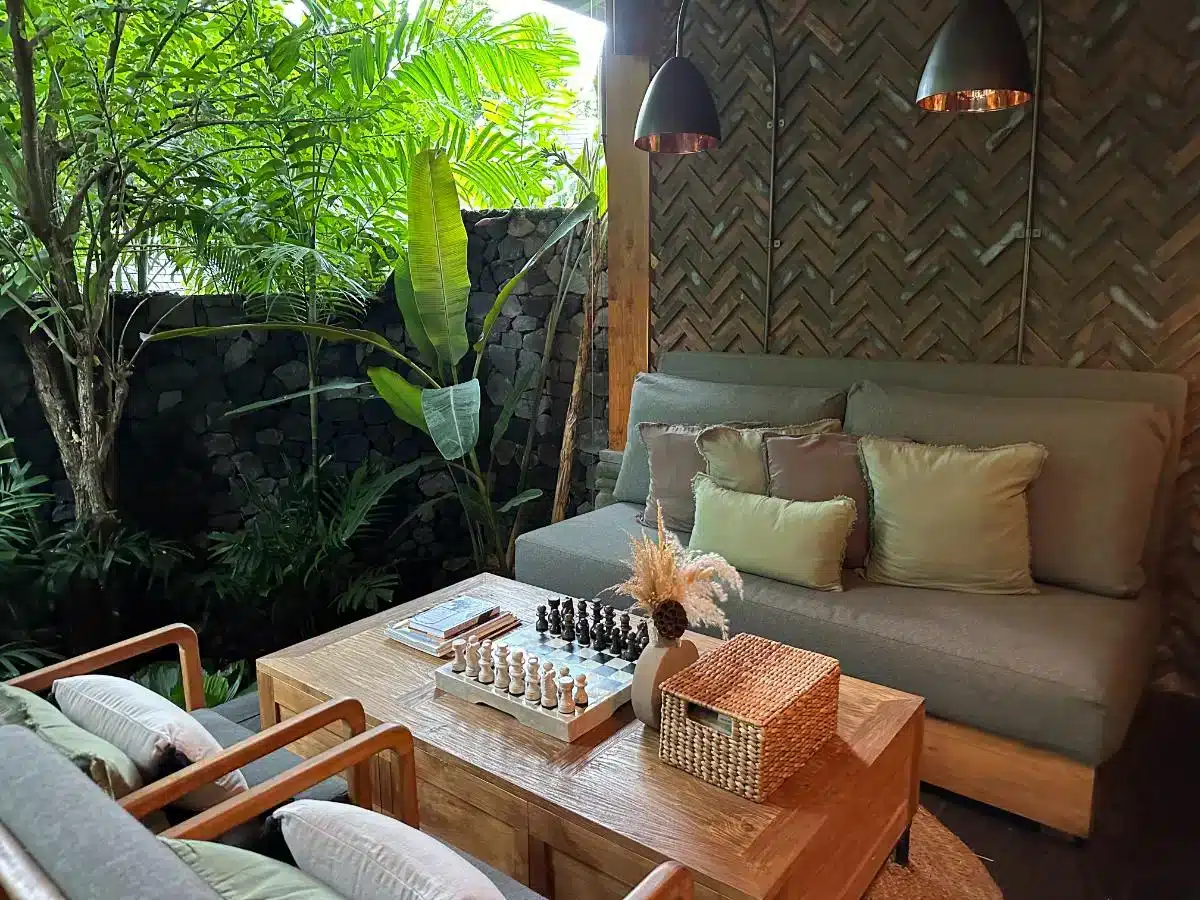
    The villa spacing, garden buffering, indirect evening lighting, and stripped-back design all point to a property that has thought carefully about sensory reduction.

    I spent three nights testing whether that intention translates into genuine restoration, or whether it’s just a pretty setting that happens to be quiet.

    At a Glance

    8.8 /10
    Restorative Index
    Property
    Desa Hay Bali
    Location
    Pererenan / Canggu, Bali, Indonesia
    Room Category
    Premium Jabu Villa with Plunge Pool
    Last Stayed
    3 nights, leisure and property evaluation
    Price
    ~$200-$350/night depending on season
    Best For
    Couples, solo travelers, remote workers seeking quiet near Canggu
    Transparency: Fully hosted stay. Opinions are solely my own.
    What is the Restorative Index? →

    8.8 / 10 — Restorative Stay

    A calm boutique property where privacy, thoughtful villa design, and attentive service create a noticeably restorative environment. The hotel excels in sleep quality and environmental calm, although it lacks the extensive spa and movement facilities found at larger wellness resorts.

    Restorative Index – Score Breakdown

    8.8 /10
    DimensionWeightScore
    Sleep Architecture3030
    Environmental Calm2020
    Nutritional Impact1514
    Bioregulation (Spa)157
    Biomechanics (Movement)107
    Frictionless Operations1010
    Restorative Index10088

    The Stay

    A Quiet Location Close to Canggu

    Desa Hay sits just outside the busiest part of Canggu, around a ten-minute drive from the centre and about ten minutes from Pererenan Beach.

    There isn’t much directly around the property apart from a few cafés, which actually works in its favour. The surroundings feel residential and calm, creating a noticeable contrast to the constant activity in central Canggu.

    Yet if you want restaurants, beach clubs, or surf spots, they are still easily accessible by motorbike.

    Once I settled into the villa, though, I found myself surprisingly reluctant to leave.

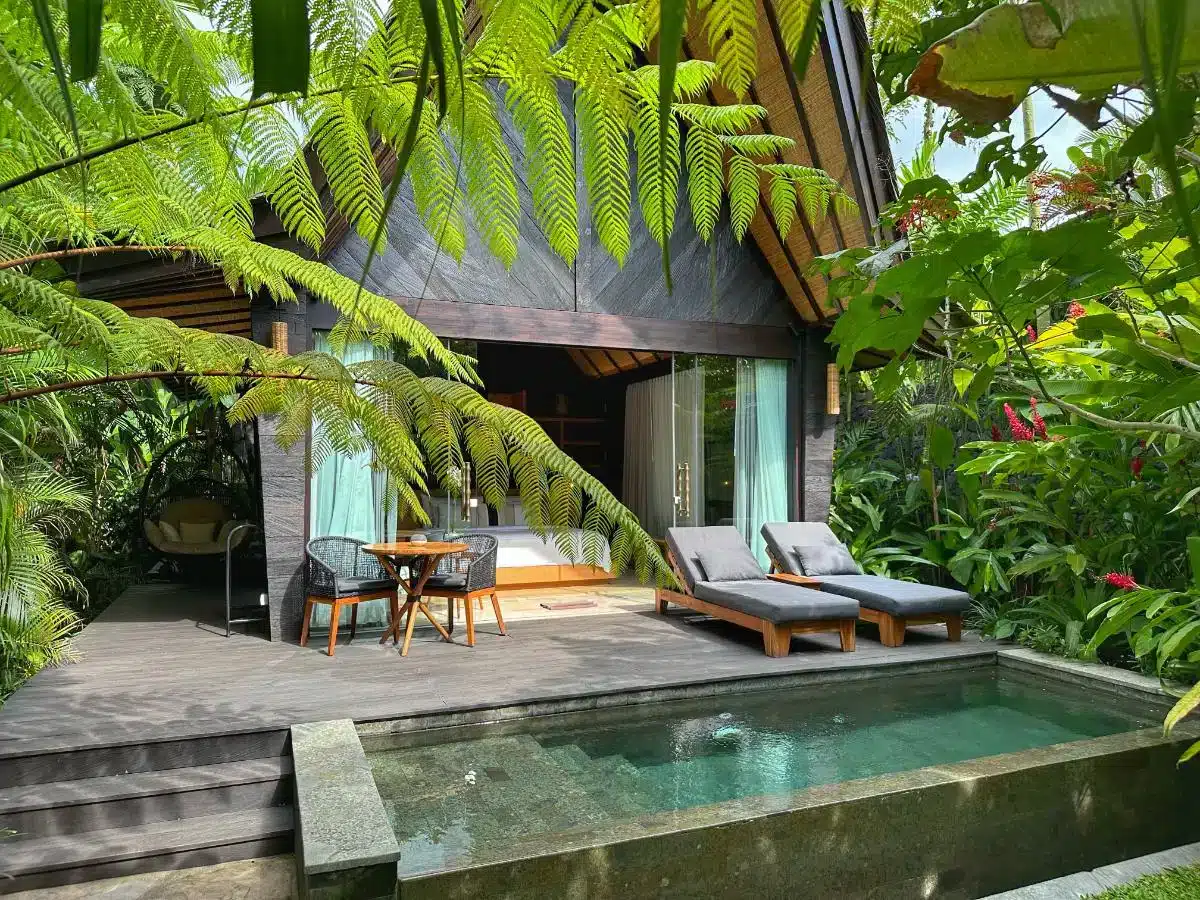
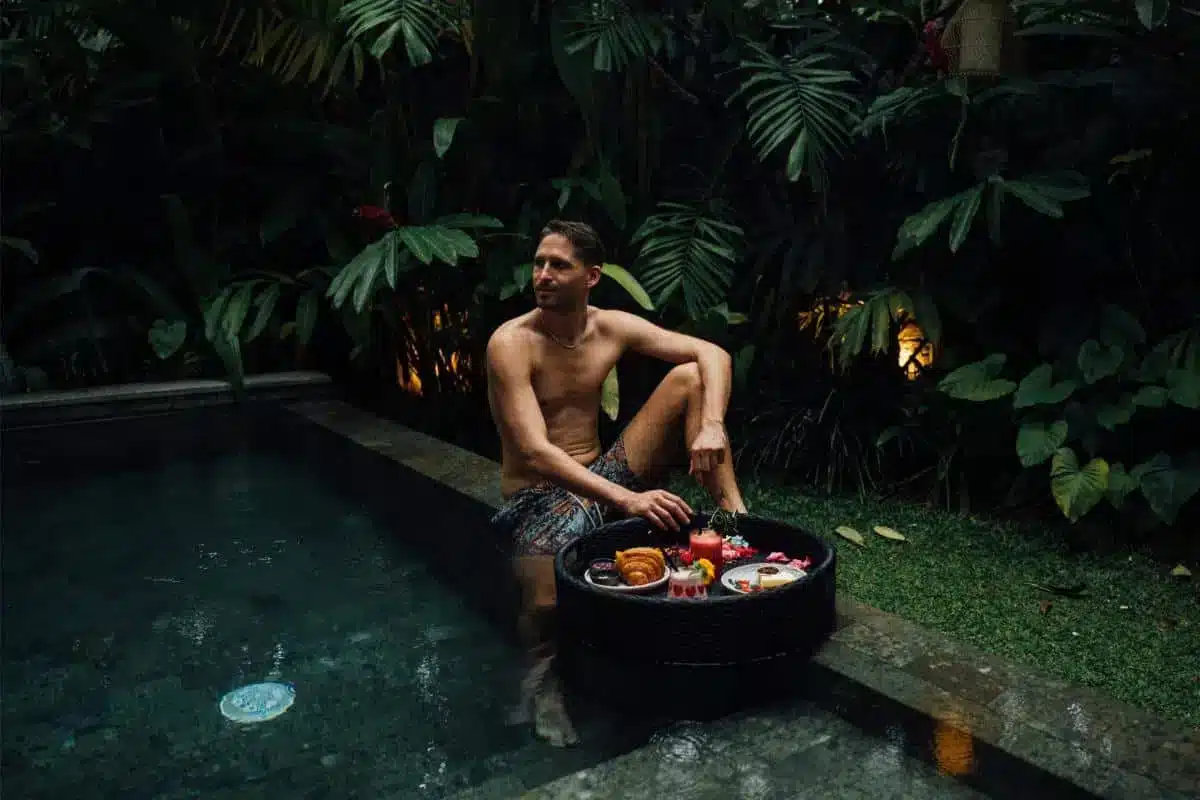
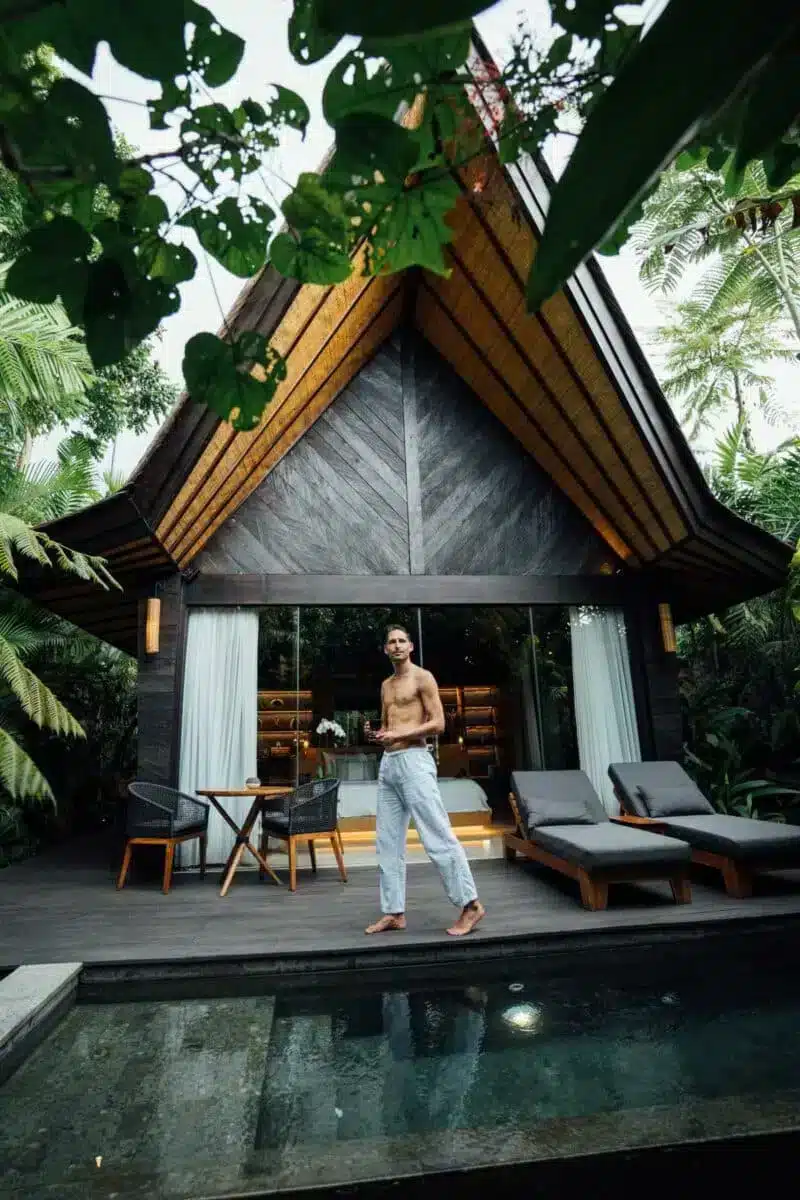
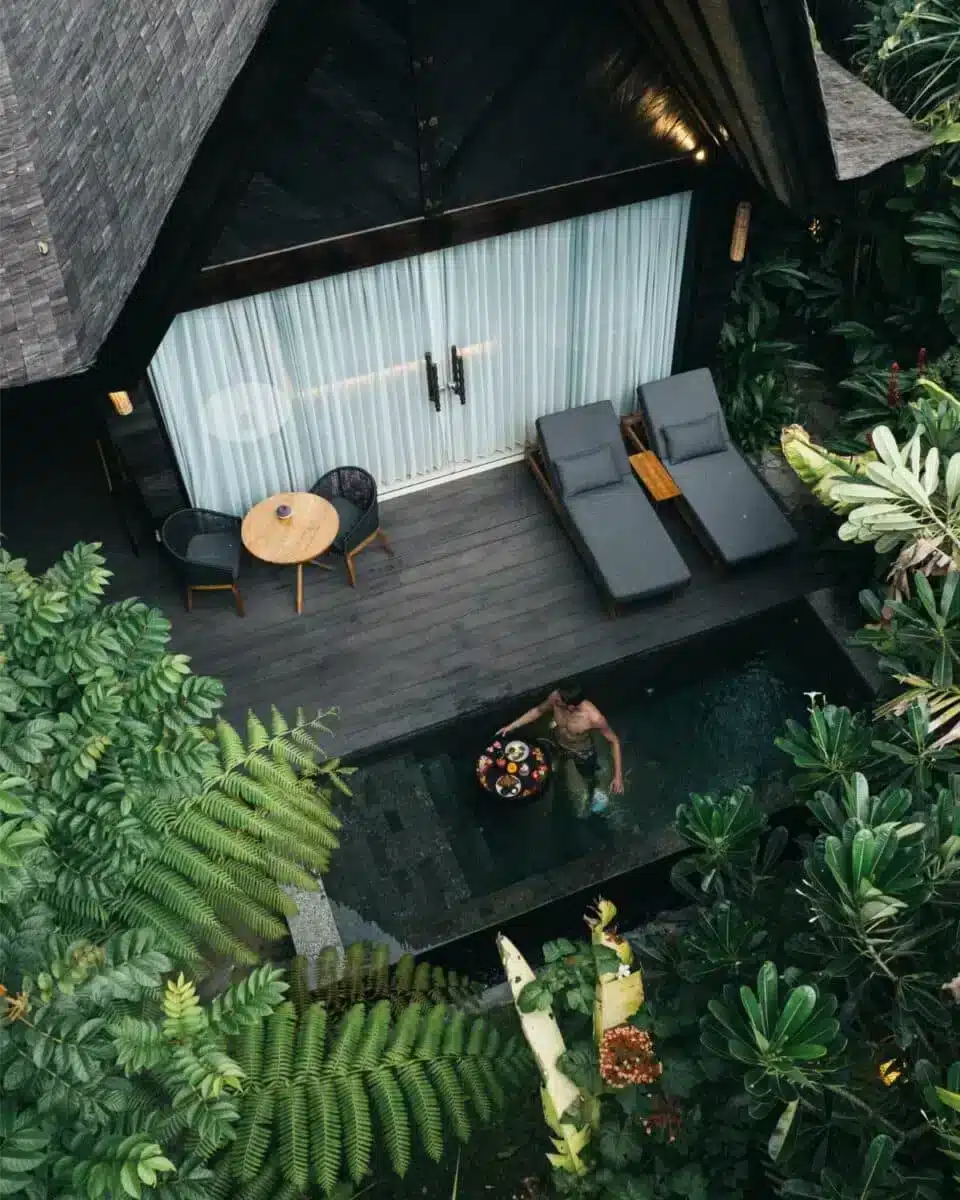
    The Premium Jabu Villa with plunge pool
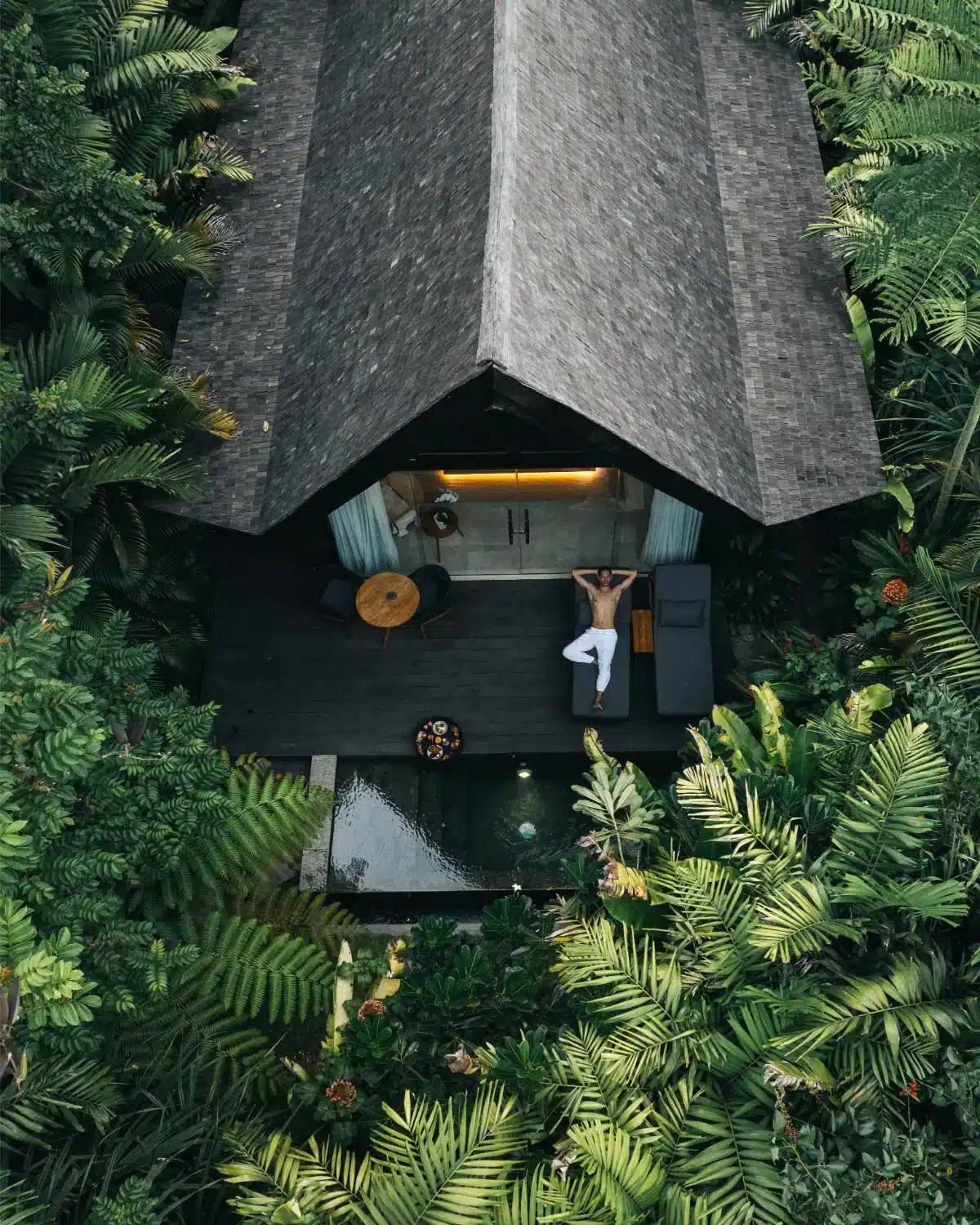
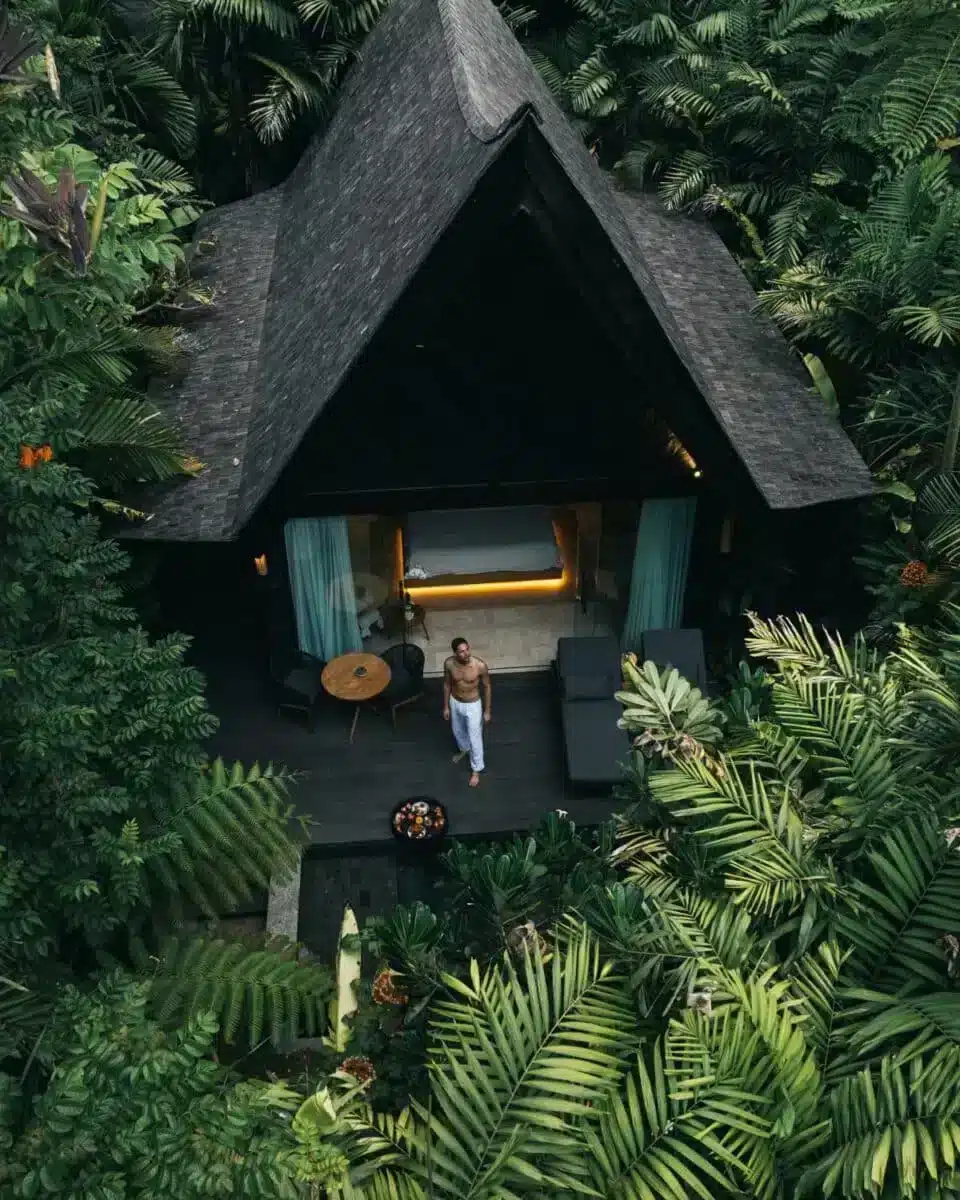
    Aerial drone view of Premium Jabu Villa at Desa Hay Bali showing guest relaxing on wooden deck terrace with plunge pool surrounded by lush tropical garden

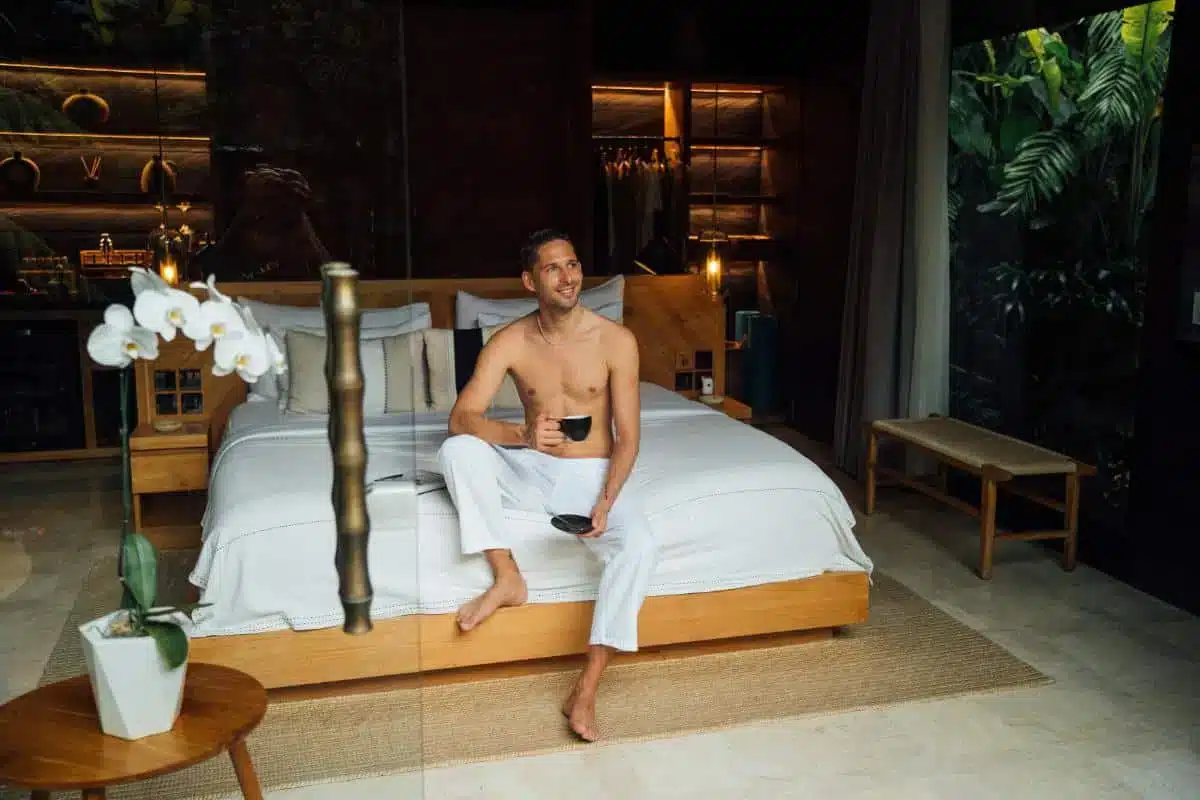
    During my stay, I slept in the Premium Jabu Villa with a plunge pool, and the space felt incredibly inviting.

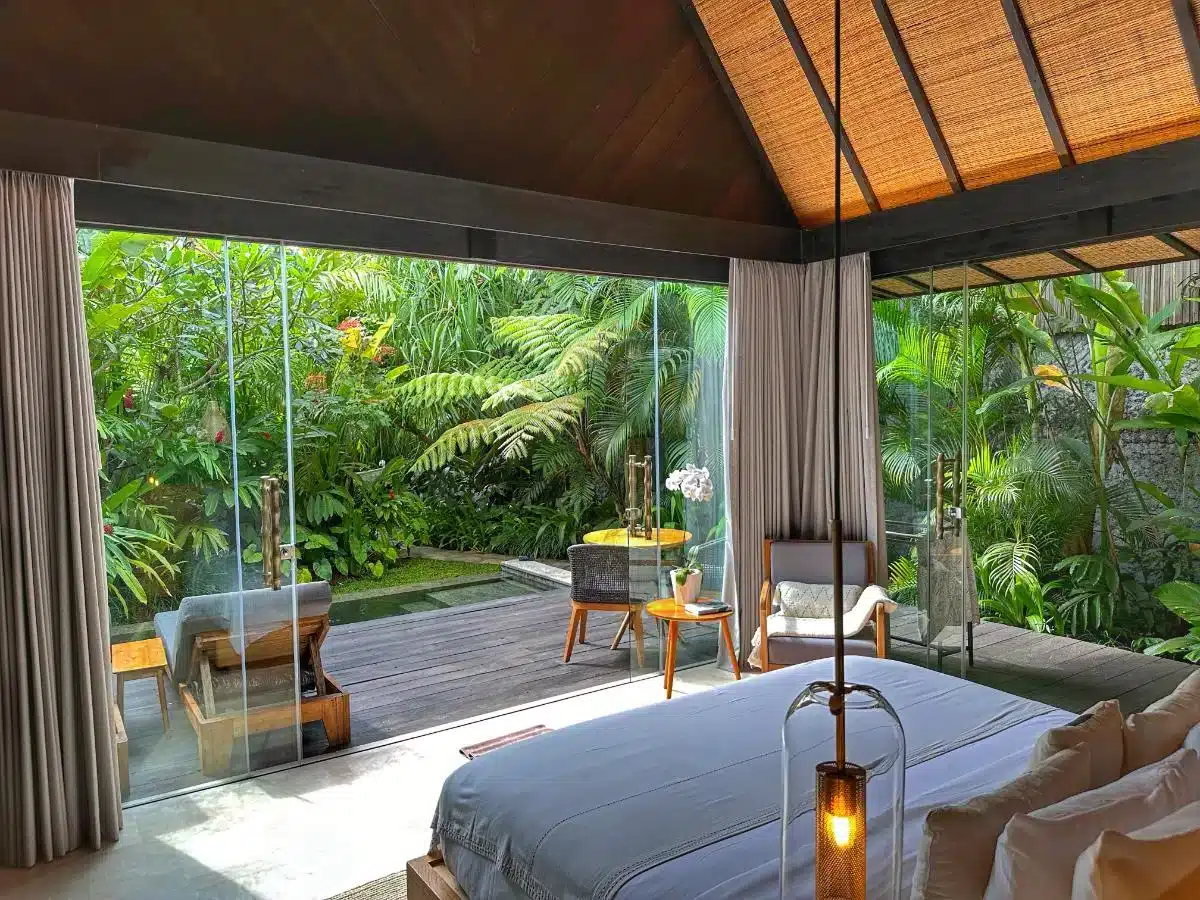
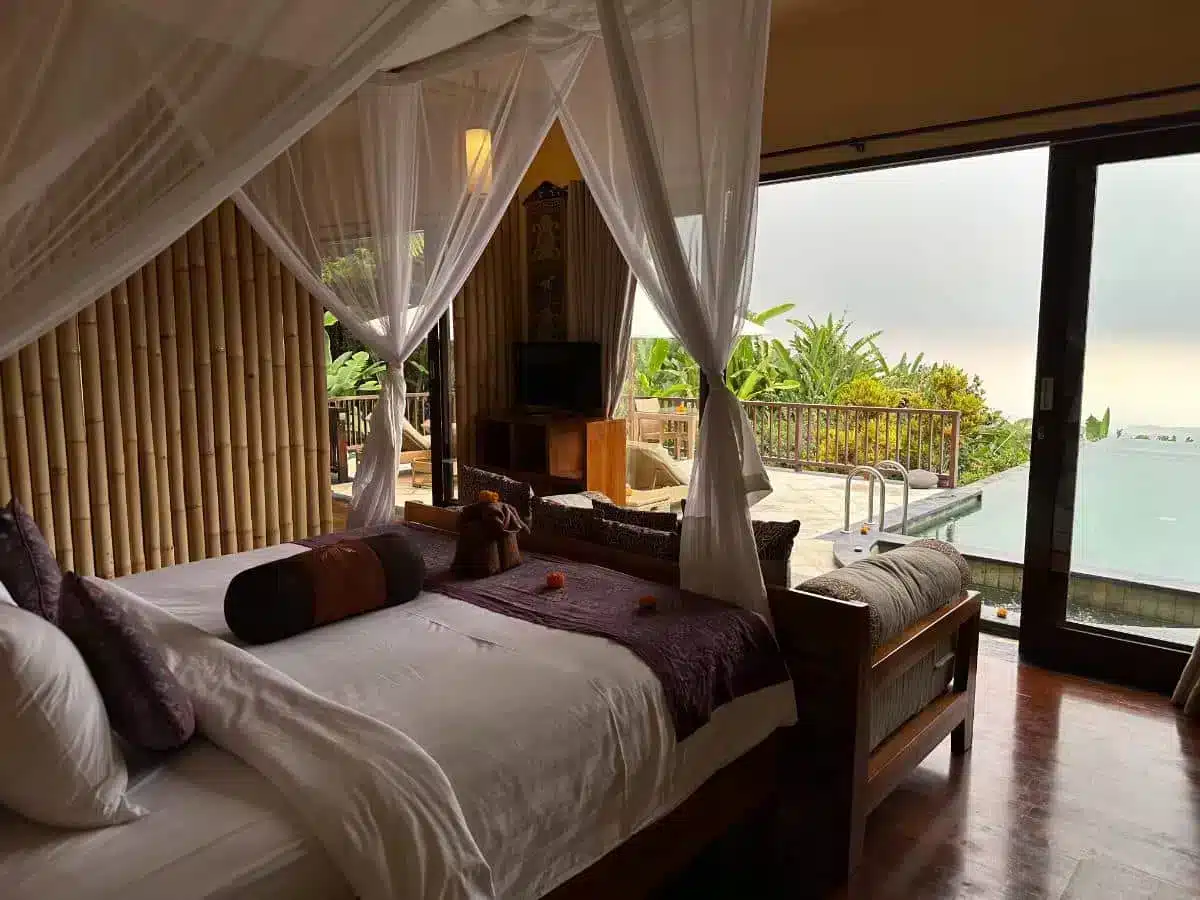
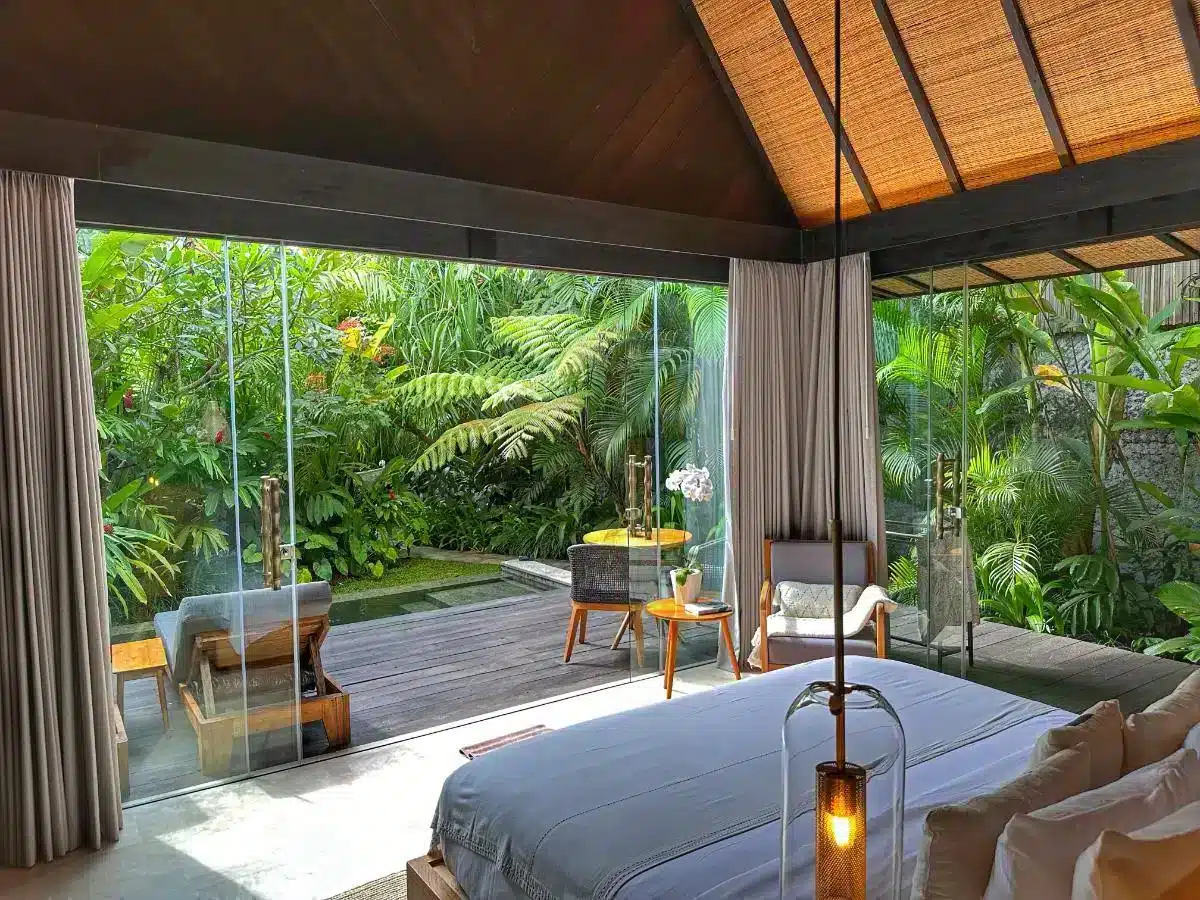
    The bed faces directly toward the private garden and pool, framed by large floor-to-ceiling windows that bring natural light into the room throughout the day. The high ceiling creates an open, airy atmosphere.

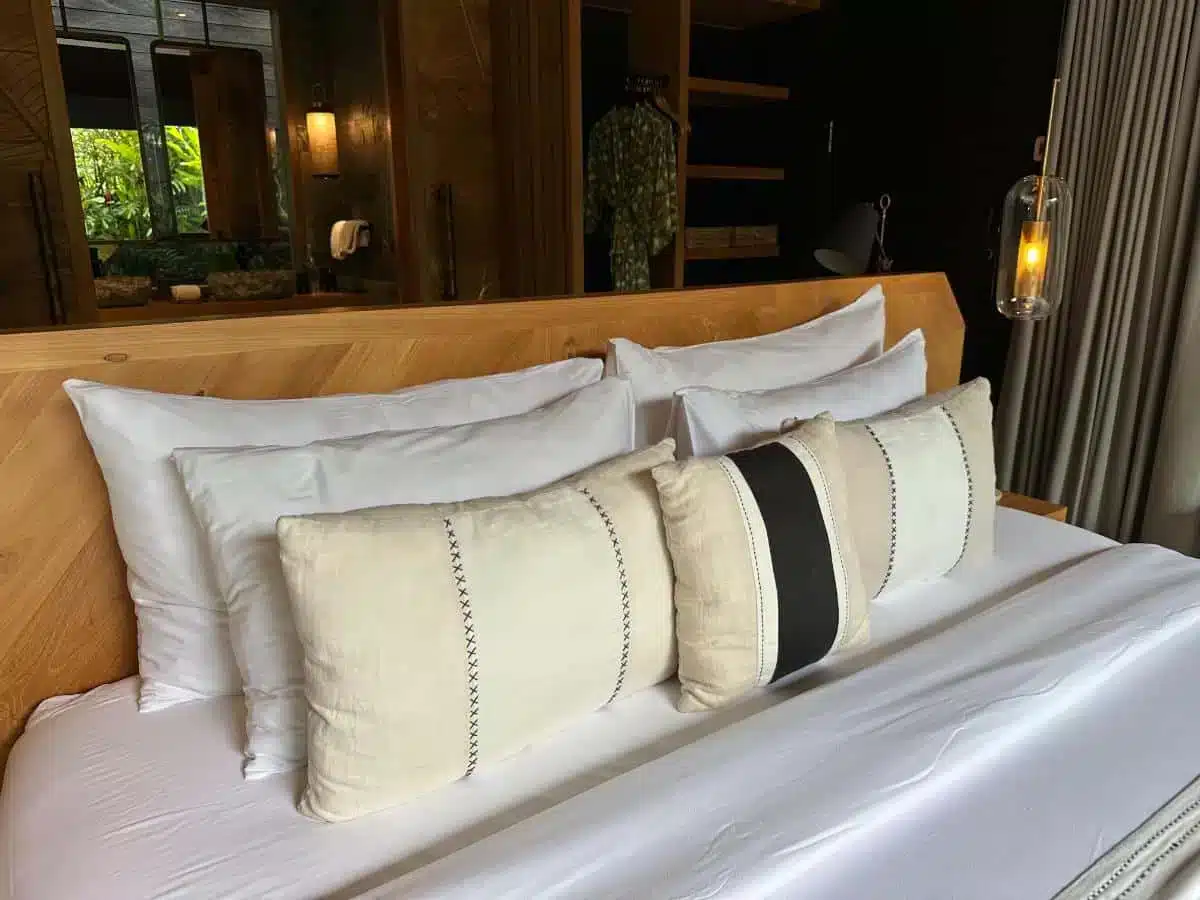
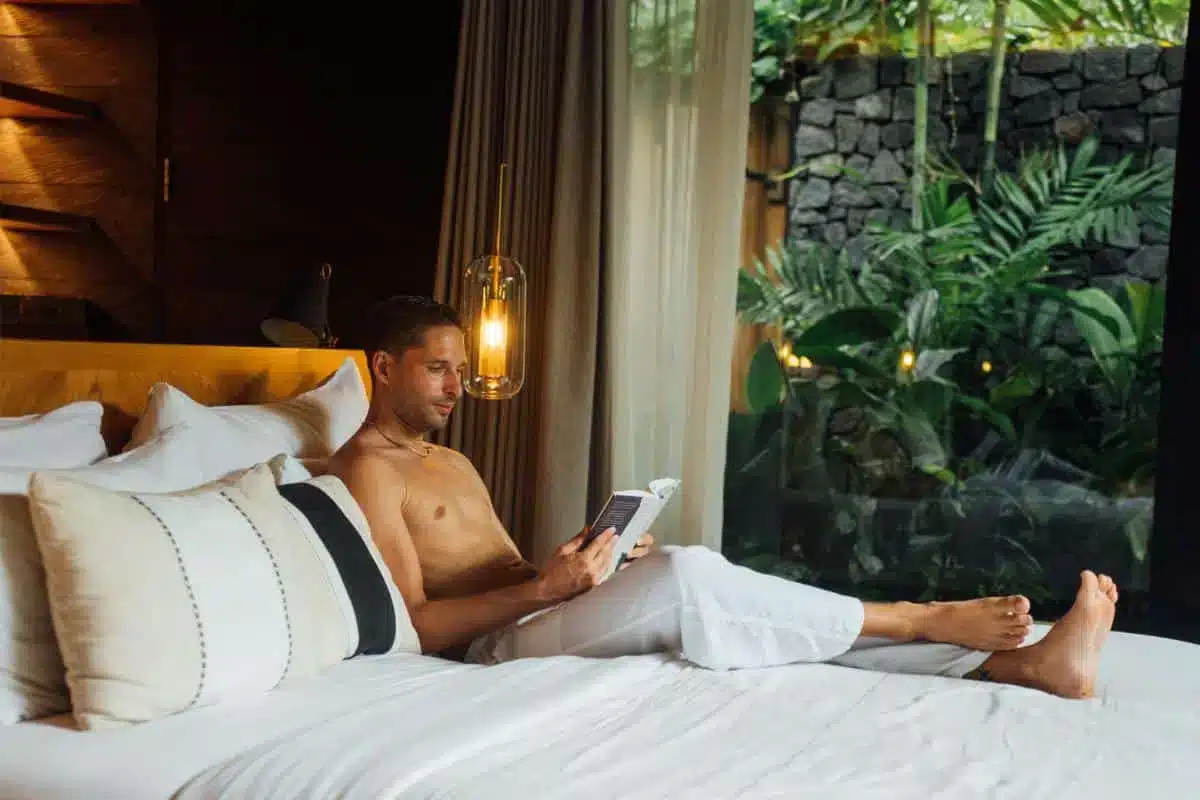
    The mattress was very comfortable and supportive, and the selection of pillows made it easy to adjust the sleeping setup to personal preference.

    Blackout performance was strong. The curtains blocked almost all the light at dawn. Acoustic isolation was equally effective: despite the villa’s open garden design, I heard no hallway traffic, no neighbouring guests, and no mechanical HVAC noise during the night.

    The air conditioning ran quietly and maintained a stable temperature throughout, which is worth noting in Bali’s humid climate, where inconsistent cooling can easily fragment sleep.
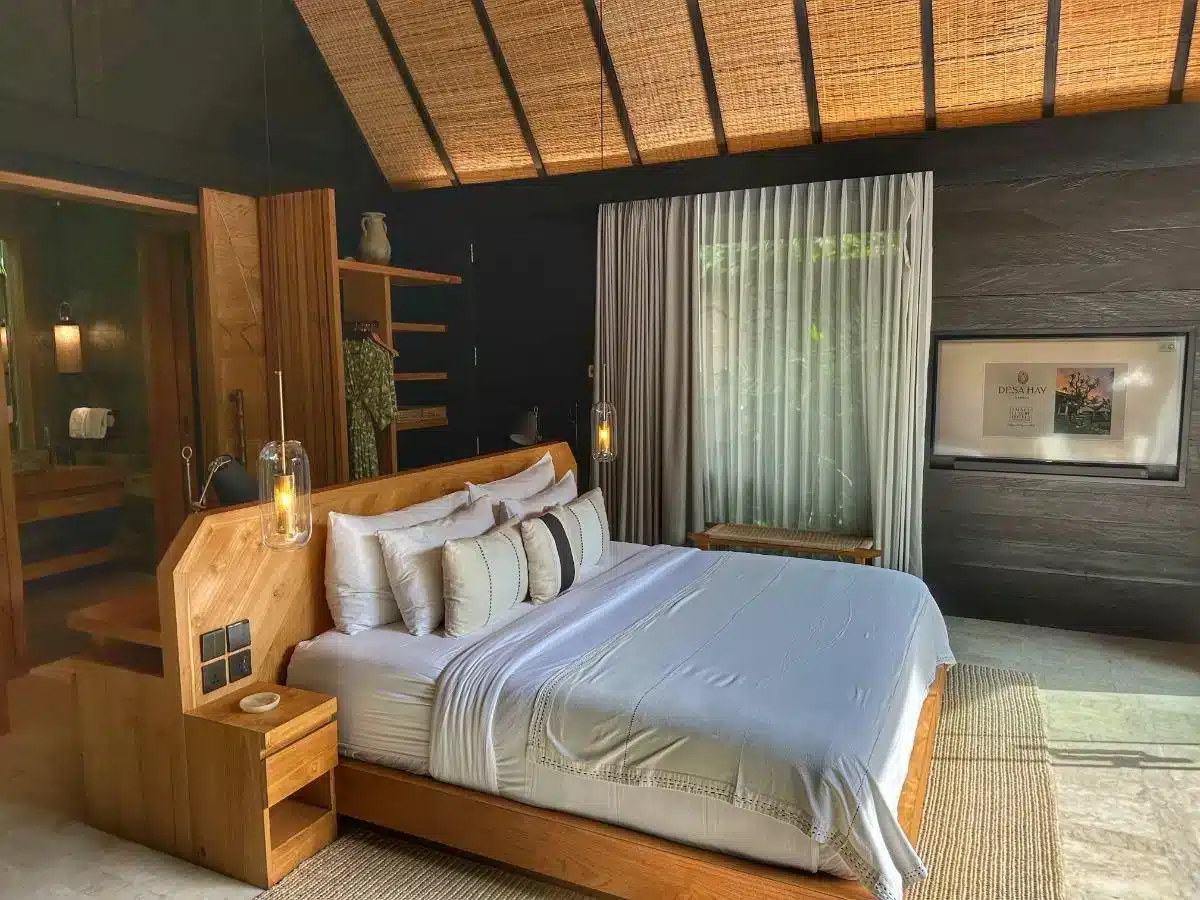
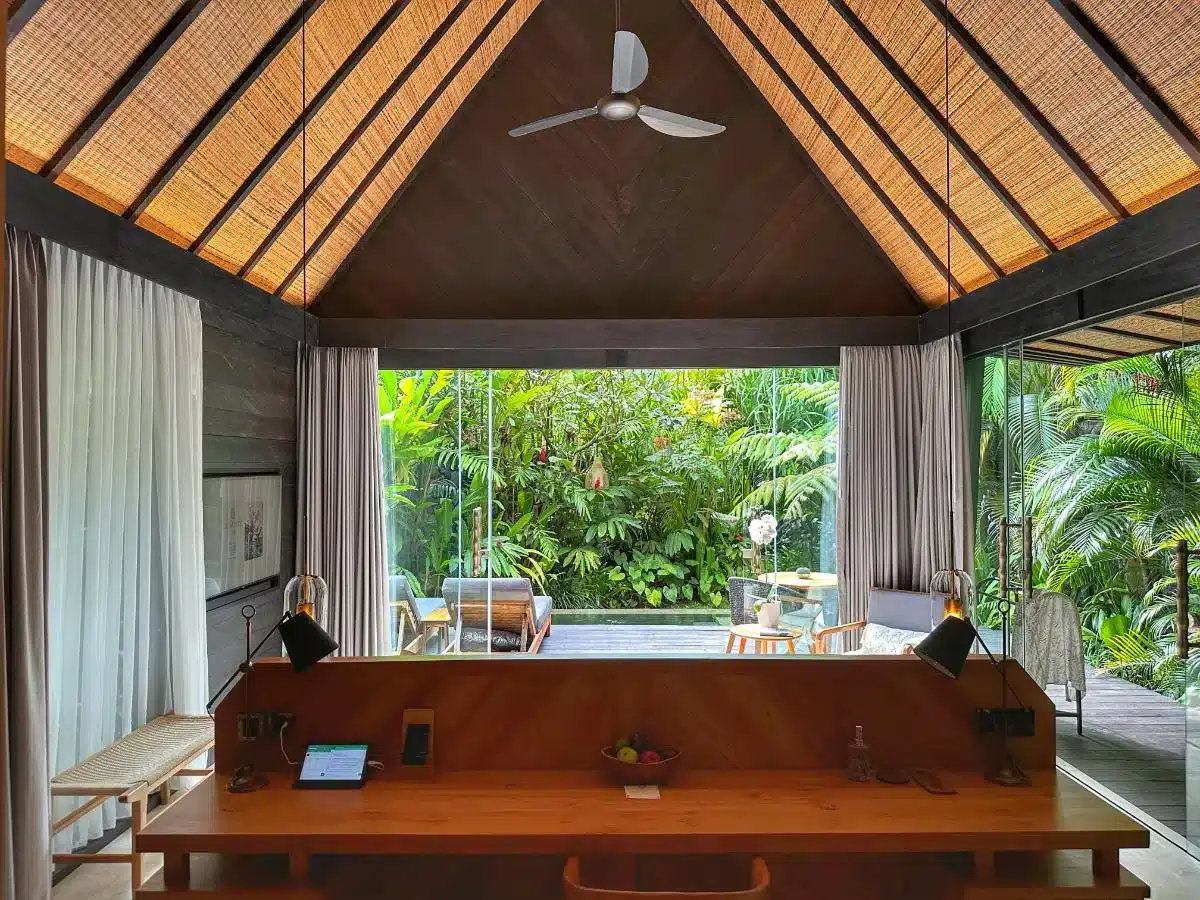
    Practical details were also clearly considered. Power outlets and light switches are conveniently placed beside the bed, which makes the room surprisingly comfortable for both relaxation and work.

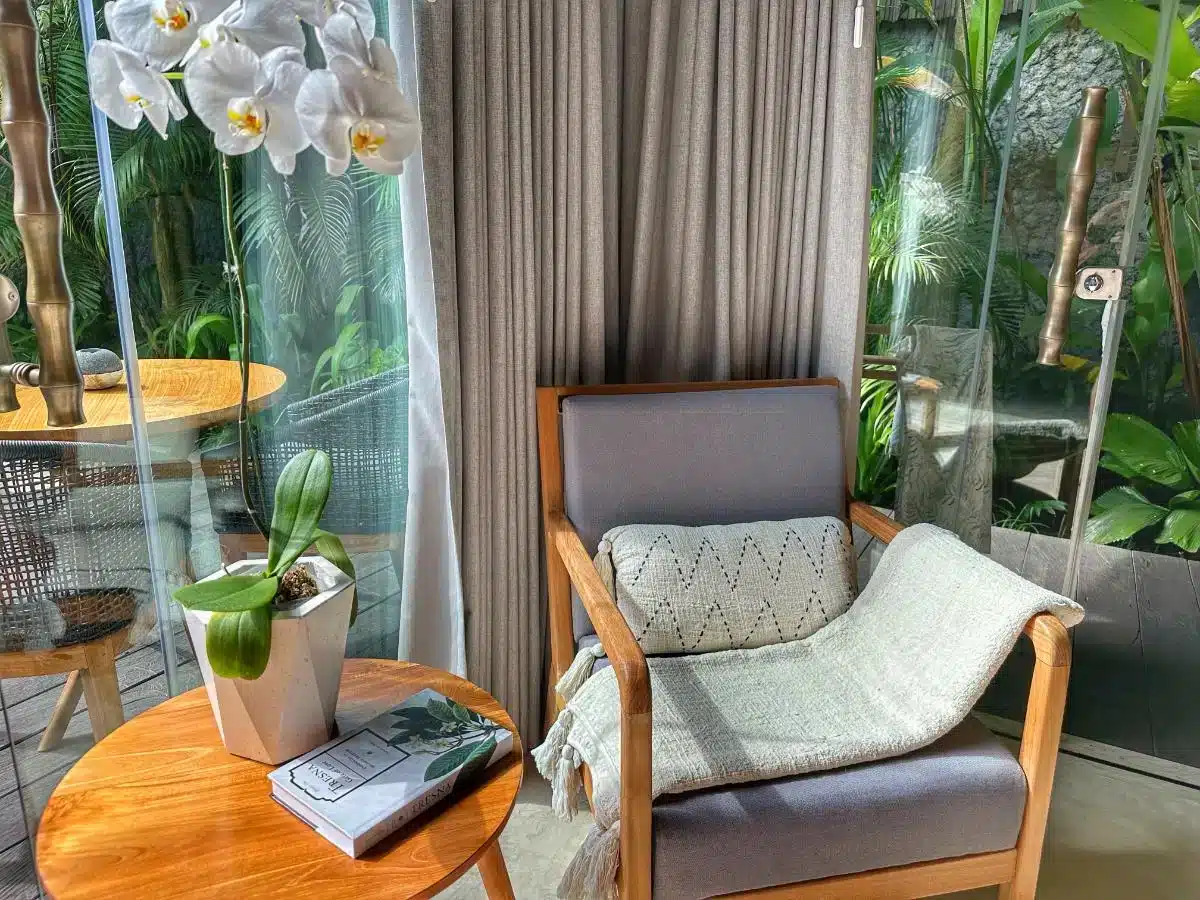
    The villa includes a smart TV with Netflix, a small desk overlooking the garden, and a comfortable chair by the window that quickly became my favourite place to sit with a book.

    A tablet connects guests to the hotel staff through a private WhatsApp group, which turned out to be one of the most convenient aspects of the stay. Anything I needed, housekeeping, food, or a quick question, was just a message away.

    The minibar was also well stocked with wines, liquors, soft drinks, coffee, and tea.

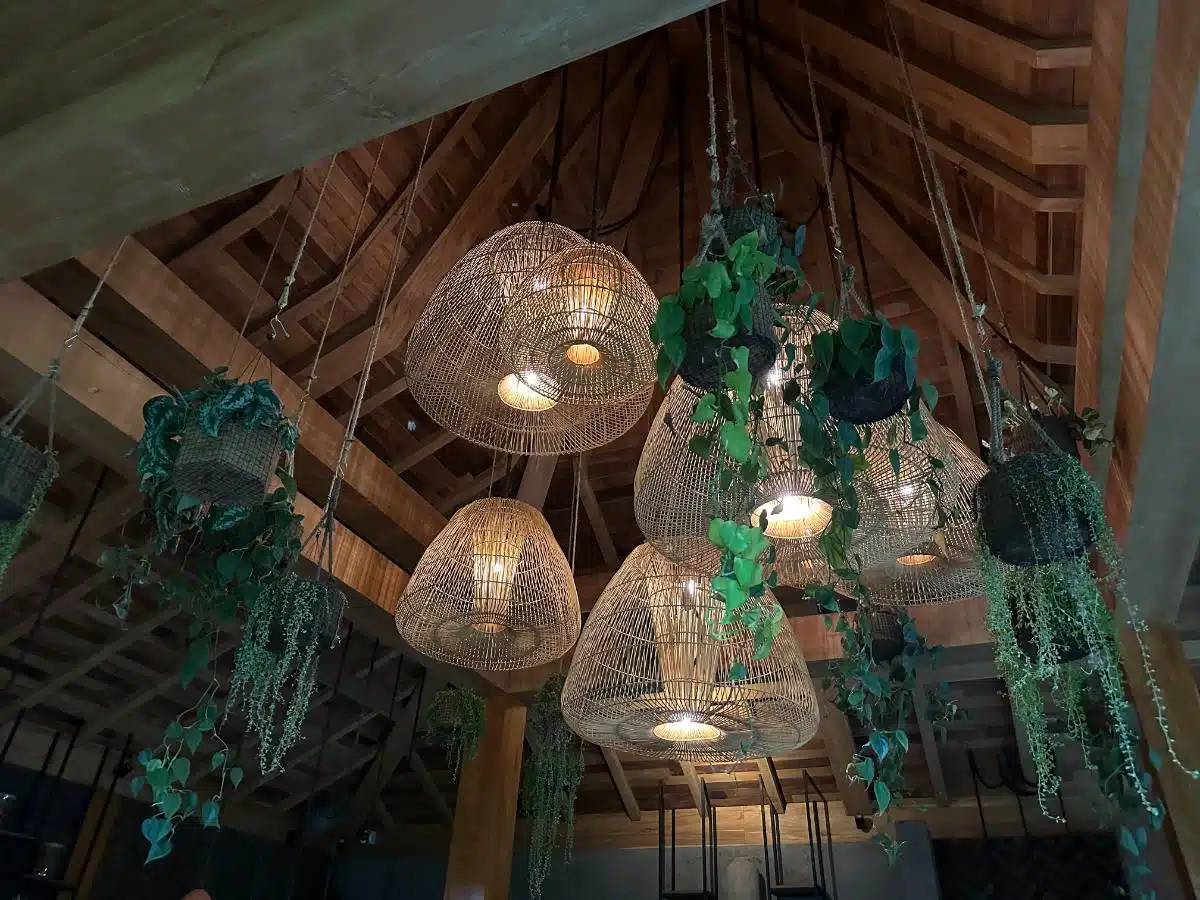
    Lighting transitions were handled well. During the day, natural light fills the villa through the floor-to-ceiling windows. By evening, the property shifts to warm, low-level lighting across the pathways and gardens, no harsh overhead spots, no blue-toned LEDs.

    Crowd density was minimal throughout my stay; the property is small enough that common areas never felt shared. The dominant soundscape was birds during the day and near-silence at night, with occasional distant temple sounds that added to rather than disrupted the atmosphere.
    Bathroom and Outdoor Bathtub

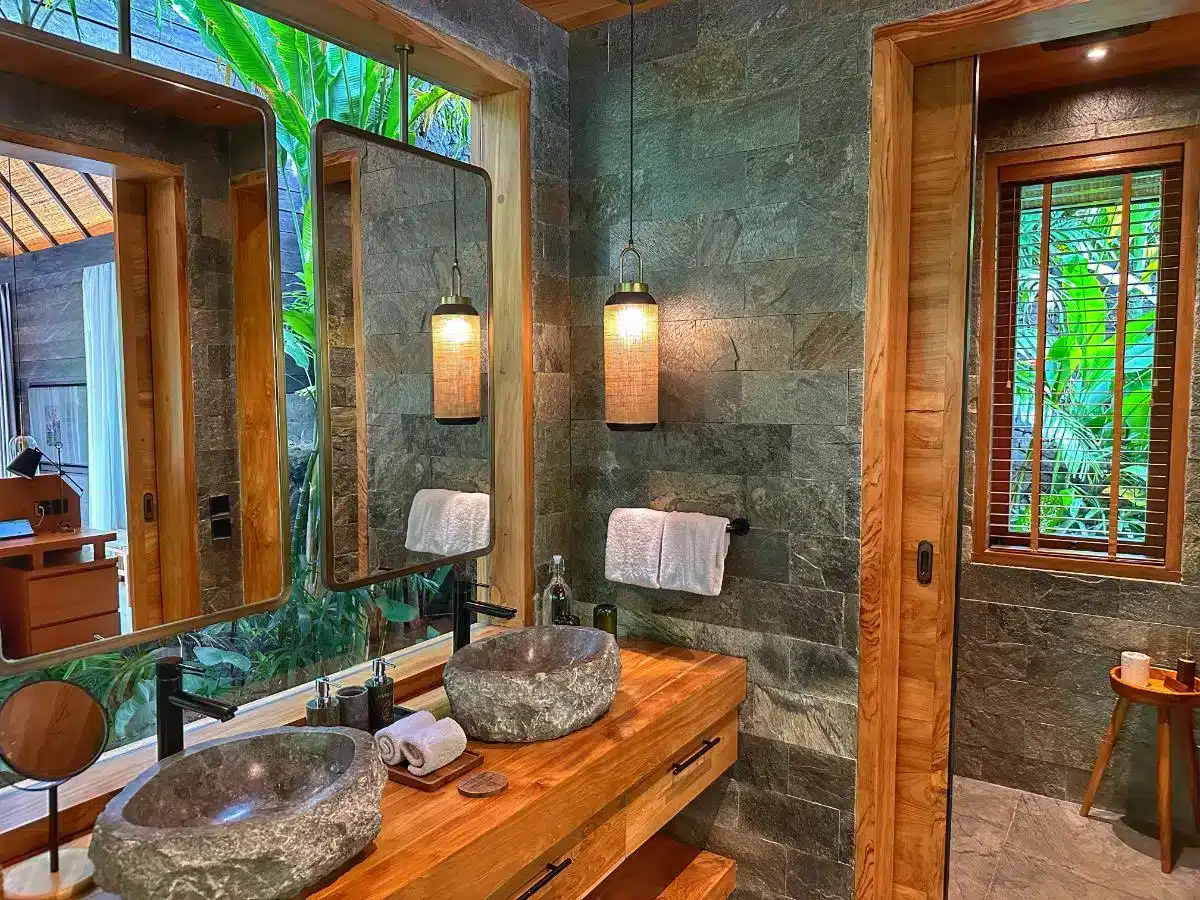
    The bathroom is spacious and thoughtfully designed.

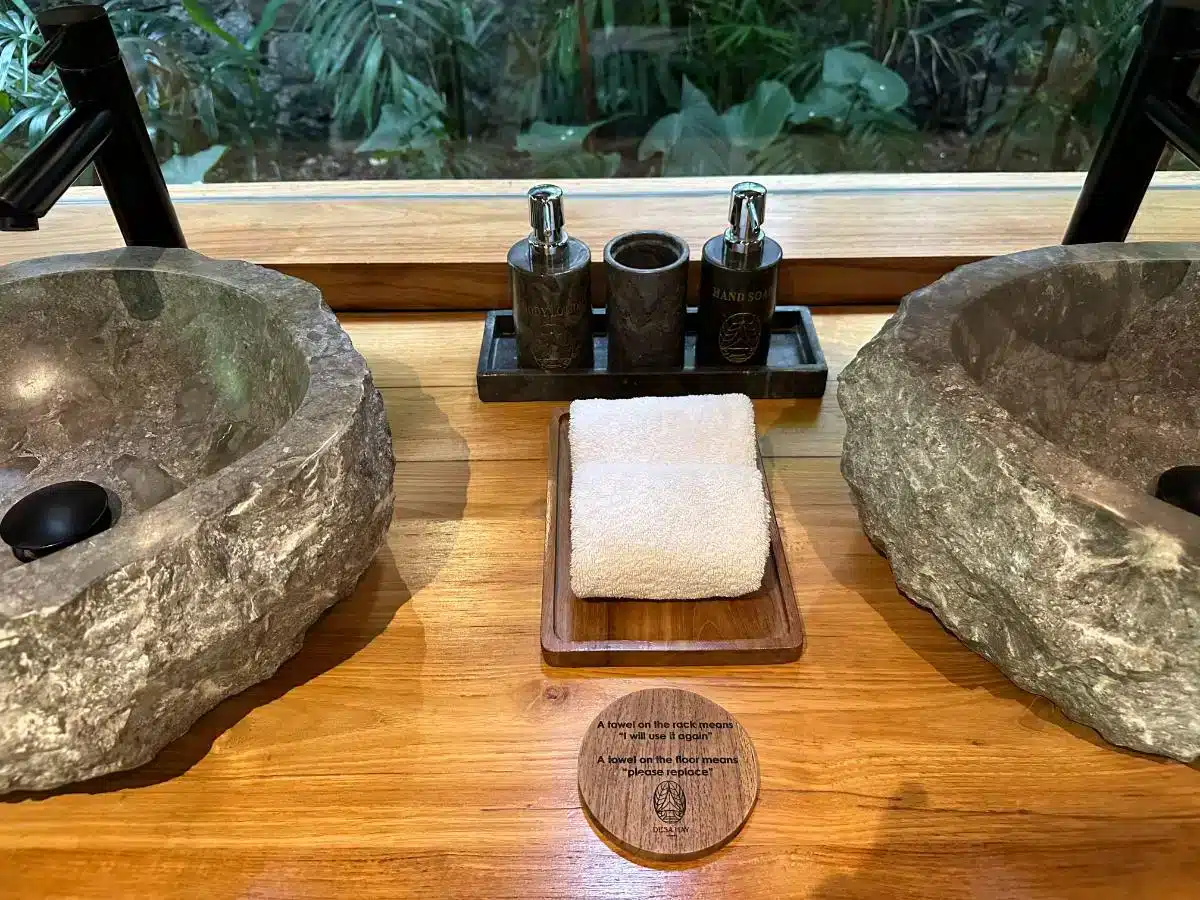
    Amenities include a bamboo toothbrush, charcoal toothpaste, natural mosquito repellent, and comfortable bathrobes.

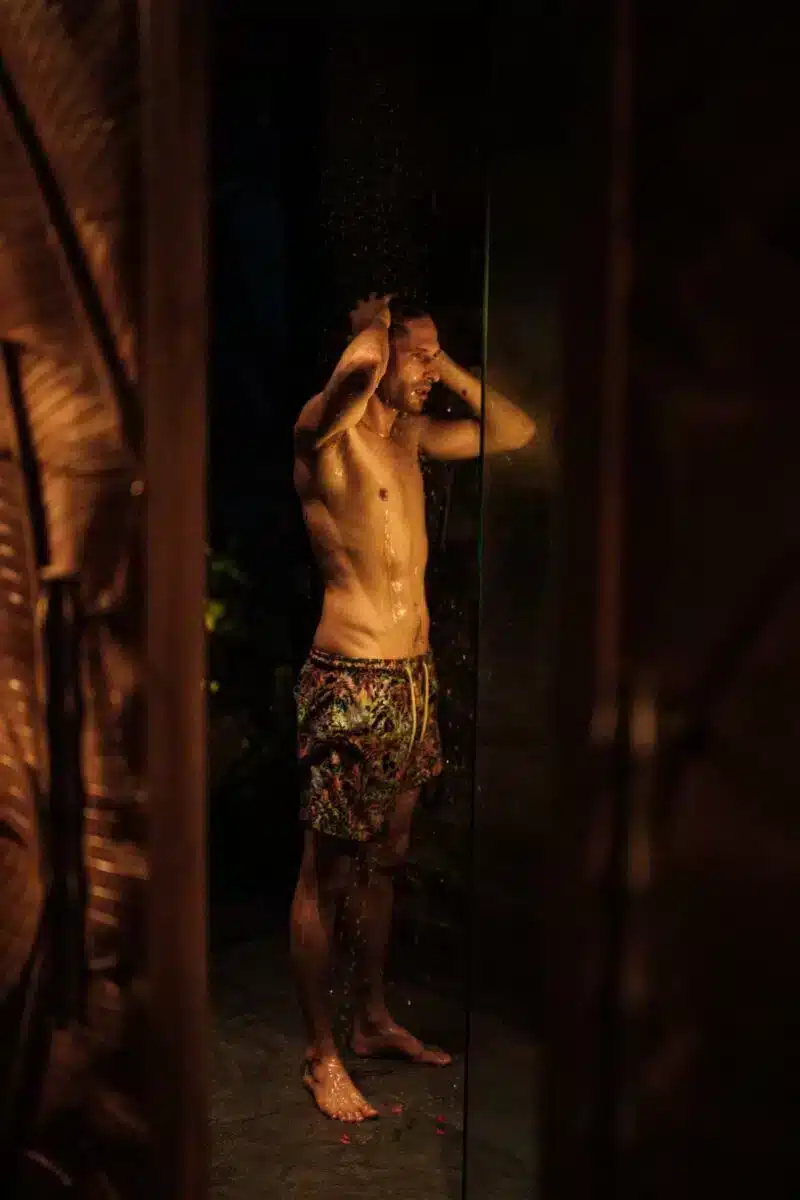
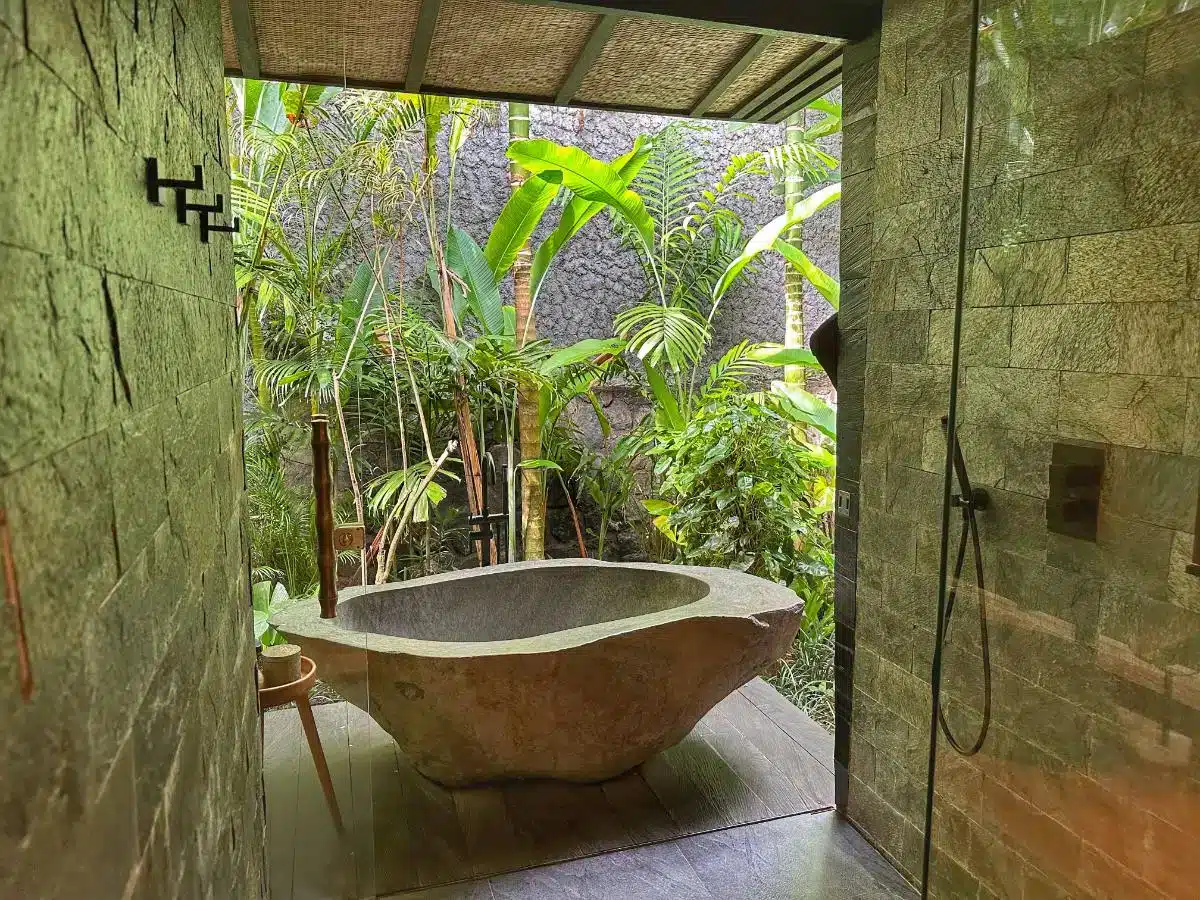
    One of the most memorable features is the shower, which opens through a glass door toward the garden. Showering here feels almost like standing outdoors in a tropical setting.

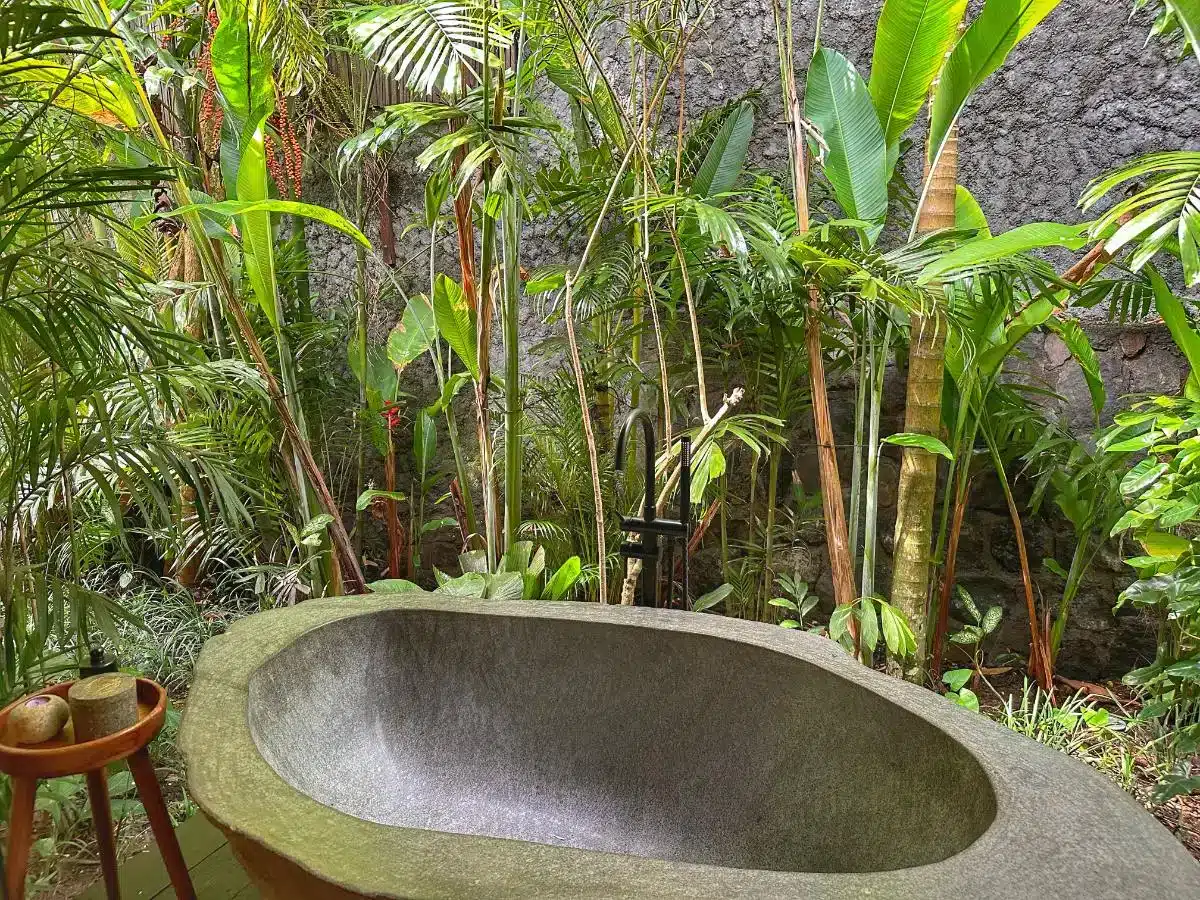
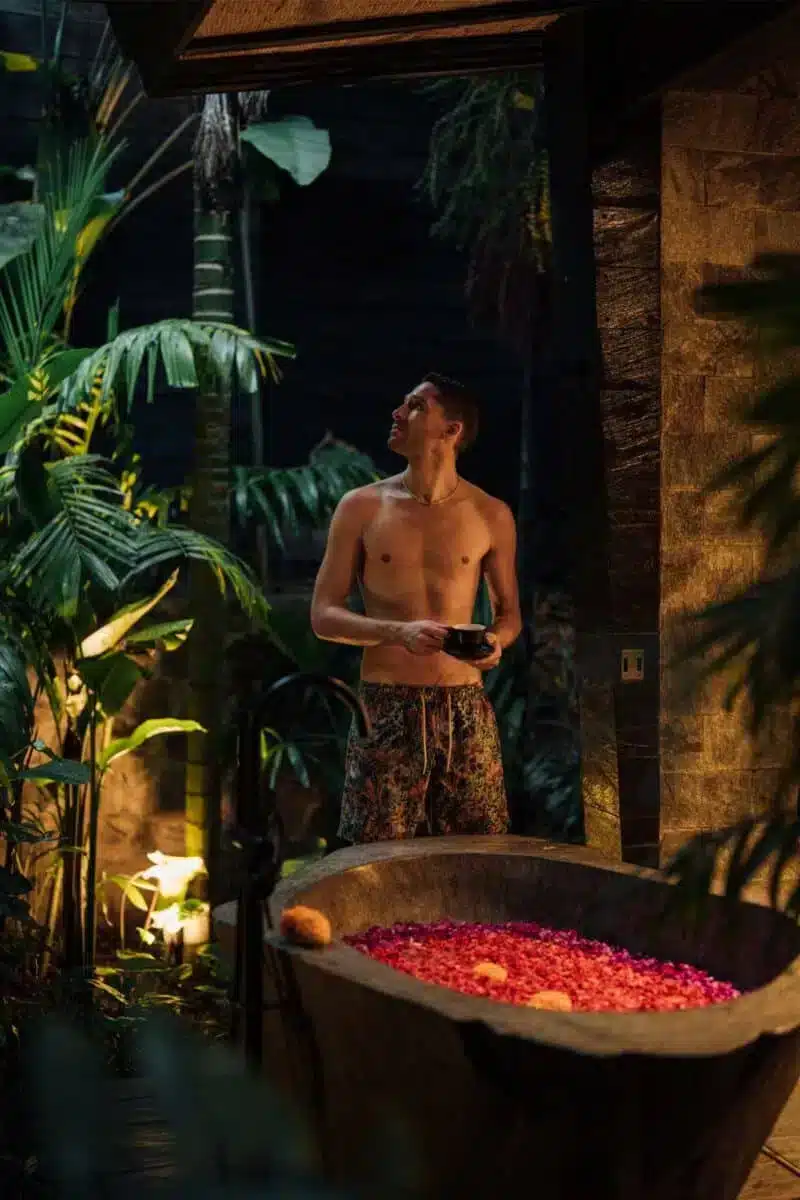
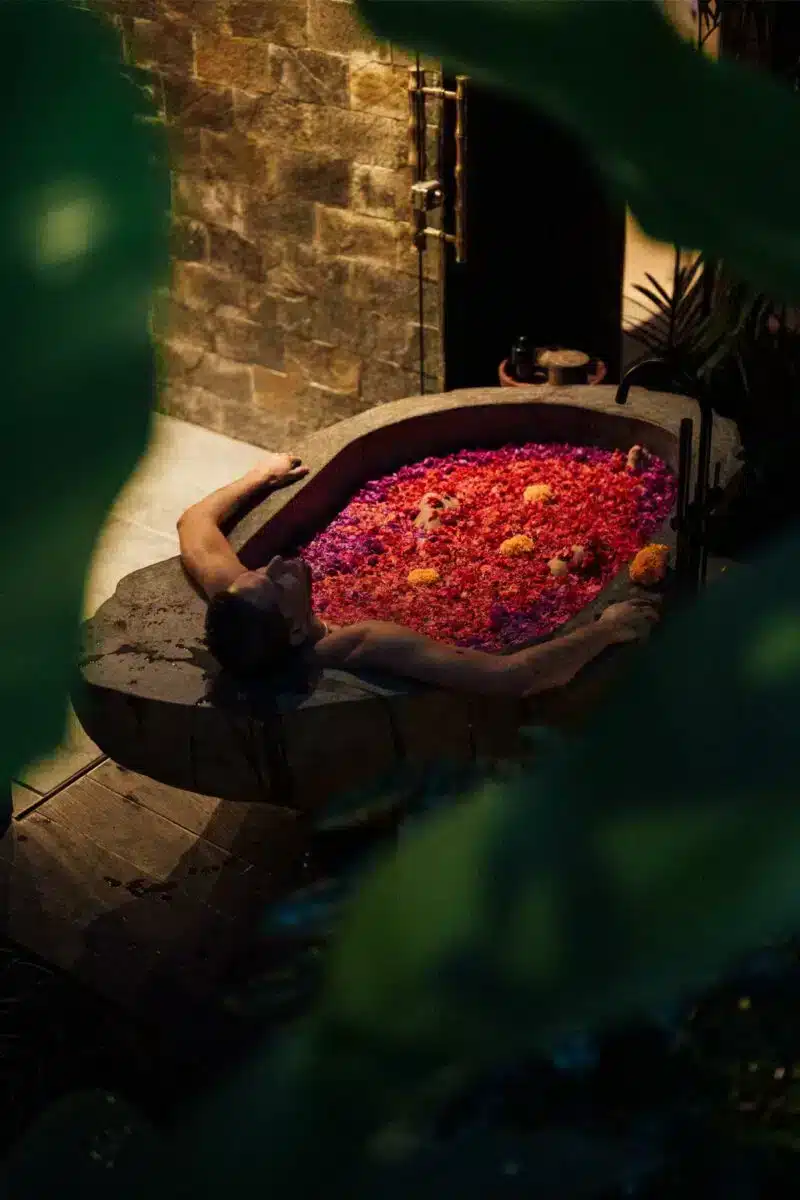
    But my personal highlight was the outdoor bathtub.

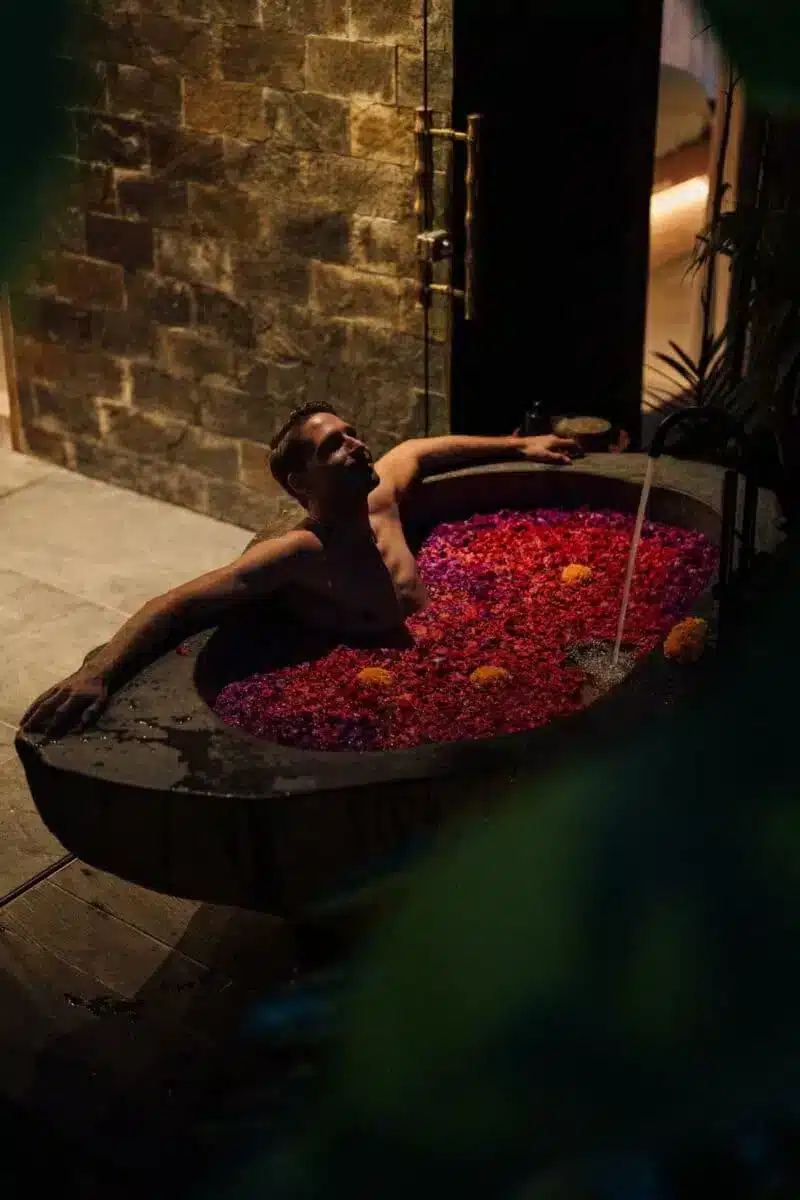
    One evening, the hotel prepared a flower bath, which turned out to be one of those classic Bali experiences that genuinely lives up to expectations.

    Warm lighting, fragrant flowers, and the quiet garden surroundings create a wonderfully relaxing atmosphere.
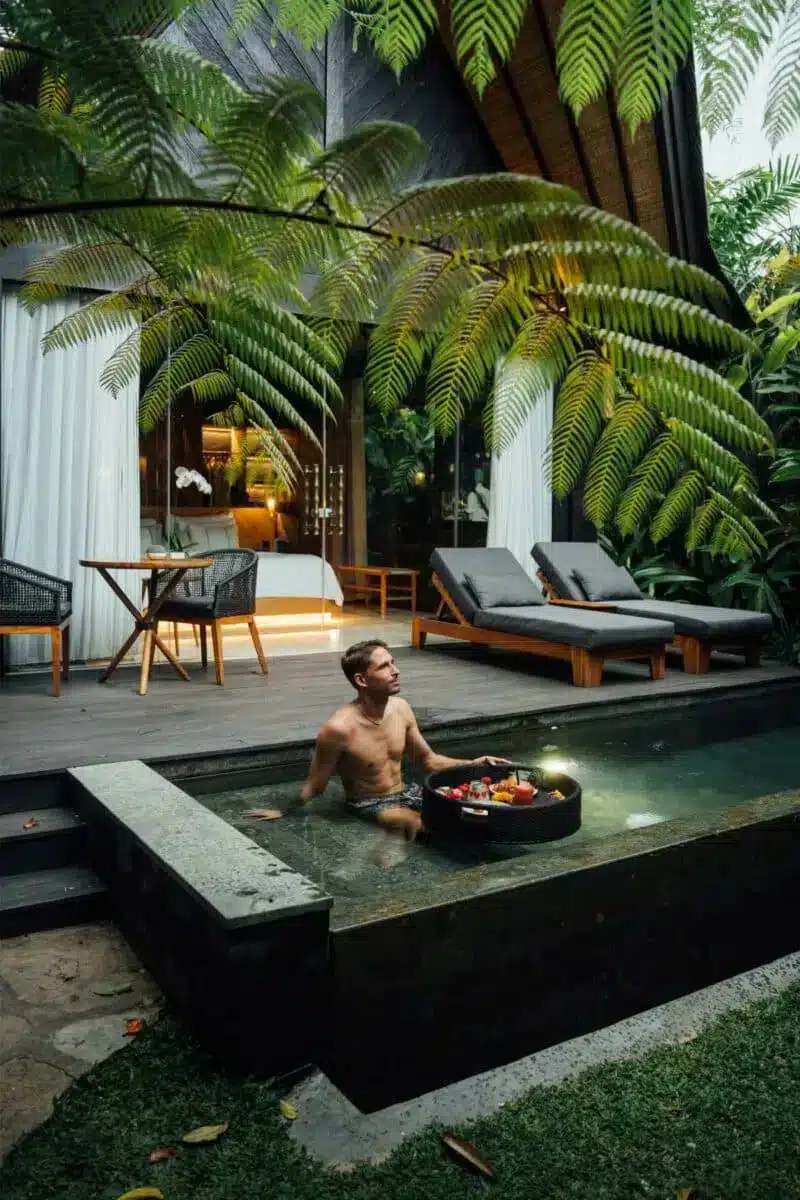
    The Private Garden and Plunge Pool

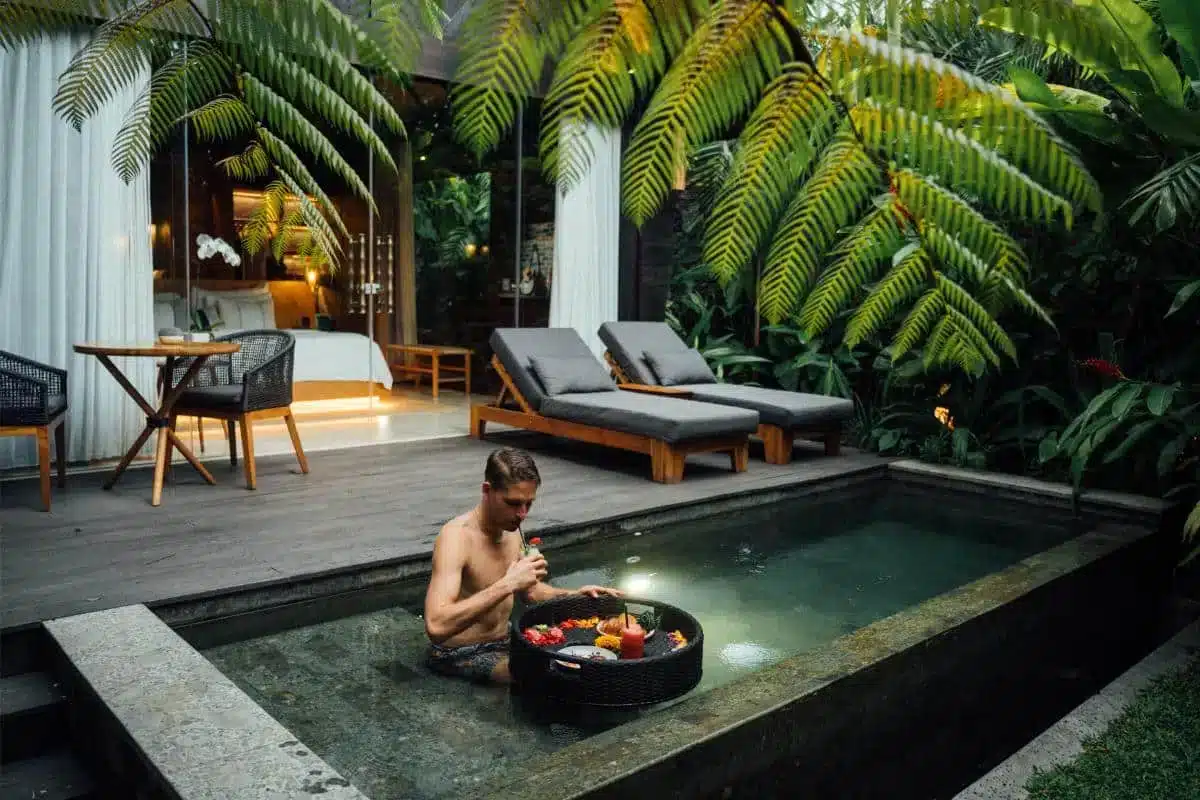
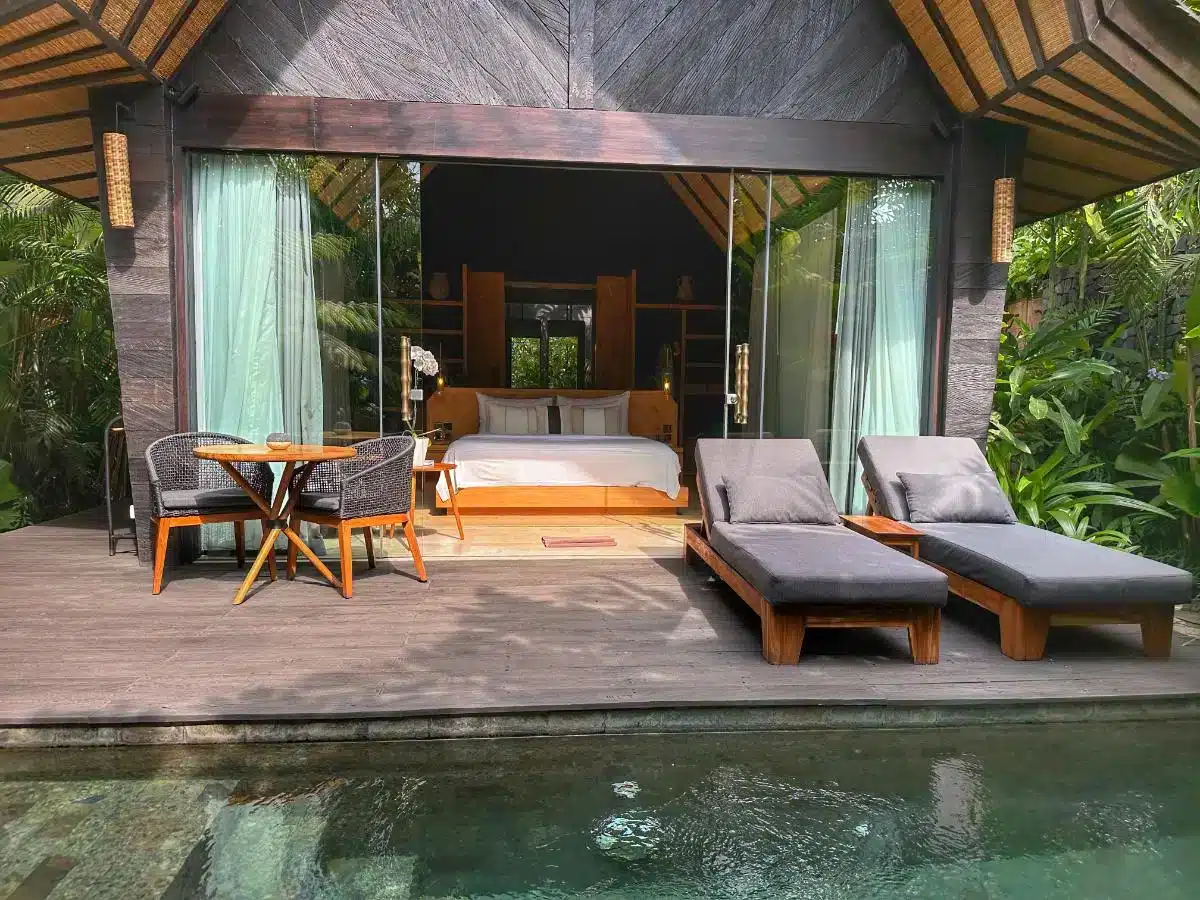
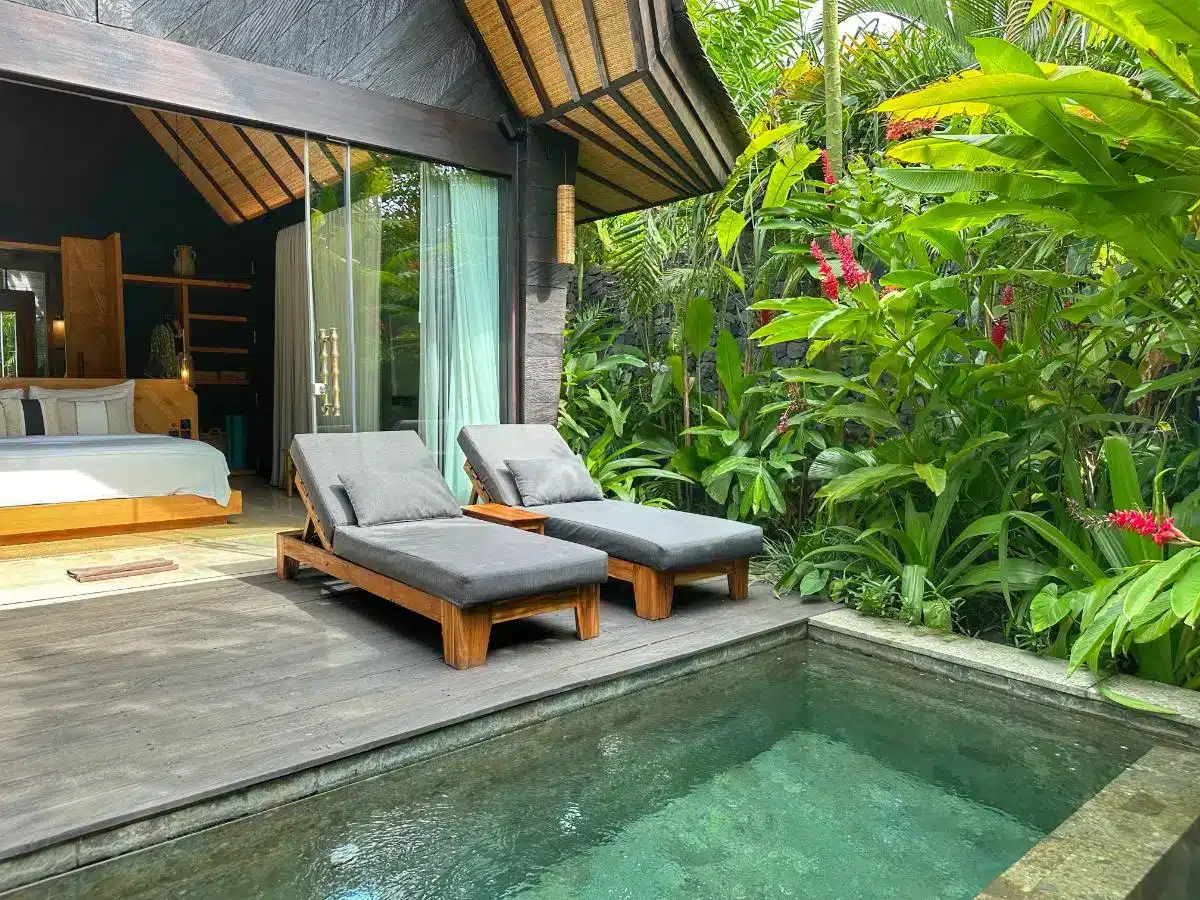
    Sliding glass doors open directly onto a terrace with sunbeds and a small table where breakfast or afternoon tea can be enjoyed.

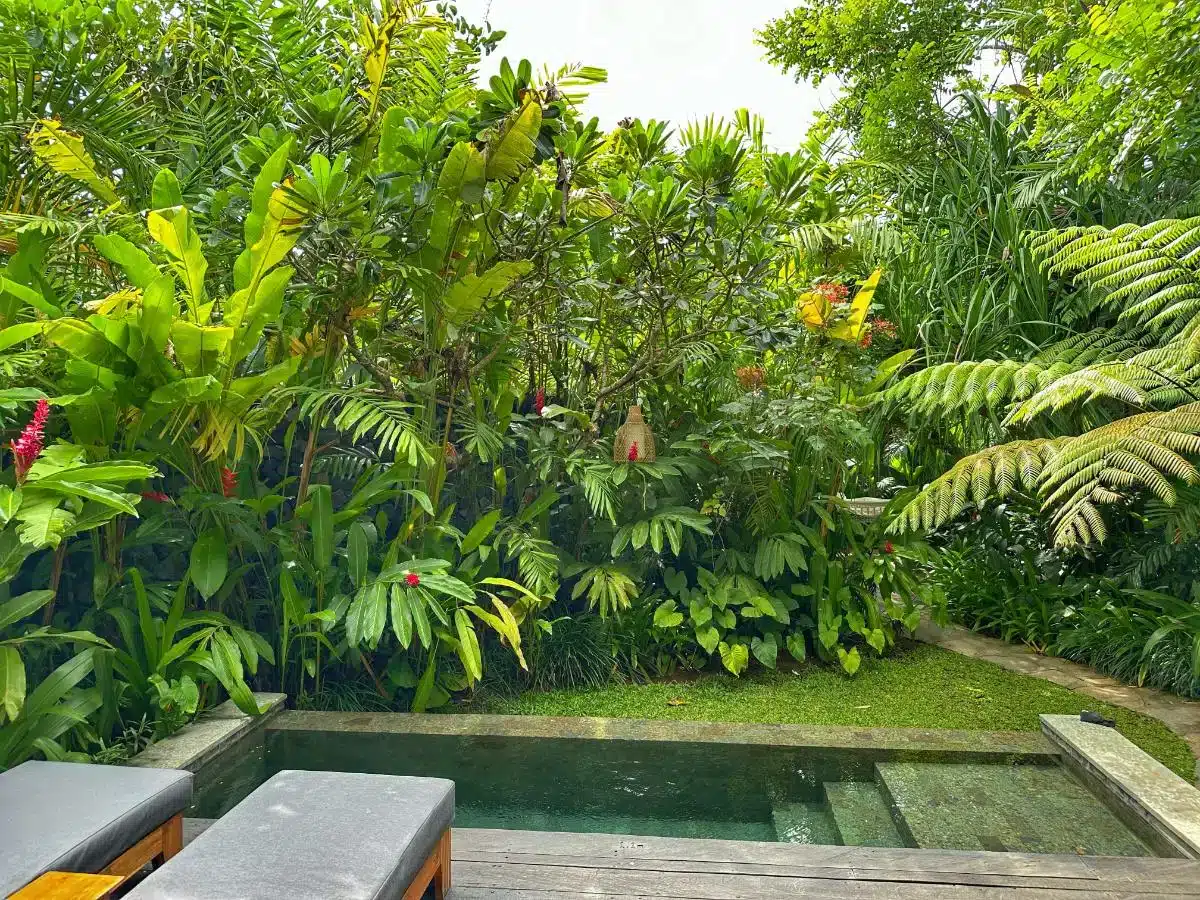
    The plunge pool sits in the middle of the garden, surrounded by lush tropical plants.

    Despite being relatively close to Canggu, it was remarkably quiet here. Most of the time, the only sounds were birds and water gently flowing over the edge of the pool.

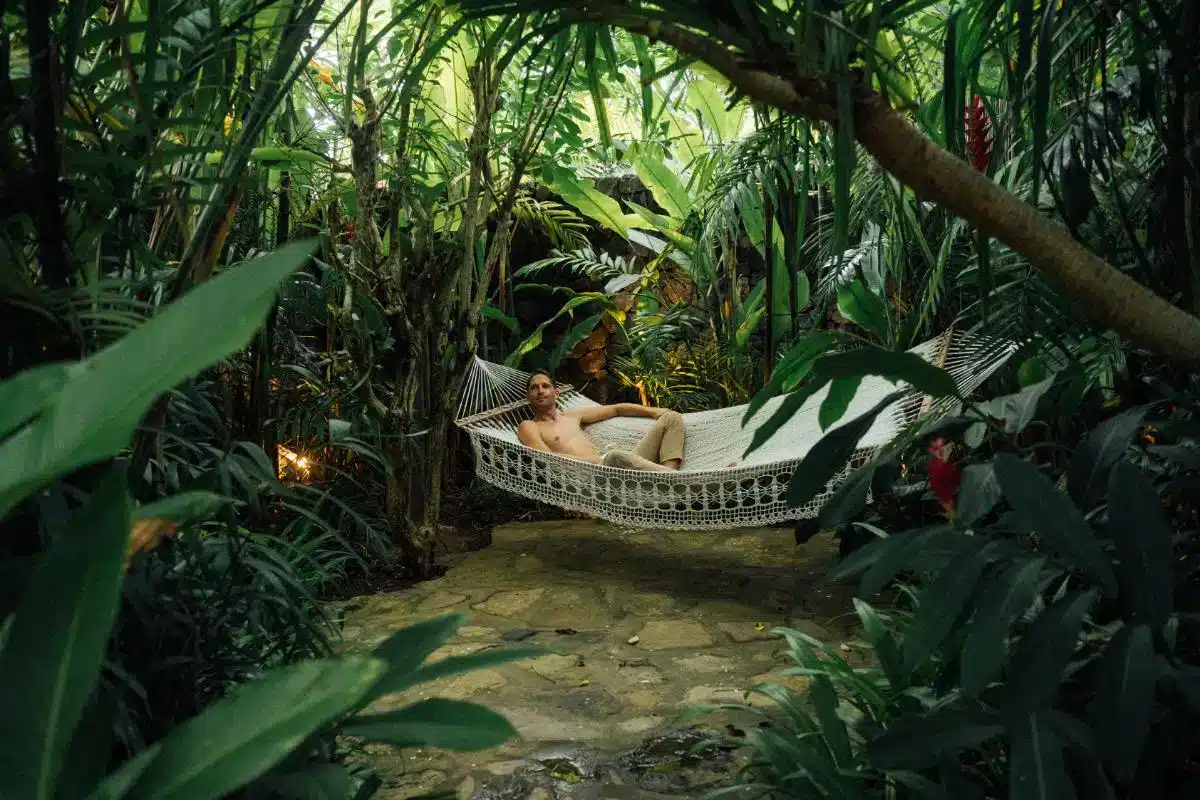
    The Premium Jabu villas also include a hammock in the garden, which quickly became one of my favourite places to relax, read, or take an afternoon nap.
    Dining at Ijo by Desa Hay
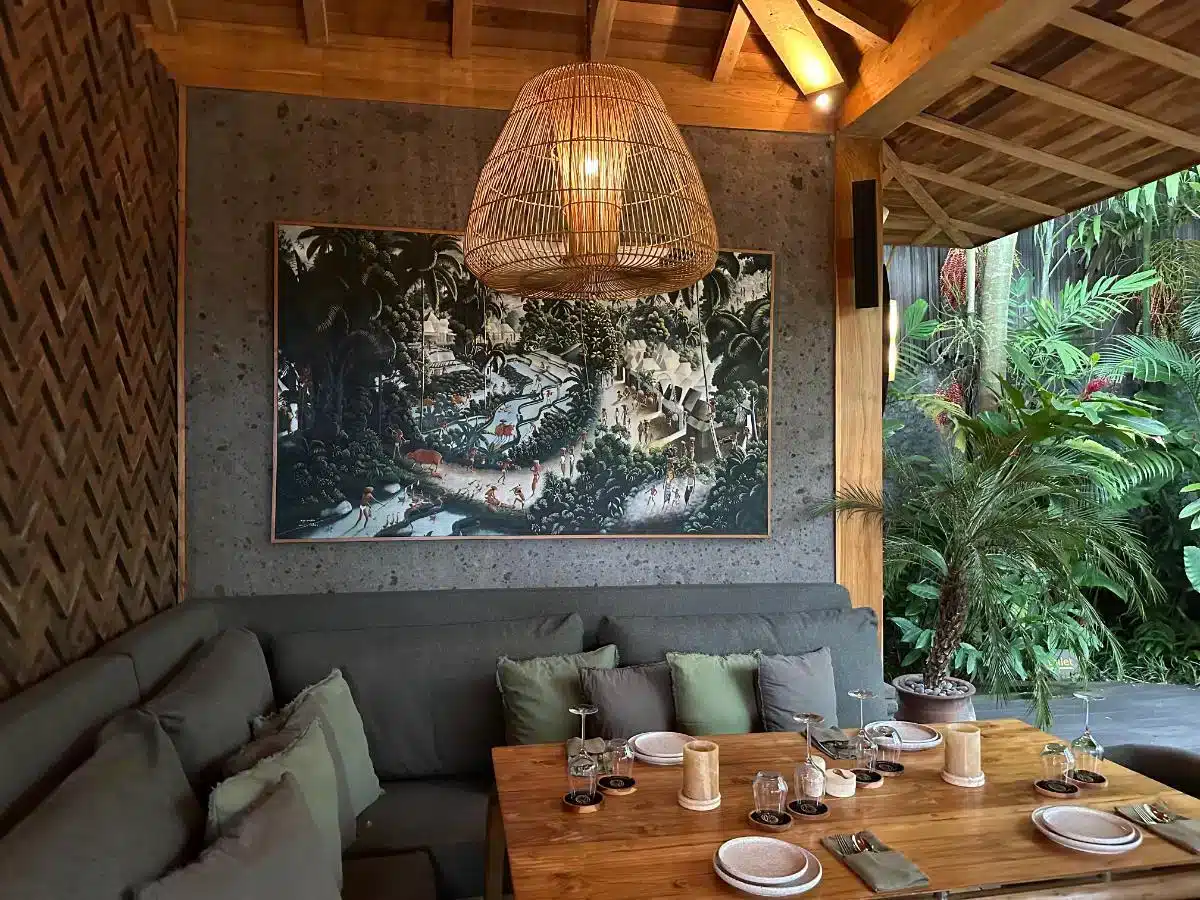
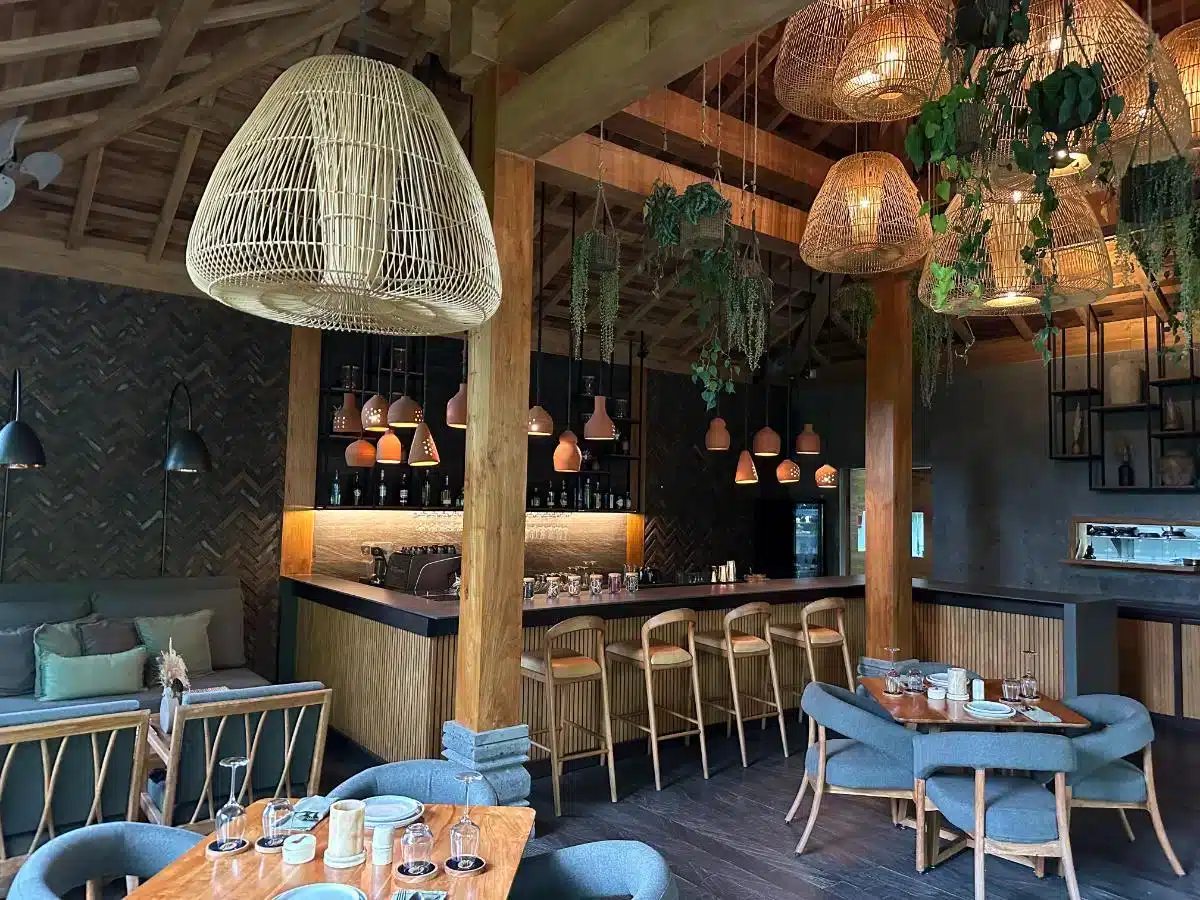
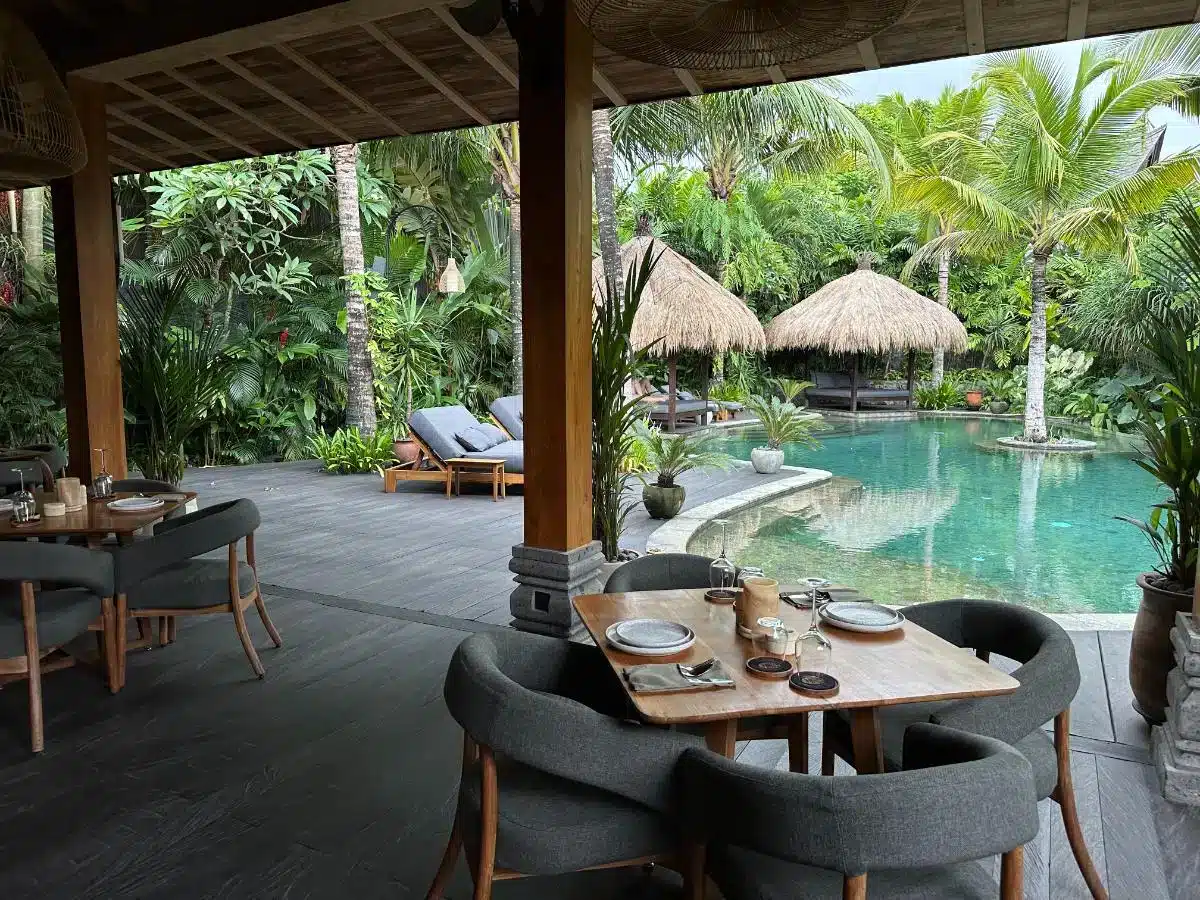
    The hotel restaurant, Ijo by Desa Hay, sits beside the pool and features a relaxed open-air design.

    For dinner, I ordered the Sulawesi grilled ribs, served with peanut sauce, tomato salad, and mashed potatoes. The meat was incredibly tender and practically fell off the bone.

    Breakfast was equally enjoyable.

    My favourite dish was sourdough bread topped with guacamole, poached eggs, and salmon, fresh, satisfying, and a great way to start the day with steady energy.

    The kitchen focuses on fresh ingredients and relatively balanced meals. For guests arriving late, lighter dishes and breakfast options make it possible to eat without feeling overly heavy.

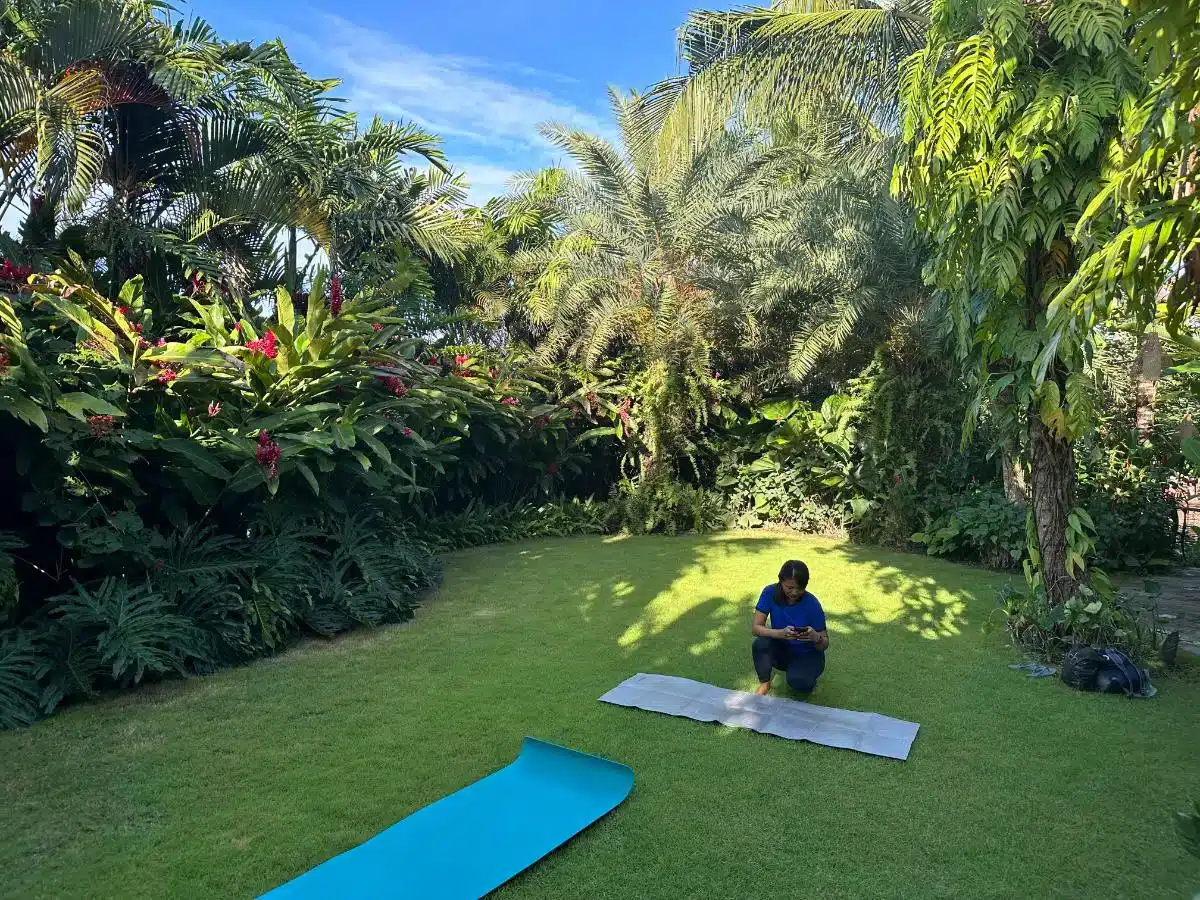
    Morning Yoga
    Guest practicing yoga on a blue mat on the green lawn surrounded by tropical garden and palm trees at Desa Hay Bali

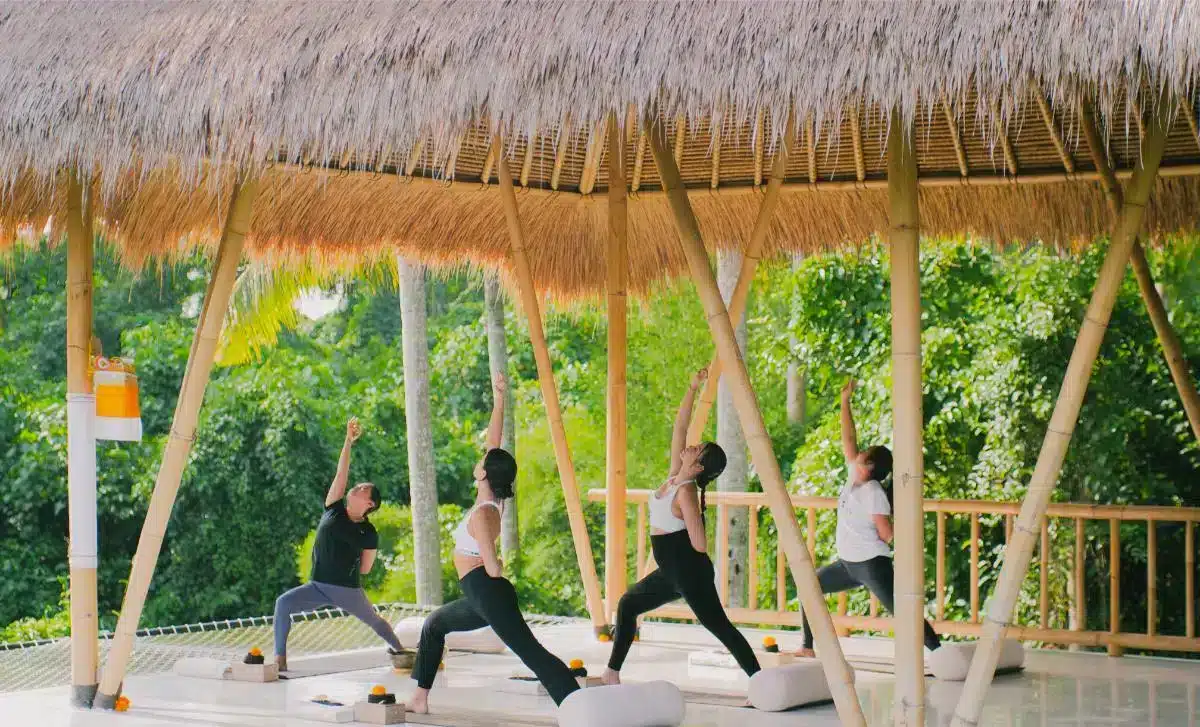
    Every morning, the hotel offers a complimentary yoga session from 8 to 9 AM.

    When the weather allows, the class takes place in the garden. If it rains, it moves to the restaurant area or sometimes to a villa space.

    The sessions are relaxed and suitable for beginners, making them a pleasant way to start the day, even if yoga is not normally part of your routine.

    Sustainability

    Guest standing on the private villa terrace with daybed and modern design elements at Desa Hay Bali

    One of the things that stood out during my stay was the hotel’s clear commitment to sustainability.

    Desa Hay integrates environmentally responsible practices into many aspects of the property.

    Some of the key initiatives include:

    • generating solar energy through 105 solar panels
    • improving water sustainability through recharge wells
    • reducing waste by focusing on recyclable and compostable materials

    The property also supports the local community through employment and educational initiatives such as scholarships.

    Recovery and Movement Infrastructure
    Desa Hay is not designed as a full wellness or medical spa destination.

    The property does not offer thermal circuits, cold plunges, or structured recovery treatments typically found at larger wellness resorts.

    Movement infrastructure is also intentionally minimal. Apart from the morning yoga sessions, there are no dedicated fitness facilities or training areas.

    However, the calm surroundings, gardens, and private villas still provide space for gentle movement, stretching, or relaxation during the day.

    Frictionless Service

    One operational detail stood out throughout my stay: communication with the staff happens through a private WhatsApp group.

    From the moment you arrive, all departments are reachable through a simple message.

    Requests are answered quickly and clearly, which removes many small logistical frictions that can interrupt relaxation during a hotel stay.

    Check-in and coordination during the stay felt smooth and straightforward, and the team was consistently attentive without feeling intrusive.

    Things to do nearby

    Although Desa Hay feels secluded, many of Bali’s well-known attractions are within easy reach.

    Nearby highlights include:

    • Tanah Lot Temple — about 21 minutes by car
    • La Brisa Beach Club — about 14 minutes by car
    • Ubud Monkey Forest — around one hour away
    • Tegallalang Rice Terraces — approximately 1 hour 20 minutes by car

    Who This Stay Is For
    Guest sitting on the edge of the bed in the Premium Jabu Villa with wooden furniture and white orchid at Desa Hay Bali

    Ideal Guest

    Desa Hay is particularly well-suited for travelers who want to stay close to Canggu while escaping its constant stimulation.

    Couples, solo travelers, and remote workers looking for a quiet villa environment where they can sleep well and slow down will likely benefit most from the setting.

    Wrong Fit

    Travelers seeking a highly social atmosphere, nightlife, or large wellness resorts with extensive spa and fitness facilities may find the property too calm.

    Verdict

    My stay at Desa Hay was genuinely restorative.

    Sleep quality was excellent, the private villa design created a peaceful environment, and the quiet gardens made it easy to slow down and unwind.

    Energy throughout the stay remained stable thanks to comfortable accommodation, balanced meals, and the calm surroundings.

    For travelers who want to enjoy Canggu without being immersed in its constant energy, Desa Hay offers a thoughtful balance between accessibility and tranquility.

    At $200–350 per night, the value proposition is strong. You’re not paying for a spa programme or fitness centre, you’re paying for privacy, sleep quality, and an environment that genuinely allows you to switch off. For what it delivers, the price is fair and competitive against comparable boutique properties in the Canggu area.

    You leave feeling relaxed rather than needing another vacation to recover.
    Premium Jabu Villa exterior at night showing the thatched roof warm interior lighting and wooden architecture at Desa Hay Bali

    Frequently Asked Questions

    Book Desa Hay Bali

    From ~$200/night for a Premium Jabu Villa with private plunge pool near Canggu.

    What is the Restorative Index score for Desa Hay Bali?

    Desa Hay Bali scores 88 out of 100 on the Restorative Index, a wellness hotel evaluation framework that measures six dimensions: Sleep Architecture (30/30), Environmental Calm (20/20), Nutritional Impact (14/15), Bioregulation and Spa (7/15), Biomechanics and Movement (7/10), and Frictionless Operations (10/10). The score reflects a property that excels in sleep quality and operational smoothness, with room for growth in its spa and movement programming.

    Is Desa Hay Bali worth the price?

    Desa Hay Bali is positioned in the upper-mid range for Bali wellness properties, with premium pool villas starting around $350–450 per night. For what you get, an exceptional sleep environment, high-quality plant-forward cuisine at Ijo restaurant, daily yoga, and genuinely peaceful surroundings just minutes from Canggu, it represents strong value compared to ultra-luxury wellness resorts in Bali that charge $800+ for similar fundamentals. The property justifies its price through substance rather than spectacle.

    How far is Desa Hay Bali from Canggu and the airport?

    Desa Hay is located approximately 10 minutes from central Canggu by scooter or car, giving guests easy access to restaurants, cafés, and surf beaches while remaining in a quiet, rice-field setting. Ngurah Rai International Airport is roughly 45–60 minutes away, depending on traffic. The hotel can arrange private airport transfers.

    What makes Desa Hay Bali different from other wellness hotels in Bali?

    Desa Hay stands apart through its design-led approach to restorative wellness. Rather than offering a lengthy spa menu or clinical treatments, the property embeds wellness into the architecture itself, natural ventilation, blackout-capable rooms, open-air living spaces, and a layout that encourages walking and stillness. The on-site restaurant Ijo serves plant-forward cuisine with ingredients sourced from local farms, and the daily yoga program is included. It appeals to travelers who want wellness woven into the stay rather than sold as add-on packages.

    Does Desa Hay Bali have a spa?

    The property’s wellness proposition centers more on environmental design, sleep quality, and nutrition than on a traditional spa experience. Guests seeking extensive spa facilities may want to complement their stay with visits to nearby Canggu wellness centers.
    Disclaimer: I was a guest at Desa Hay Bali. As always, my opinions are solely my own.

  • The Anam Cam Ranh (Nha Trang) Review: Is It Worth It? (2025)

    The Anam Cam Ranh (Nha Trang) Review: Is It Worth It? (2025)

    Tim’s Take: Sprawling, multi-pool resorts typically prioritize entertainment over genuine restoration. Danielle enters the massive Anam Cam Ranh to evaluate whether a classic five-star property can still anchor the nervous system, or if the sheer scale of the resort dilutes the escape.

    The Anam Cam Ranh warmly welcomes guests from the moment they arrive at the luxurious resort with its chic colonial charm and perfectly manicured sweeping grounds.

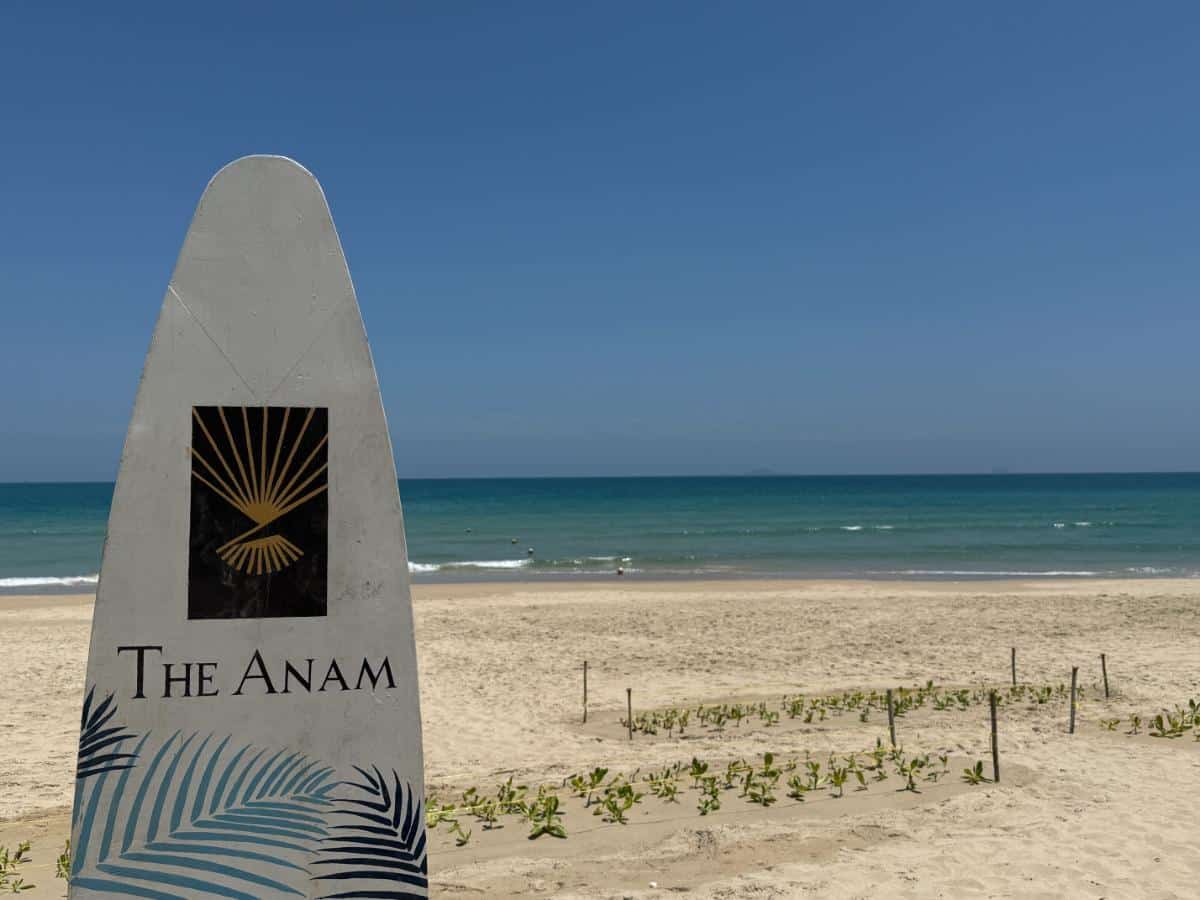
    Just 15 minutes from Cam Ranh International Airport, this five-star resort is tucked away from the busy centre of Nha Trang, fronting the calm waters of Cam Ranh Bay, with a beautiful expansive sandy beach, fresh ocean breeze, and lush tropical gardens.

    The hospitable Vietnamese service at The Anam ensures a welcoming and relaxing experience from the very beginning.

    The resort’s commitment to exceptional service is evident in each and every interaction with the attentive and friendly staff. From the concierge to housekeeping, every staff member is focused on quality guest services. 

    The Anam leaves guests wanting for nothing, providing a plethora of activities, dining options, natural attractions, swimming pools, wellness experiences, and room choices – a stay here is truly an escape from the everyday.

    A room with a view

    The Anam has 75 villas, 96 rooms, and 40 premium suites, each carefully designed featuring local materials like teak wood and handmade fabrics.

    Guests can choose from various room types, including mountain view, ocean view, and pool view, depending on what you would like your outlook to be.

    All rooms are equipped with modern amenities such as air conditioning, private balconies, and luxurious bathrooms, ensuring a comfortable and indulgent stay. 

    For our visit, we enjoyed a stay in the sea view villa, a wonderful room choice within easy walking distance of all guest facilities.

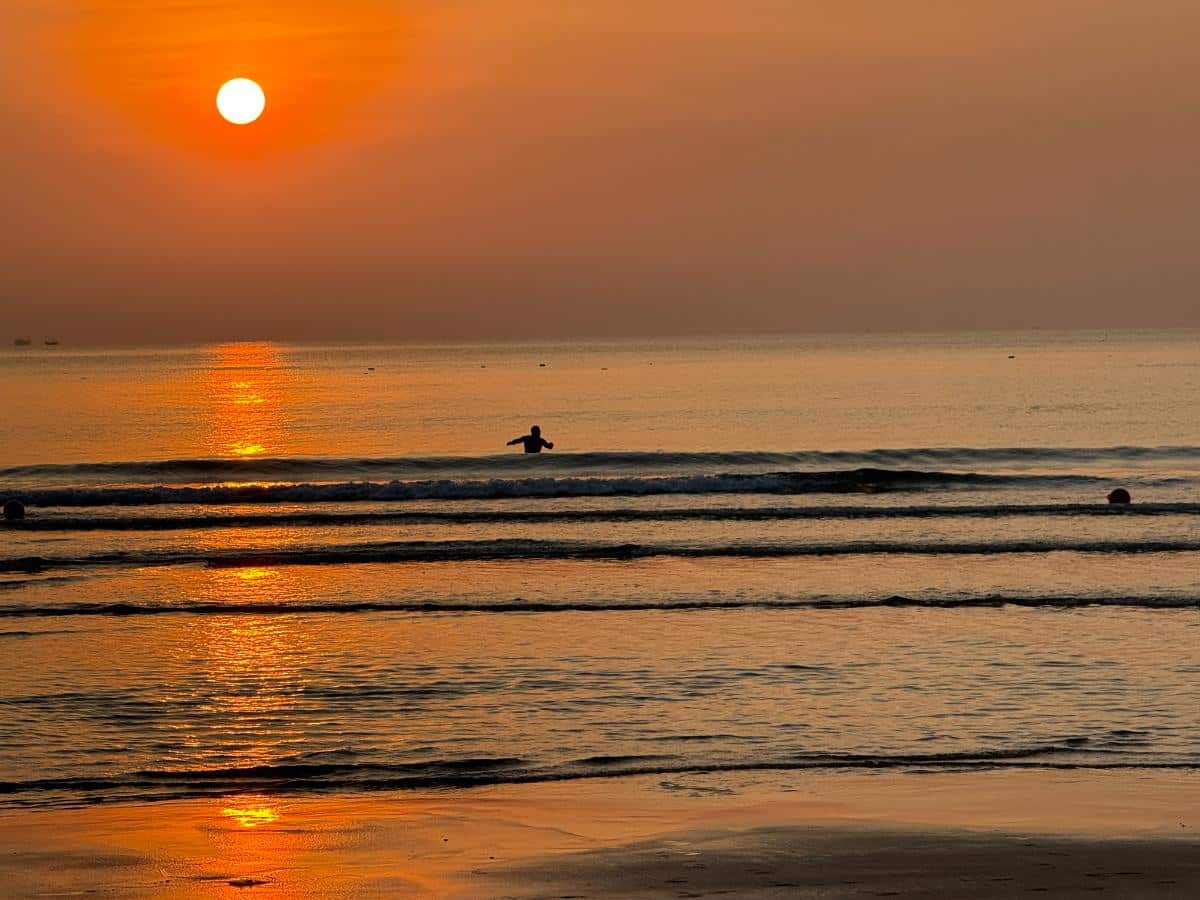
    The room was spacious with a king-sized bed, tastefully tiled floors, a stunning bathroom complete with a deep-soak bathtub, and an expansive balcony with outdoor seating and a breathtaking view of the beach, including the magical sunrise.

    The room has all the essentials for a comfortable stay, in-room robes and slippers, extensive bathroom amenities, complimentary fruit and kombucha, free wi-fi, a large smart TV, and complimentary drinking water.

    It is easy to relax and sleep in the comfort of the villa with plenty of space to unwind.  The window seat is the perfect place to nap in the balmy tropical weather or curl up for some quiet time with a book.

    There is a workspace great for remote work, travel planning, and calls to home, and the balcony is a great spot to enjoy an evening drink as the sun dips into the ocean.

    From Pho to Fine Dining

    Culinary experiences at The Anam are outstanding and include 3 restaurants, a beach club, and a bar, all serving some of the finest dishes and drinks in the country.

    There is the French-inspired fine dining restaurant, which serves an exceptional degustation or a la carte dinner menu; an all-day dining venue for eastern and western standards; a Vietnamese restaurant and bar with all the traditional favourites; a classic bar for drink and snack; and a beach bar for sandy feet and happy hour cocktails.

    Guests can also enjoy in-room dining at their leisure. The impeccable service continues throughout the hospitality venues, and nothing is too much to ask, with dietary requirements accommodated and special requests considered. 

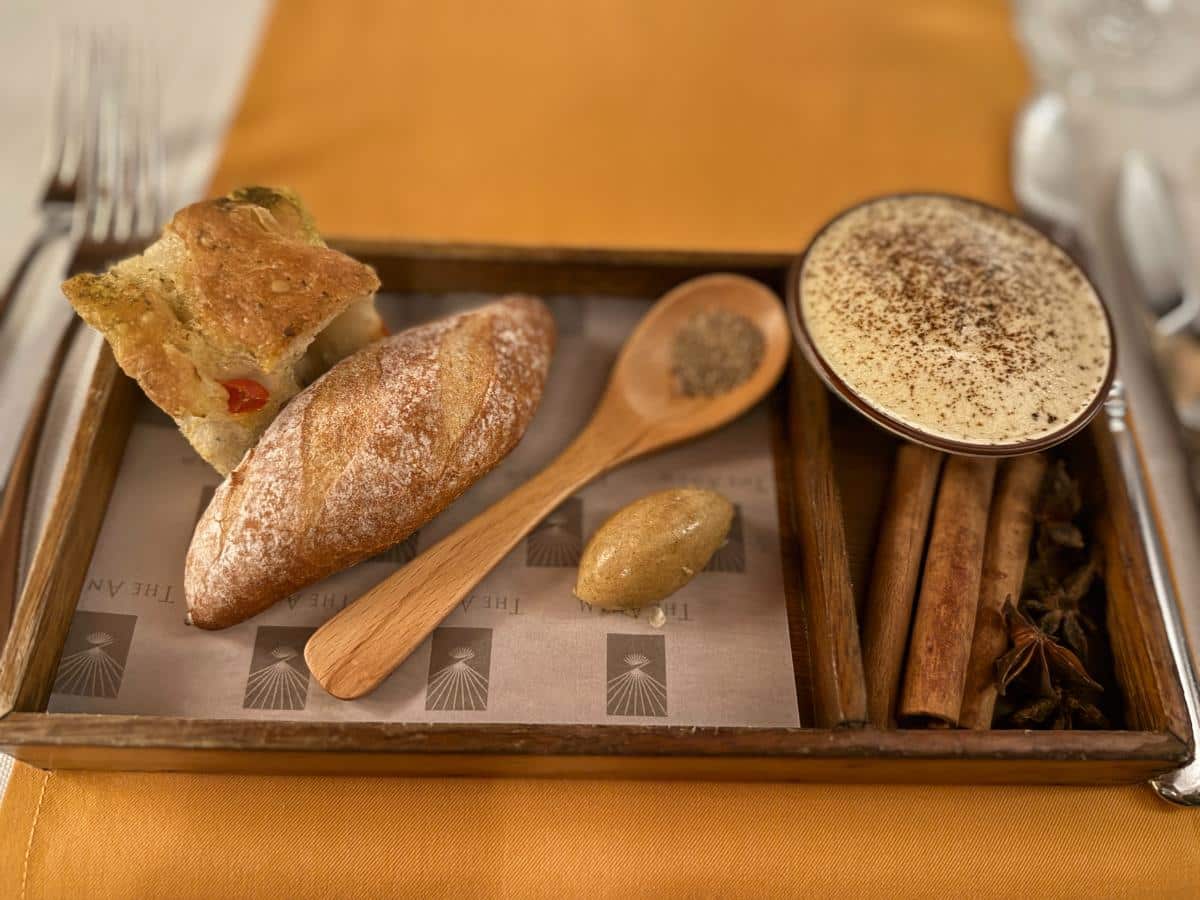
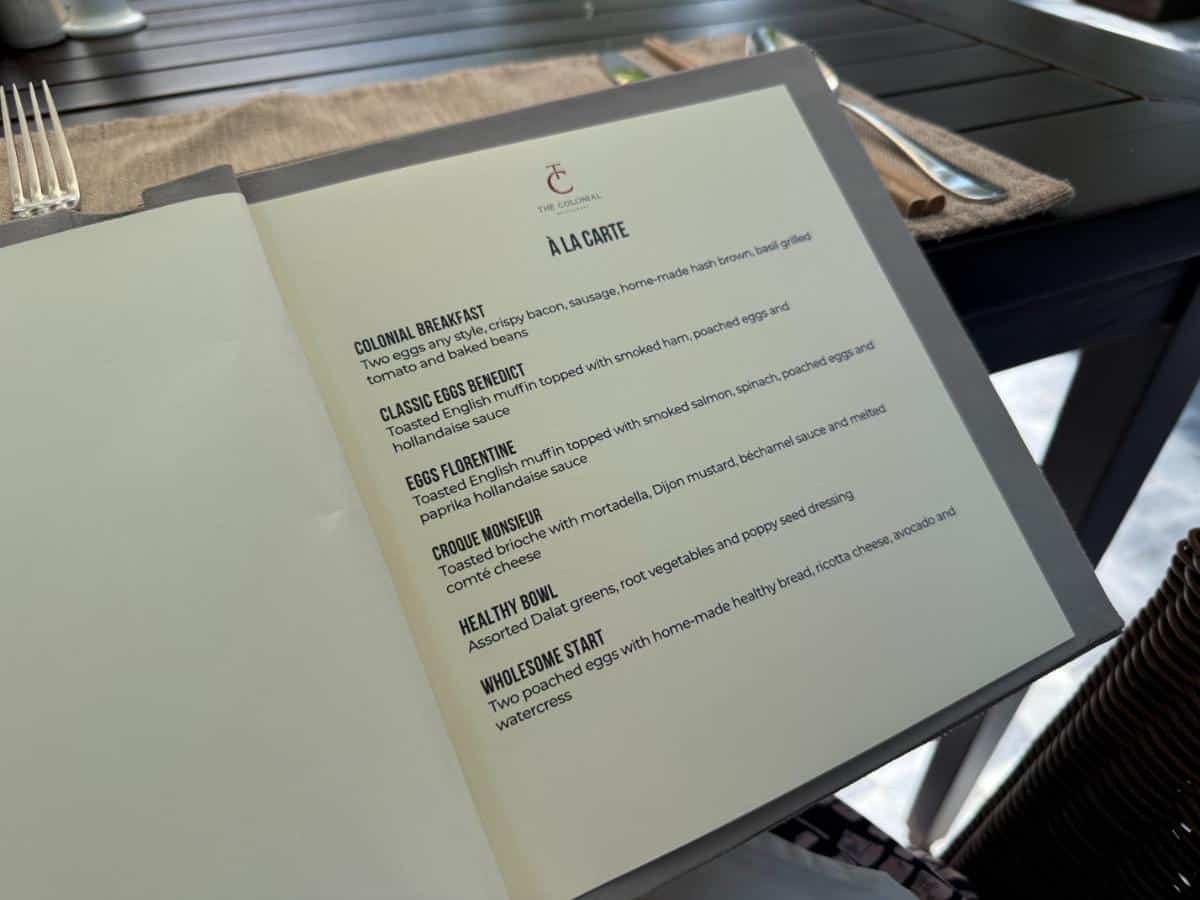
    The Colonial breakfast buffet is simply a spectacular way to start the day with a buffet of pastries, breads, spreads, fruit, and cereals supported by an extensive à la carte breakfast menu.

    All served with a selection of tea and coffee and an optional breakfast mimosa! Guests can enjoy indoor and outdoor dining under umbrellas on the Colonial patio or in the restaurant.

    Never a Dull Moment from Sunrise to Sunset

    The Anam provides a wide range of activities. With three spacious swimming pools, a fitness centre, a tennis court, mini golf, and water sports equipment rentals, there’s no shortage of recreational options.

    Guests can enjoy the on-site movie theatre, as the first resort in Vietnam to feature a 3D movie theatre that caters for up to 60 people with a wide selection of movies screened daily. An outdoor cinema on the lawn is also organised when the weather permits.  

    The Anam Spa

    For those seeking relaxation, the Anam Spa has a 10-treatment-room spa that offers a range of services, including massages and facial treatments.

    In addition to the standard treatment rooms, there are four VIP rooms for couples, a beauty salon, a relaxation lounge, steam rooms, saunas, and outdoor jacuzzis.

    This is certainly a great place to start your stay to release all the stress of the outside world. There are regular yoga classes on site and a full program of tours that take guests to some of the surrounding attractions and towns. 

    A sprawling plot of land within the resort grounds has been transformed into a thriving kitchen garden called The Anam Farm. This patch features vegetables, herbs, and fruit, grown organically and harvested for the property’s kitchens. Guests are welcome to wander through the gardens and meet the animals that live on the farm.

    Classic resort feels with a contemporary, luxury edge

    The Anam Cam Ranh stands out as a serene and luxurious retreat that captures the essence of Vietnam’s rich cultural heritage and the benefits that make resort stays so desirable.

    Its combination of colonial design, high-quality amenities, and outstanding service makes it an ideal destination for travellers seeking both relaxation and a true escape.

    Whether lounging by the pool, indulging in gourmet cuisine, or taking advantage of the beautiful beach, guests will leave here fully revitalised and recharged. 

    Disclaimer: Danielle was a guest at The Anam Cam Ranh. Her opinions, as always, are solely her own.

  • Luxury You Can Feel: How Design, Light & Ritual Turn a Stay into a Reset

    Luxury You Can Feel: How Design, Light & Ritual Turn a Stay into a Reset

    Tim’s Take: Former investment banker Jay McHale realized that standard five-star hotels and corporate towers are aesthetically polished but biologically depleting. He explains how intentional environmental design, using light, acoustic rhythm, and ritual, can actually trigger a parasympathetic downshift and anchor the nervous system out of chronic fight-or-flight.

    Ten years ago, I found myself lying on the snow, unable to move, staring up at a sky I was not sure I would ever see again.

    A near-fatal ski accident stopped me cold in every sense of the word. Until that moment, I had lived by the “work hard, play hard” mantra.

    I was an investment banker and serial entrepreneur, chasing achievement during the week and adrenaline on weekends. On paper, it looked like success. Inside, it felt hollow.

    The accident left me with a realization I could not ignore. I had been living on autopilot. My environments were polished but not nourishing.

    Corporate towers, luxury hotels, crowded clubs. They all looked impressive, but did nothing to restore me. When the pace slowed and the distractions fell away, I was left with a question I had been avoiding:

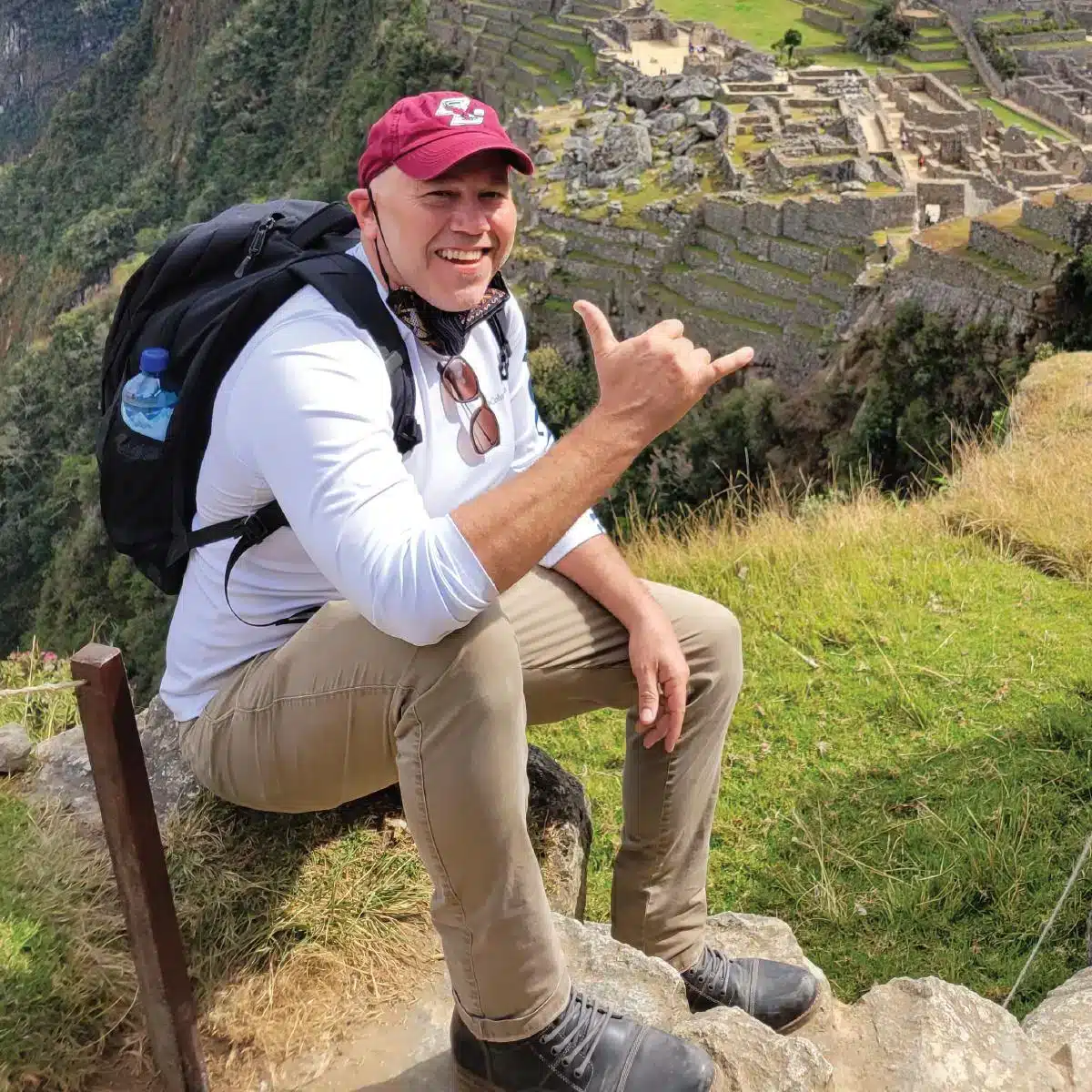
    Jay McHale founder of FlowVeda sitting on a rock with a backpack giving a shaka hand sign with Machu Picchu ruins in the background

    What does it actually mean to live well?

    That question sent me on a decade-long search that reshaped not only my life but also my understanding of wellness.

    I immersed myself in different philosophies, spent time in restorative spaces, and studied how intentional environments can shift our inner state. What I found was simple yet profound.

    The design of a space, its rhythm, its flow, its invitation to pause, can either keep us in stress and distraction or open the door to presence and connection.

    In spaces created with wellbeing at their core, I noticed how my nervous system responded. My breath deepened. My thoughts quieted. My sense of self expanded.

    Sometimes it was the stillness that worked, sometimes the natural surroundings, sometimes the shared rituals with others on the same path. But always, it was intentionality, the conscious choice to create an environment that nurtures rather than depletes, that made the difference.

    That realization has become the foundation of my work. When I founded FlowVeda, I wanted to bring the principles of restorative travel and wellness design into daily life.

    Our flagship Ayurvedic nootropic was created not just as a supplement, but as a catalyst for presence, awareness, and focus. Paired with mindset tools and practices, it allows people to carry a piece of that retreat state into ordinary settings, whether at a desk at work, during a busy commute, or in the morning routine at home.

    Because here is the truth. We should not have to fly across the world to feel whole. Travel can spark transformation, but it is what we integrate into our everyday lives that sustains it.

    Important Wellness Trends

    Through this journey, I have observed several important trends shaping the future of wellness travel and restorative hospitality:

    1. Integration over escape. People are no longer satisfied with short-term relief. They want to return home with tools, habits, and perspectives that keep the benefits alive long after the trip ends.

    2. Design as therapy. From the architecture of a retreat center to the layout of a hotel room, design is no longer about aesthetics alone. It is about creating environments that regulate our nervous systems and invite us to slow down.

    3. Purpose-driven connection. The most powerful experiences do not just restore the individual. They foster community, belonging, and alignment with values. Guests want meaning woven into every part of their stay.

    My own recovery taught me that environments are not neutral. They shape how we think, feel, and show up in the world.

    When we enter a space built with intention, we can experience a shift that feels almost alchemical. We remember what it feels like to be present. We reconnect to our deeper purpose.

    Looking back, my accident could have marked the end of my story. Instead, it became the beginning of one where wellness is no longer an afterthought, but the organizing principle of my life and work.

    Today, whether through FlowVeda or through sharing my journey, my mission is to help people break free from autopilot and create conditions inside and out that allow them to thrive.

    Wellness travel showed me what was possible when environments are designed for healing. Now, my focus is on making that possibility accessible in everyday life. Because the true measure of a retreat is not how relaxed you feel while you are there. It is how much of that presence, clarity, and balance you carry home with you.

    For me, well-being is no longer about chasing intensity or achievement. It is about designing a life, and spaces within it, that invite us to live fully awake, aligned, and on purpose.

    Wellness retreats & brands redefining recovery: contribute to Beyond the Spa. Partner with us→

  • Sacred Ascension Journeys: Walking the Path of Renewal

    Sacred Ascension Journeys: Walking the Path of Renewal

    Tim’s Take: The wellness retreat space is splitting into two lanes — clinical biohacking on one side, deeply experiential journeys on the other. Miss Sayé Yabandeh’s Sacred Ascension Journeys sits firmly in the second. Her retreats in Costa Rica, Mongolia, and Bali blend energy medicine, ceremony, and community into something closer to pilgrimage than a spa week.

    Her language is unapologetically spiritual, and that won’t land for everyone. But the most transformative wellness experiences I’ve come across rarely fit neatly into a category — and that’s usually the point.

    As a global humanitarian, award-winning actress, and energy medicine facilitator who has guided thousands across more than ninety-five countries, I have come to understand something essential: healing is not only found in clinics or ceremonies, but in the way we journey through the world.

    Travel itself can be a sacred teacher, a mirror, and a medicine.

    Healing is not only found in clinics or ceremonies, but in the way we journey through the world.

    I was not born into silence. I was born into a world of noise, of conflict, of rushing feet and restless minds.

    My earliest memories are of sirens and the trembling ground of the Iran–Iraq war. In first grade, while other children sat at school desks, I learned to read and write from a single hour of television programming each day—because bombs shook the walls too fiercely for classrooms to remain open.

    And yet, even then, even in the midst of rubble and fear, I felt a current running through me. A song beneath the chaos.

    A reminder that there is something more enduring than destruction. That song became my compass, carrying me far beyond borders, into both the brightest and darkest places of this world.

    A Journey Through Contrasts

    Life gave me contrasts so stark that sometimes I wondered if I was living several lives at once. I have lived in palaces and I have walked through ruins.

    I have stepped off private jets into the arms of luxury, and moments later, leapt on horseback to play polo in the world’s most prestigious arenas—the sport of kings and queens.

    I have shared meals with presidents, sat in circles with villagers, and stood on stages as an actress, weaving human stories for the world to see.

    Years ago, Sir Richard Branson crowned me Woman of the World, with words I shall never forget: “From a knight to a queen.” It was more than an honour. It was a reflection, reminding me that the true crown rests not upon the head, but within the heart.

    I have seen it all—the glitter, the grief, the victories, the wounds. And I came to understand that none of these outer forms are the destination.

    They are merely passages. What endures is how we carry ourselves through them—with grace, with compassion, with love.

    The Birth of Sacred Ascension Journeys

    From all these experiences arose a vision. As I travelled, I began to weave the threads together: the chants of Himalayan monks, the desert prayers whispered by women around firelight, the laughter of children in jungles, and the ancestral medicines that pulse through every culture.

    I recognised something profound—travel could be far more than escape. It could be pilgrimage. It could be a path of renewal. It could be a living ceremony.

    And so Sacred Ascension Journeys came into being. Not as retreats in the usual sense, but as sanctuaries where the soul can remember itself.

    What We Do on These Journeys

    In Costa Rica, Mongolia, Bali, and beyond, we gather. The land itself becomes the teacher. We move through forests, dance by waterfalls, bathe in ice-cold rivers, and stand beneath stars that remind us of our place in the cosmos.

    We breathe. We chant. We fall into silence. We immerse in the medicine of nature and community. Each ritual, each practice, is an invitation to release what weighs us down and rise into who we truly are.

    I have seen tears become liberation, laughter become medicine, and strangers become kin. A woman who had carried decades of grief let her tears pour into the ocean and felt her body lighten for the first time.

    A man who had forgotten joy rediscovered it in the firelit dance. These moments are not fleeting—they are gateways.

    The Living Offering of Energy Medicine

    Underlying all of this is a current that has lived within me since childhood. I call it energy medicine—yet it is not something I studied or acquired, but a living stream that continues to expand within me.

    As I turned inward, listening to the still voice of the eternal, that current grew larger than myself. Today, it allows me to hold and facilitate vast groups across the world, transmitting something that words alone cannot carry.

    Energy medicine is my reminder that healing is not linear. It is a rhythm, a pulse, a resonance that flows through all of us. When I stand before a circle, I feel the field open and rise, not from me but through me.

    In that moment, community itself becomes the healer, nature becomes the teacher, and remembrance becomes inevitable.

    Travel as a Sacred Path

    For me, travel has always been more than movement. It is medicine. Each border crossed, each culture embraced, is an initiation into deeper compassion.

    The mountains, rivers, and deserts are not scenery—they are living beings, guiding us back to ourselves.

    When we travel consciously, we do not consume places; we are consumed by their wisdom. We arrive not as tourists, but as pilgrims. We leave not just with memories, but with transformation.

    A Queen’s Offering

    From the war-torn streets of my childhood to the glittering arenas of kings, from private jets to humble circles of healing, I have walked many paths. Each one has prepared me to stand now—not as an actress, not as a humanitarian alone, not even as a facilitator—but as a woman who has seen, felt, endured, and risen.

    Sacred Ascension Journeys are the culmination of this path. They are my offering to the world. An invitation to return—to the heart, to the breath, to the eternal truth that we are not separate, but whole.

    Closing Reflection

    We live in an age of information, but I have come to see that information without embodiment is hollow. Truth is not held in libraries of words; it is revealed in presence, in frequency, in how we show up to life.

    The frequency I carry is beyond method or tradition. It does not depend on garments, rituals, or prayers. It is the field of truth itself—the silent force that awakens remembrance and calls us back to wholeness.

    This is my offering to the world: not a technique to be followed, but a presence to be felt. A frequency that meets each soul where they are, and invites them to rise into the fullness of their own light.

    With infinite love from my heart 

    Miss Sayé

  • How I Built One of the World’s First Women-Only Luxury Surf & Yoga Retreats in Bali

    How I Built One of the World’s First Women-Only Luxury Surf & Yoga Retreats in Bali

    Tim’s Take: For solo female travelers, standard five-star hotels rarely provide the deep psychological safety required to truly downshift a wired nervous system. Chelsea Ross shares why she built Bali’s first luxury women-only surf retreat, proving that intentional community and ocean immersion can anchor the body faster than any traditional spa protocol.

    In the early 2000s, solo travel for women was almost unheard of. The internet was still relatively new, Airbnb didn’t exist, and retreats were not mainstream; they were reserved for spiritual seekers and yogis, usually at very rustic locations.

    If you were a woman who wanted to travel alone, your options were limited and uninspiring.

    You could either stay in backpacker-filled hostels or check into hotels that catered to couples and families, where solo travellers often felt conspicuously out of place.

    The activities were no better. They revolved around lying by the pool, sipping cocktails, and following the same tourist trails that did little to nourish the spirit.

    Surf camps were another story altogether. If you wanted to learn to surf, the options were rough and basic, clearly designed with men in mind.

    No air-conditioning, cold showers, fried rice for dinner, and a cold Bintang beer, if you were lucky. As a professional woman who valued both adventure and a certain level of comfort, none of these options spoke to me.

    At the time, I was living in Bali, surfing daily, while travelling frequently to Singapore to run a successful corporate coaching and training company.

    I had transitioned from personal life coaching and workshops into corporate development, working with companies like HP and Oracle, delivering workshops on sales strategy, leadership, and a favorite topic for corporate training weekends, ‘work/life balance’.

    While I loved aspects of my work, I felt a growing disconnect. I would spend my days immersed in the salt air and ocean, then find myself wrapping my overly tanned legs in stockings and a corporate outfit to present workshops in windowless, air-conditioned conference rooms.

    I realised it wasn’t my message that was wrong. It was the audience.

    The ‘Aha’ Moment

    Meanwhile, surfing was becoming something far deeper for me. It was not just a sport; it was a powerful teacher of presence, trust, surrender, and resilience.

    However, back then, you rarely saw women in the surf lineup. Surfing was an oral tradition, and unless you had a brother, boyfriend, or husband to teach you, the door to that world remained firmly closed.

    I was not content to try to fit myself into a box that wasn’t made for me, obviously didn’t fit me, and I knew other women felt the same.

    There was an undeniable gap. I also knew women like me did not want another mass-produced, cookie-cutter holiday like the popular group 19-25 year old ‘adventure tours’ available at that time.

    We had outgrown staying at hostels, yet felt invisible at resorts. We wanted and needed to have a fun holiday, but we also longed for genuine connection, meaningful experiences, and activities that nourished us physically, emotionally, and spiritually.

    I wanted to create something entirely new: a retreat that combined surf, yoga, spa, wellness, adventure, and personal development.

    A place where women could gather, grow, and be seen. A place that was luxurious in its intention, not just its amenities. 

    I remembered the famous line from Field of Dreams: “If you build it, they will come.” That was my call to action.

    The Birth of Goddess Retreats

    So I built it, launching Surf Goddess Retreats, the world’s first luxury women-only surf and yoga retreat, in 2003.

    I started with one guest, then two. Slowly, organically, Goddess Retreats grew, not because of aggressive marketing, but because the need was real and the experience resonated.

    Over time, we welcomed more women who, like myself, were searching for something deeper than just a typical getaway. They wanted a meaningful vacation, one that was not only fun and rejuvenating but that also offered practical ways to enrich their lives.

    Goddess Retreats was designed to truly honor women authentically, providing experiences that were not just beautiful and healthy, but good for the soul.

    It combines luscious inclusions, personal growth, and connection in a way that allows women to feel both pampered and genuinely empowered, leaving with more than memories, but with lasting tools for a richer, more grounded life.

    Today, more than two decades later, Goddess Retreats has welcomed over 18,000 women from around the world. It has evolved into a thriving, solely women-focused company, offering a range of personalised retreats across Ubud and Seminyak, including healing, wellness, surf, Pilates, and fitness.

    More Than Just a Getaway

    Goddess Retreats offers an unparalleled experience: boutique luxury seamlessly combined with authentic Balinese culture, all centred on a transformative journey of self-discovery.

    We’ve created a space where guests can step away from distractions and into deep self-reflection, healing, and renewal. 

    We embrace a ‘soulful luxury’ concept. Not luxury in the traditional, five-star sense – though our settings are undeniably beautiful – but luxury as deep care, presence, and personal attention.

    From the beginning, our retreat experiences have been intentionally intimate. We welcome small groups, with a dedicated team that offers warm, thoughtful support every step of the way.

    Sessions and activities are designed to feel spacious and personal, most often shared between one or two guests and a guide, so that every woman feels seen, supported, and free to go at her own pace.

    Looking back, the journey of Goddess Retreats is a testament to the power of following your passions.

    What began with a simple desire to share the joy of surfing and create a welcoming space for women has blossomed into a thriving sanctuary, proving that when you align your work with your heart, the possibilities are as boundless as the ocean itself.

    And most importantly, at its core, it remains what it was from the very beginning: a deeply personal, heartfelt offering.

    Wellness retreats & brands redefining recovery: contribute to Beyond the Spa. Partner with us→

  • QC Terme Milano Review: Finding Stillness in the Heart of Milan

    QC Terme Milano Review: Finding Stillness in the Heart of Milan

    Tim’s Take: A 24-hour transit doesn’t just make you tired; it fractures your nervous system. Sherry heads straight from an overnight flight into QC Terme Milano to test whether a sprawling urban bathhouse can actually trigger an immediate, deep recovery.

    It was one of those long, overnight, blurred travel days that only flight attendants truly understand.

    After an overnight flight from New York to Milan, a long delay before we’d even taken off, and a sluggish ride through Milan’s traffic, my best friend and I finally reached our hotel at 3:30 p.m.

    We’d been awake for almost 24 hours, but we had plans – we knew where we were headed straight out without sleep – to QC Terme Milano.

    First Impressions of QC Terme Milano

    Our colleague had mentioned it at the beginning of the flight, and something inside me said, “Yes, that’s exactly what I need today.” I booked our entrance tickets the moment we deplaned, grateful we’d managed to snag a last-minute spot at the spa.

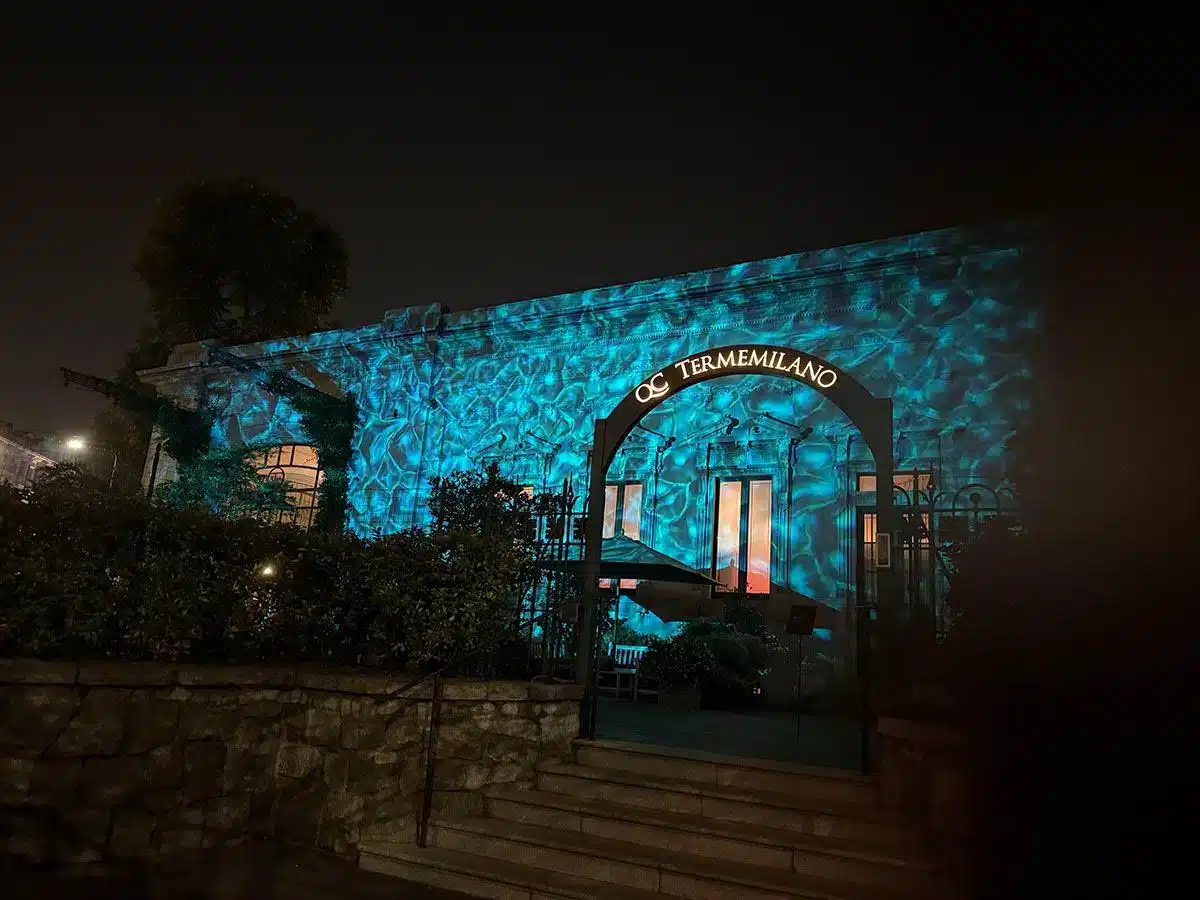
    We showered off the airplane grime, pulled our hair into buns, and ordered a cab. The spa was only about two miles away, but it felt like it was a world away. When we arrived, a grand old mansion stood to greet us.

    In the entrance, the air was perfumed with a scent we couldn’t place, a lovely room that felt cozy, with plants and bookshelves. Without hesitation, a staff member greeted us, and guided us over to a sleek digital check-in screen.

    We paid the cost, which converted to $142 USD each, and included a full-day entry, a 25-minute massage, and their “wellness journey,” which included a half-hour buffet of prosecco, fruit, cheese, and other nibbles. “Be in the dining room at 6:30 sharp,” we were told.

    It was a Thursday, late afternoon, a perfect October day. The weather was in the 70’s and I longed to be outside. Fresh air doesn’t come as often as I’d like it to as an international flight attendant.

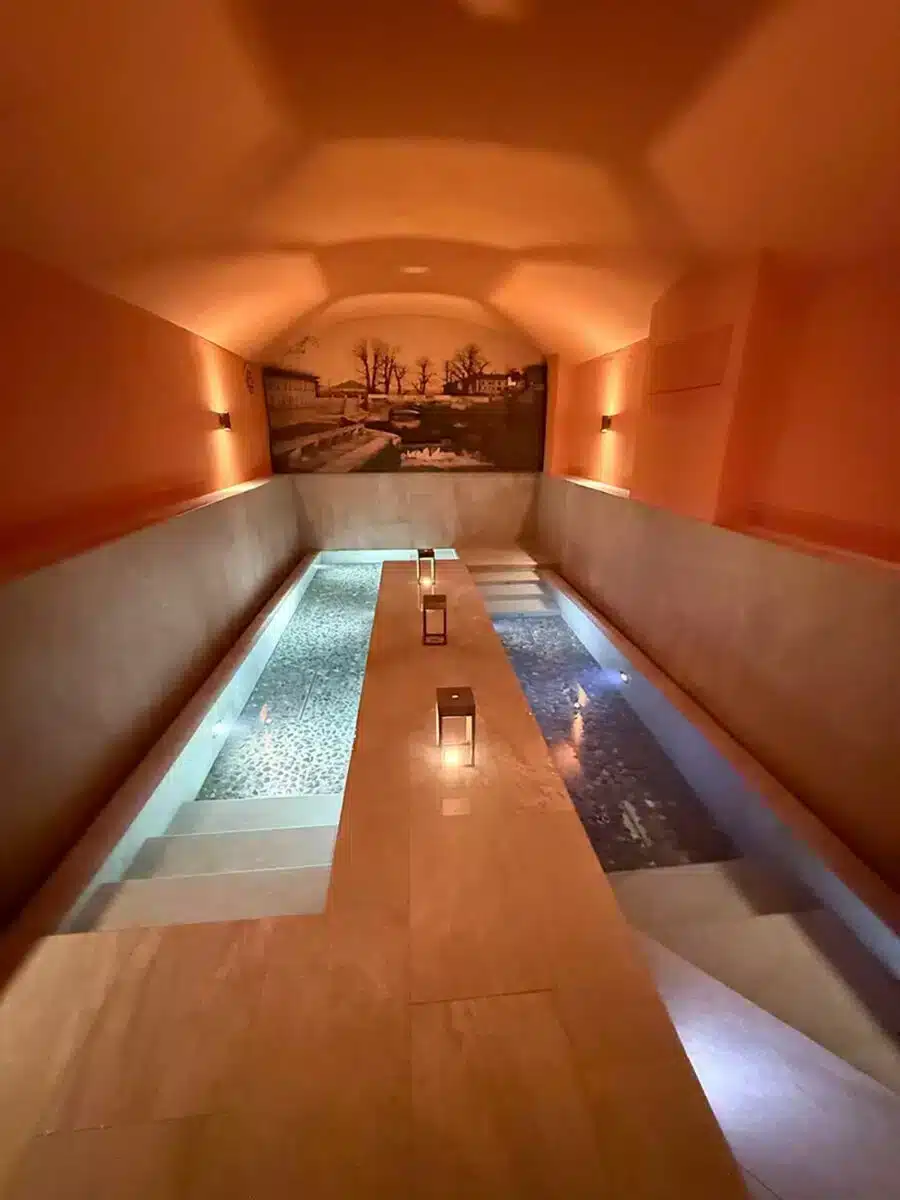
    We paused to take in the grand hallway with marble floors and high ceilings, and a friendly young attendant pointed us to “upstairs for massages, downstairs for steam and sensory rooms, outside for the jacuzzi pool and train sauna.”

    We were supplied with flip flops, and a robe, and changed into our bathing suits.

    A Secret Garden in the City

    Outdoor garden area with sunbeds ancient stone walls and historic buildings at dusk at QC Terme Milano

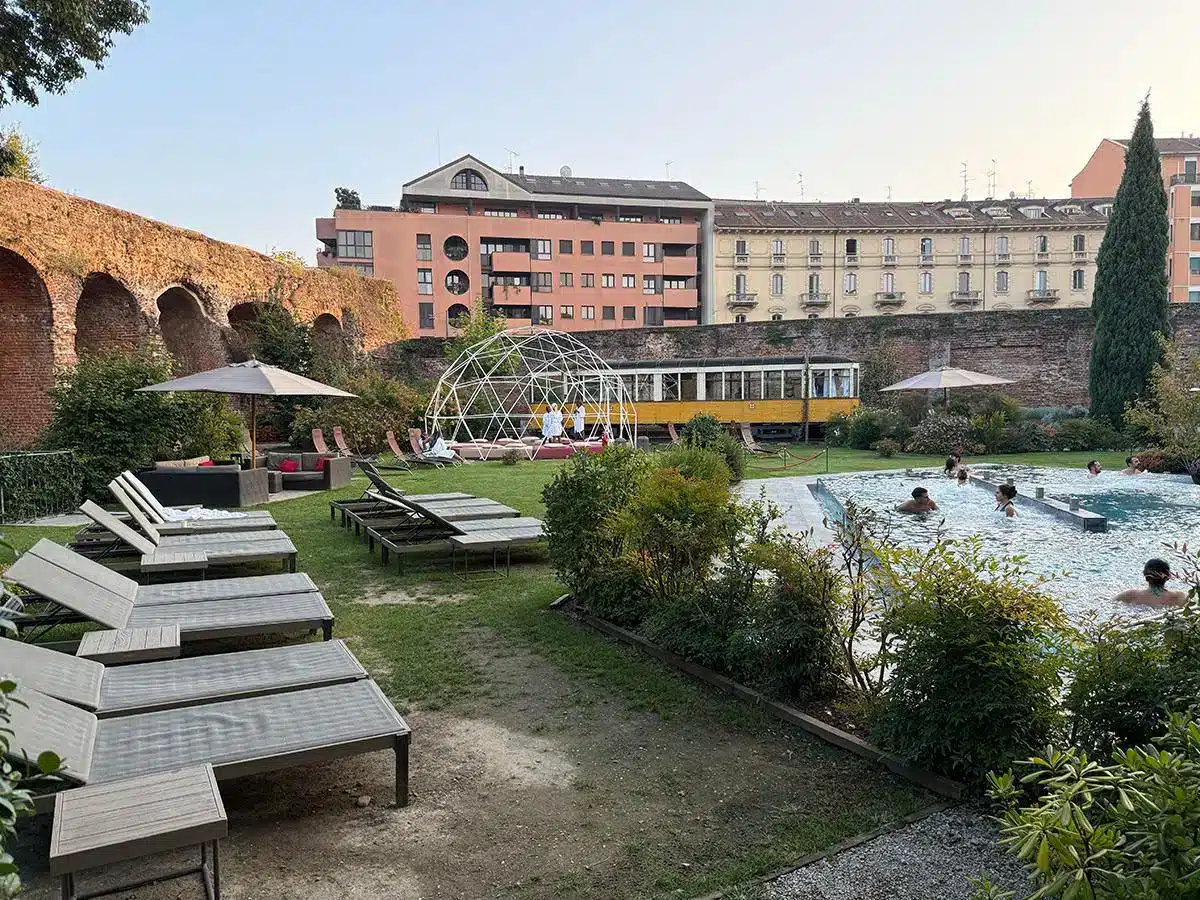
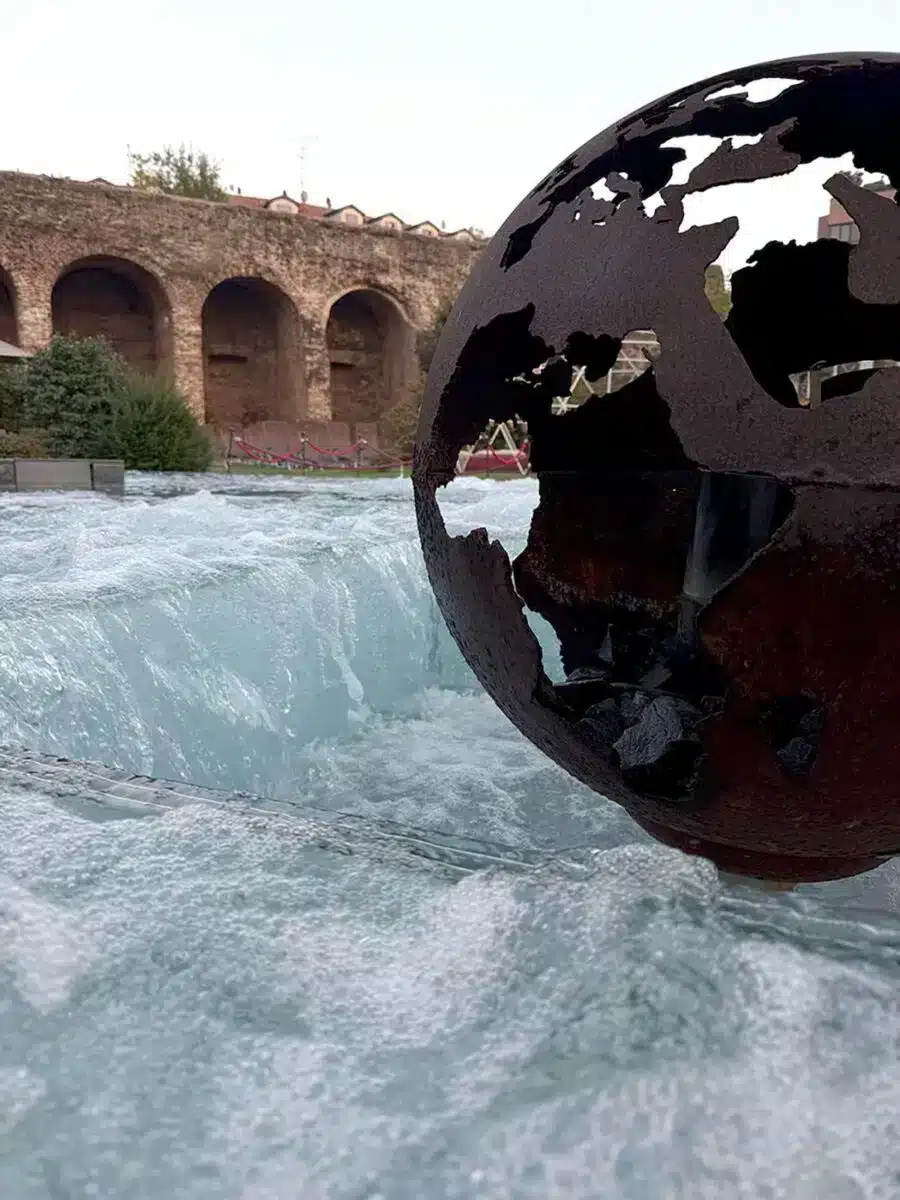
    As soon as we stepped outside, we felt like we were in a secret garden. Ancient Spanish walls encircled the property, with high rises looming above, feeling completely out of place.

    Comfy couches sat under umbrellas, surrounded by the Darsena Gardens, a completely private place to relax. Closeby, a converted Porta Romana Tram transformed into a sauna, our first experience of the afternoon. Our shoulders relaxed into the warmth.

    The Outdoor Pool

    We then slipped into what looked like a large outdoor pool, a thermal bath, warm and bubbling. Around the corner, we’d found another whirlpool that we saved for the last experience of the day – the historic “thousand blue bubbles pool.”

    We lost track of time as we floated, letting the heat loosen the knots in our backs. When we finally ventured inside, it was then that we realized that we had barely just begun our experience.

    A Maze of Sensory Rooms

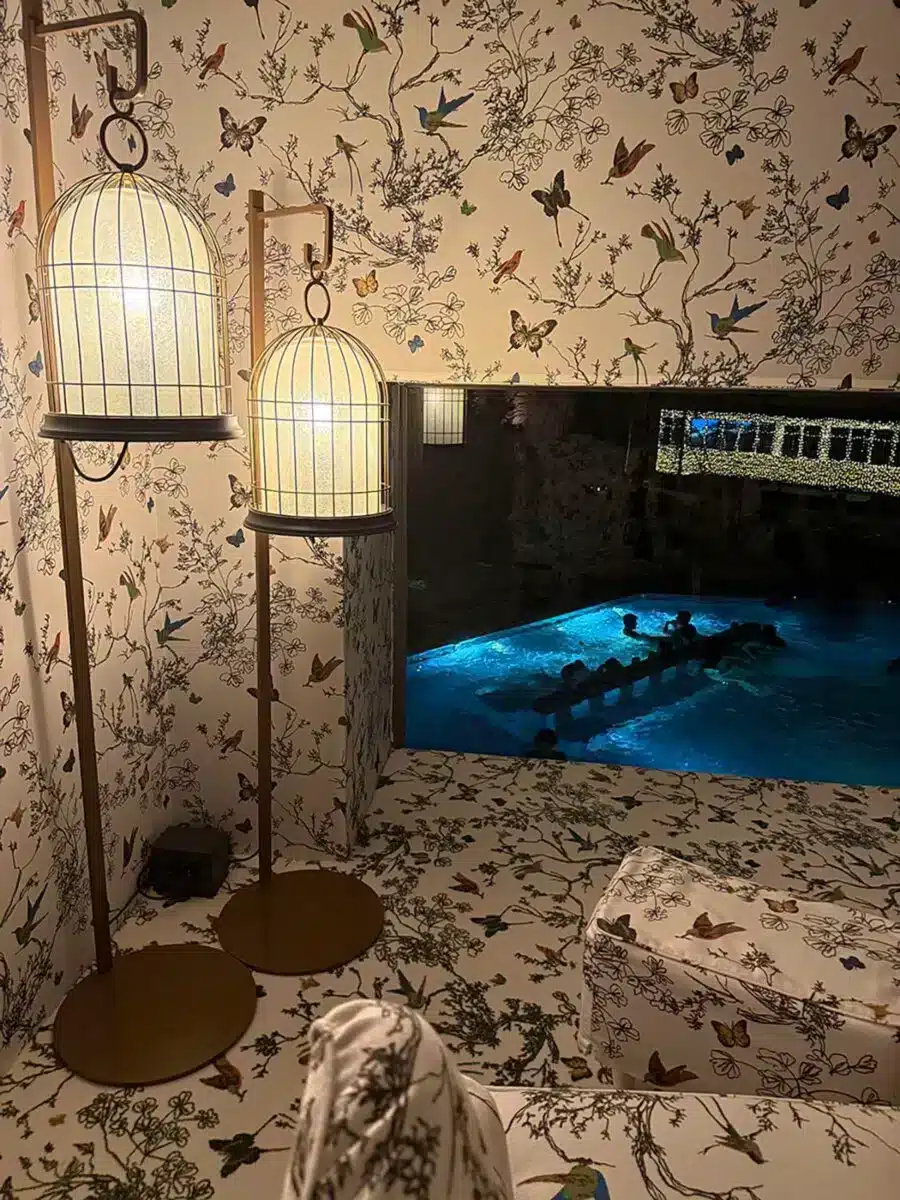
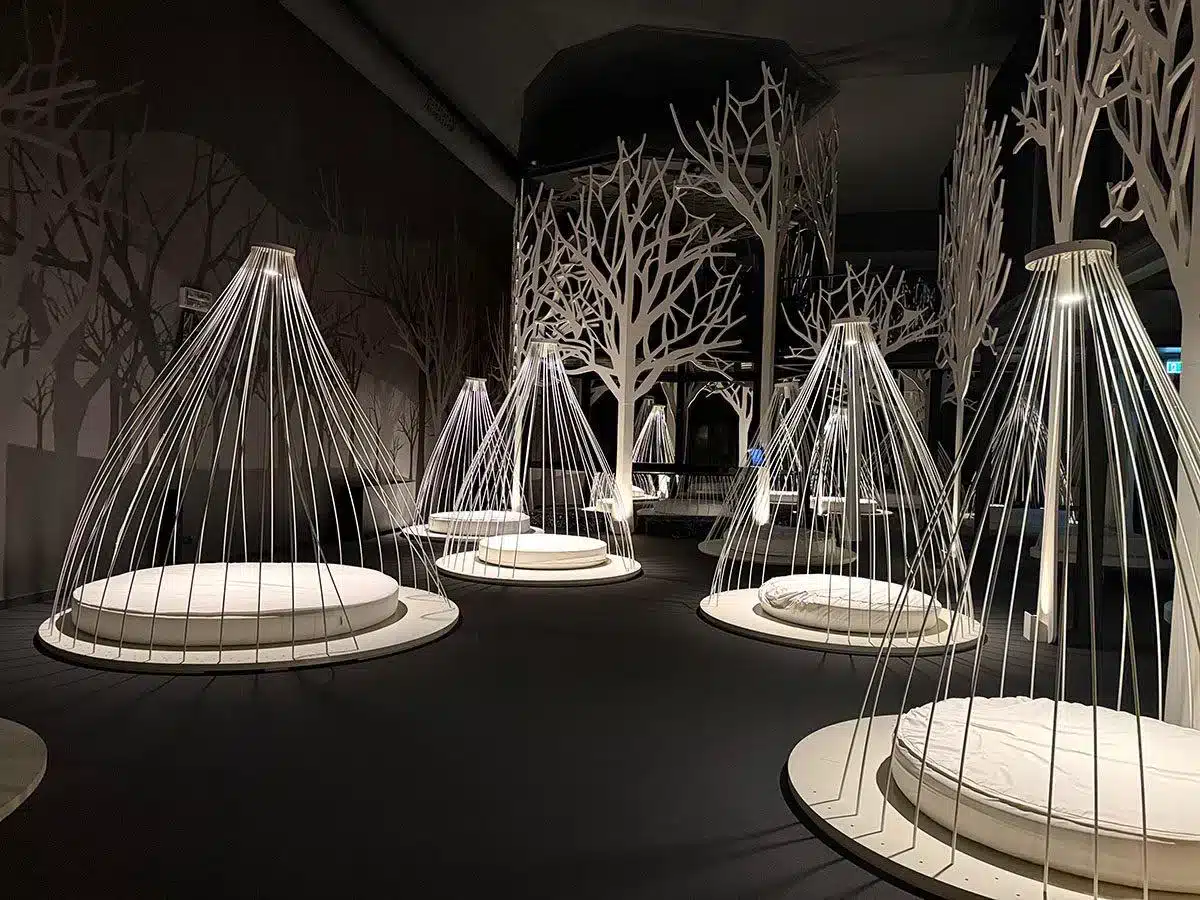
    On the lower level, we started peeking into glass doors to see what the rooms had to offer, and there were a maze of sensory rooms – some starlit, one with softly moving waterbeds, a butterfly room, and rooms glowing with color.

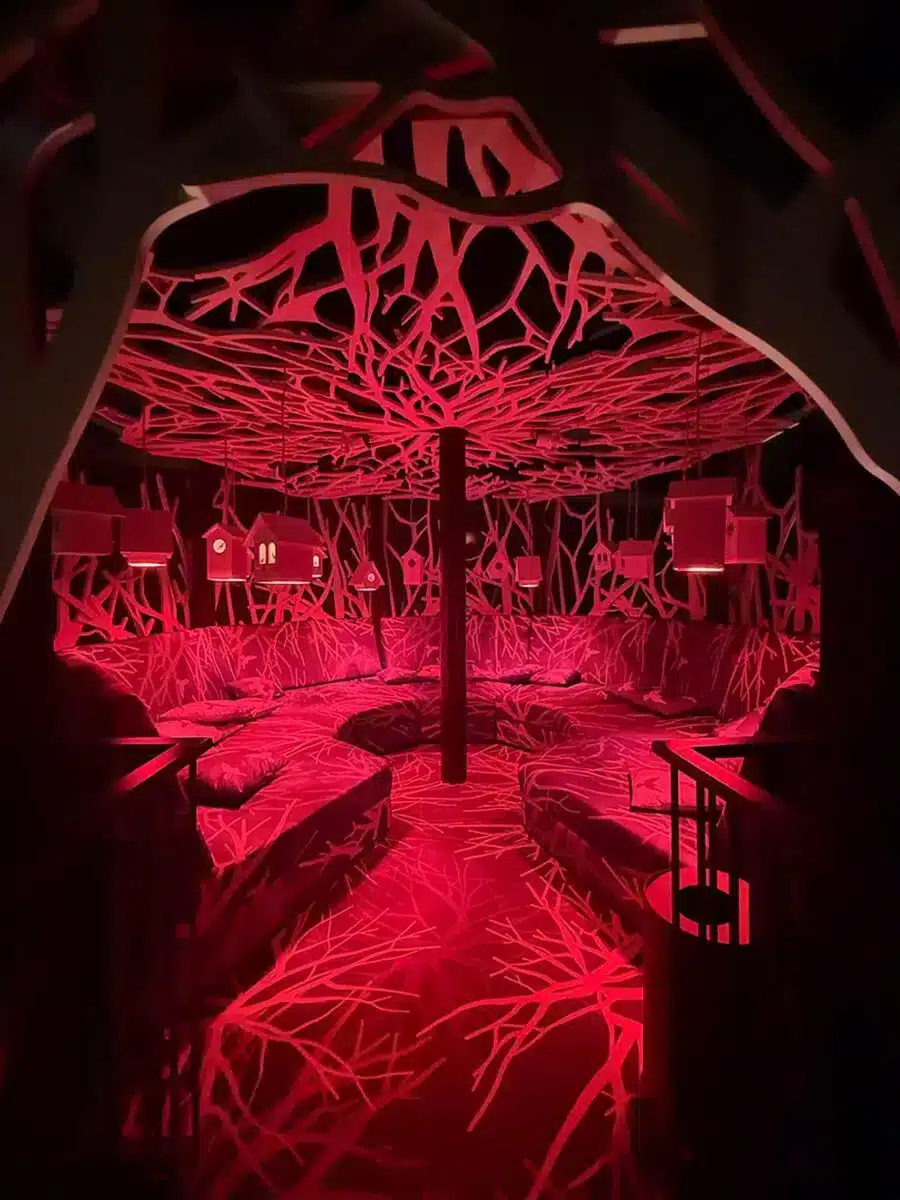
    There was a whimsical “birdhouse” room, softly filled with red, with birdsong playing and a circular couch made for sinking into.

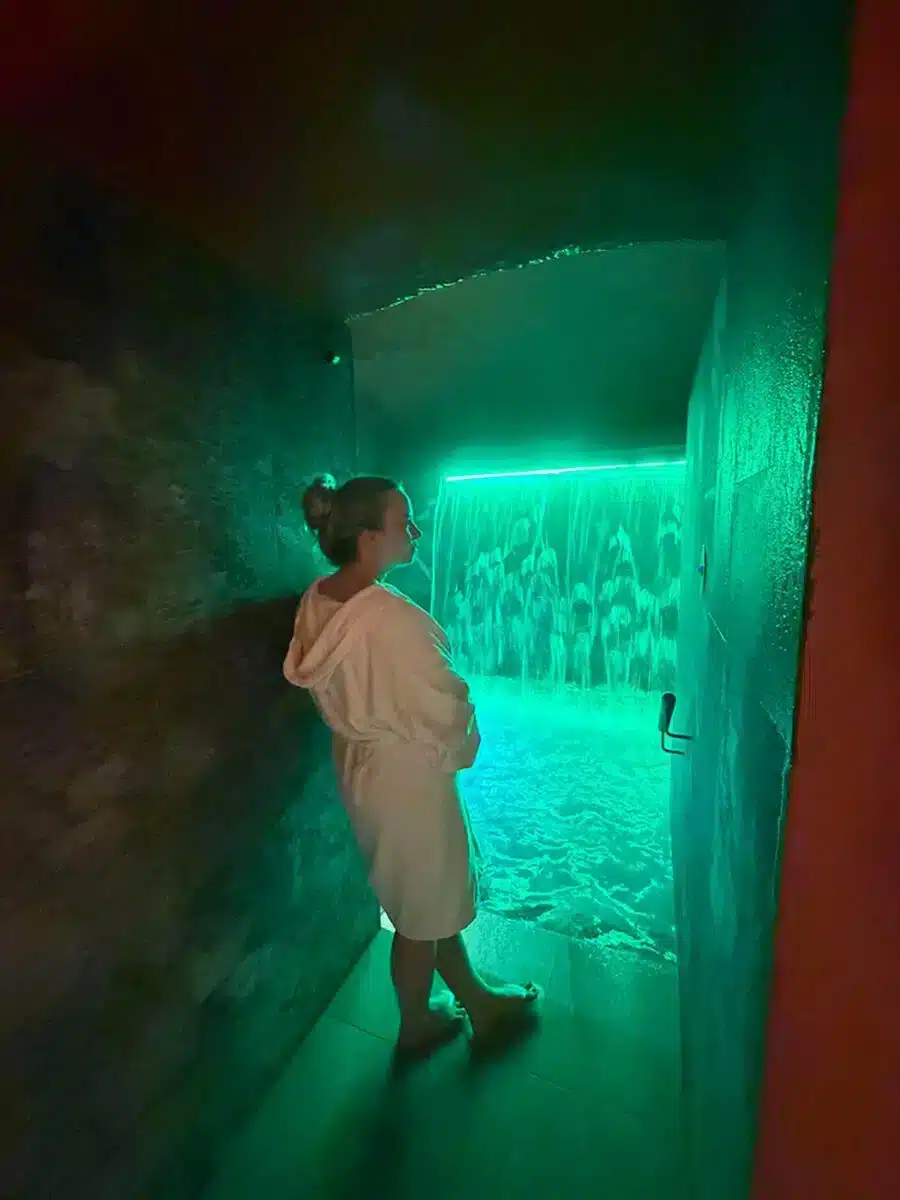
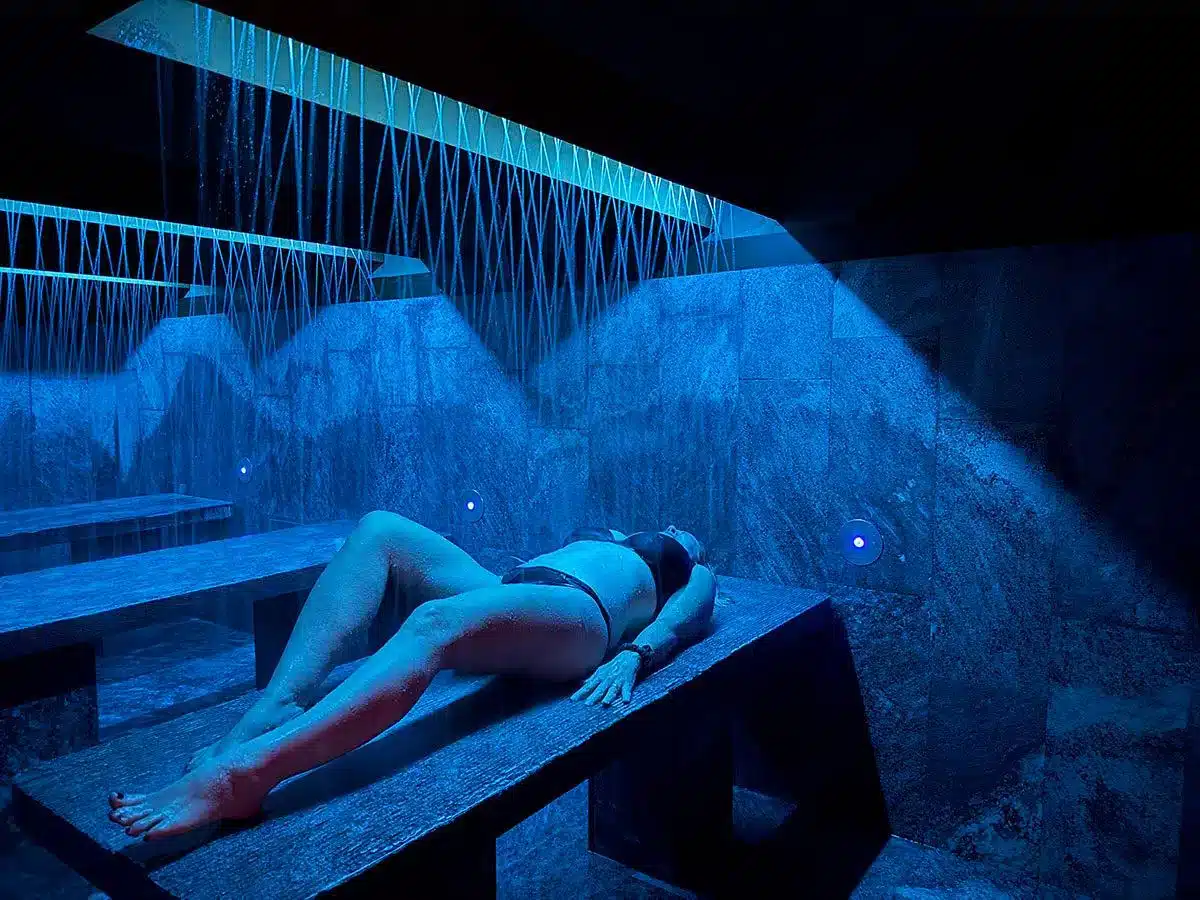
    The more we wandered around, the more we realized how many unique rooms there were, not to mention the ones we’d expected – the salt room, rainfall corridors, cascading waterfalls, and cold plunge pools.

    What amazed me the most was the serenity. Even though the spa was busy, it never felt crowded. We often had entire rooms or the steam areas to ourselves. The eucalyptus smells in the steam room were divine, scents we found out later that they sold in their lobby shop.

    The Buffet

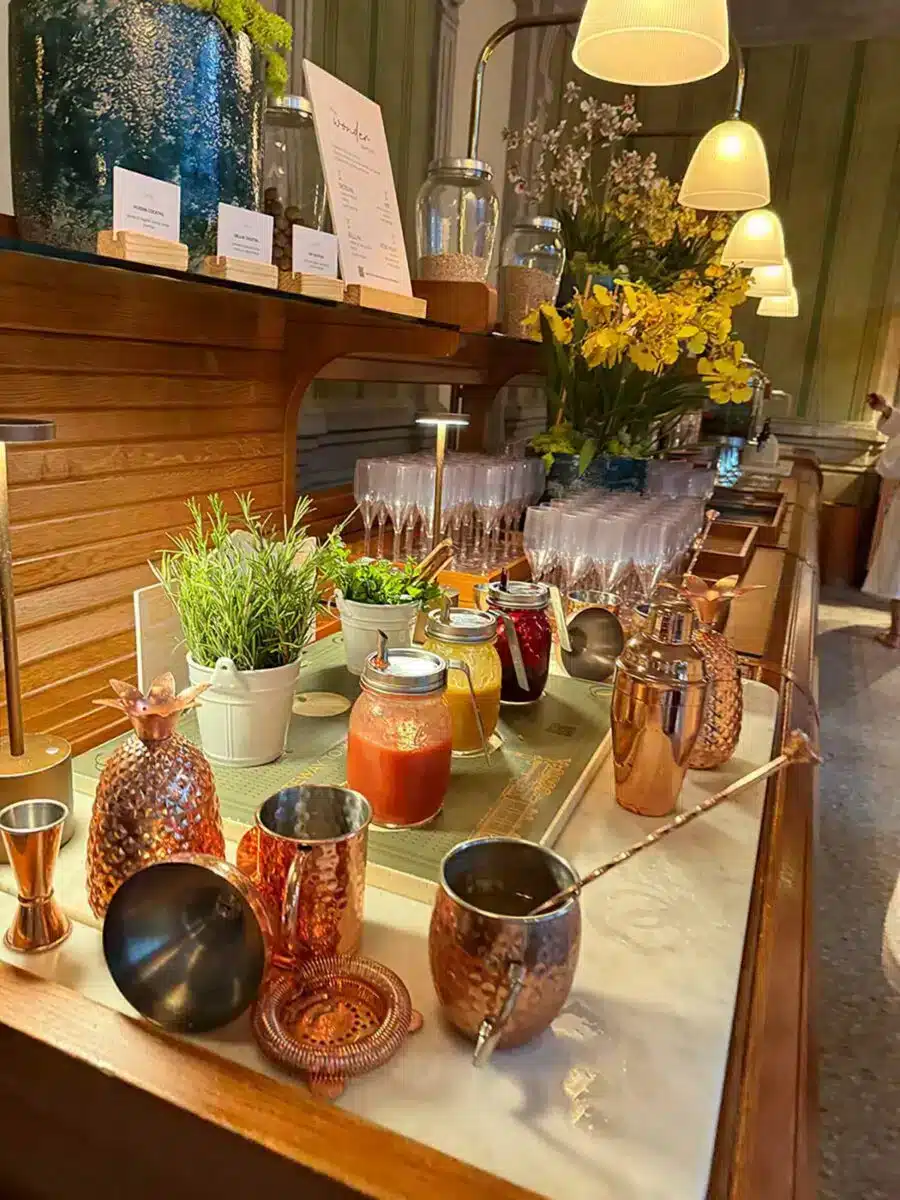
    At 6:30 pm, we made our way straight to the buffet, where flutes of prosecco and small jars of fruit, cheese, and small savory bites waited to feed our empty bellies.

    We wandered through a few more rooms until 7:30 pm, when I headed upstairs for my massage. I’d only secured a 25-minute slot due to my late booking, but it was perfect. More tension dissolved from the flight, and I walked out floating, trying to decide what I wanted to experience next.

    We left about 8:30 p.m., stepping out into the evening air with damp air and heavy eyelids. Back at the hotel, I fell asleep instantly, the faint scent of eucalyptus still clinging to my skin.

    I went to the spa tired, curious, and running on caffeine. I left completely restored after just four hours, proof that the best travel moments aren’t always about chasing sights, but about finally slowing down enough to truly take it in.

    Tips for Visiting QC Terme Milano

    If you plan to visit QC Terme, there are many locations scattered throughout Italy. Visit on a weekday for a more tranquil experience.

    Pricing is reasonable, with options to fit nearly any budget, and even the day pass alone is worth every Euro.

    Be mindful of spa etiquette:

    • Arrive on time
    • Hang your robe in designated spots, and keep track of which one is yours
    • Keep voices low, and move gently through the spaces
    • Use the towel they provide to put down in the saunas before you sit
    • Tip your massage therapist for exceptional service
    • And lastly, be mindful of how you use your phone

    The spa suggested you use the time for a digital detox, but also stated that, as long as you were mindful of other’s privacy, you could use your phone.

    As a photographer, I couldn’t resist taking photos – it was too beautiful. But silence is golden. I never heard a phone ring, nor a conversation take place once.

    QC Terme Milano isn’t just a spa: it’s a gentle reminder of how deeply healing stillness can be. For those of us who live in constant motion, measured in time zones and takeoffs, it’s a sanctuary worth seeking out, even if only for an afternoon.

    Next time I touch down in Milan, I know where I’ll be headed. There’s a cascading waterfall waiting, whispering my name.

  • Les Bains D’Orient Hammam Review – Luxury Spa Experience in Marrakech

    Les Bains D’Orient Hammam Review – Luxury Spa Experience in Marrakech

    Tim’s Take: Western spas prioritize gentle isolation, but a true Moroccan hammam is a highly physical, somatic intervention. Samira enters Les Bains D’Orient to evaluate whether surrendering to this intense, ancient ritual can trigger a deeper level of recovery than standard modern treatments.

    You never forget your first hammam! My first trip to Morocco was in 2017, and I was leading a group of 14 people on a yoga and culture style retreat.

    I knew we had to try the hammam, and I am delighted that the first place our venue tried to book us was full, because Les Bains D’Orient has proven time and time again that they are my favorite. Let me tell you why.

    Why Hammams in Marrakech Feel Different From Western Spas

    I should start by saying that every hammam experience I have had in Marrakech has been excellent. Something about every Marrakech hammam has far exceeded any American spa I’ve visited.

    The small riad hammams are often quiet, meditative spaces, where you can sink into the transportive luxury of neroli scent, steam, and body care. There are some hammams that have a much more reserved feel.

    To me, they are more aloof, but some guests might prefer more reserved. Sometimes the hammam attendant is an auntie or cousin in the family who owns or runs the riad.

    There is no licensing requirement in Morocco for these professionals, but I have always had exceptional experiences. Why is that? One might ask. Well, I will tell you!

    The Cultural and Social History of the Hammam

    Moroccan-style seating area with draped curtains arched doorway cushioned sofa and framed artwork at Les Bains D'Orient hammam in Marrakech

    The history of hammams evolves from Roman and Byzantine bathhouses. Long before homes had indoor plumbing, public bathhouses served as spaces for hygiene, ritual, and essential social connection.

    Across the Arab and Muslim world, it has been usually practiced on Thursday night or Friday morning before prayers at the Mosque, as well as before important occasions such as weddings.

    These neighborhood hammams are gender-separate spaces with men on one side and women and children on the other.

    All are slightly different, but multiple spaces with hot and cold water, steam, banquette seating, or tables in the middle serve to create perfect bathing social spaces.

    Everyone brings their own basket of supplies, which includes water-friendly sandals, a “Kesse” (scrub) glove, soap, or in Morocco, “savon noir” or “beldi”, a towel, hair tool, shaving implements, and more.

    Family and neighbors help scrub each other down while exchanging news and gossip, and relaxing in a community of care. These neighborhood hammams still exist in Moroccan cities and villages, despite that most homes have the infrastructure and plumbing to render them physically obsolete.

    So, the women who eventually go on to become professional hammam attendants have grown up with the practice from when they were infants.

    From this basic understanding of the history of hammams, it’s easy to see how socially, culturally, and emotionally hammams serve a somatic healing purpose that an individual shower simply cannot replace.

    My First Hammam Experience at Les Bains D’Orient

    Two freestanding copper bathtubs with brass claw feet and a large white ceramic vase at Les Bains D'Orient Marrakech

    So, this brings us to my first hammam experience in 2017. With a group of 14, Les Bains D’Orient had to fit us four to a room instead of two to a room, and honestly? It made it hilarious and in some ways better due to the shared surprise and joy.

    We got the Tresor d’Orient, which is a forty-minute hammam and traditional black soap scrub, hair treatment with argan oil, plus a one-hour massage.

    As of December 2025, that package is 790 MAD. The laughter started in the dressing room where one guest put her disposable paper thong on backwards at first, and continued into the steam room when our attendants first splashed us generously with buckets of perfect temperature water.

    Between our hammam and massage, we enjoyed mint tea and cookies on the rooftop terrace. For the massage, we got to choose from several scents of oil.

    Two of my retreat guests were men. They were the only two in their room, and they also had female attendants.

    Their disposable garments provided to them were more like paper shorts, and had more modesty than our thongs.

    The gentlemen report that they ALSO had a fantastic time! Couples can also go together to enjoy the experience.

    The Ritual: Beldi Soap, Kesse Scrub, and Argan Oil

    The products used in different countries are often unique. In Morocco, it is traditional to use beldi, a black gel-like soap that is made from olive oil.

    It has a mild olive oil scent, but is also often scented with mint, neroli, jasmine, or other local plants. What makes this special, and how is it used?

    The process of making beldi brings out the fatty acids and stearic acid, which nourish and soften the skin, preparing for a very effective exfoliation with the kesse glove.

    At the beginning of your hammam, your attendant will smooth beldi all over you and then leave you lying on the heated bench for about 10 minutes while the rich savon noir does its magic.

    Then, when she comes back in, she will have her kesse glove and scrub you almost EVERYWHERE. Your attendant will move the paper thong aside to reach certain areas, and those are very small areas to begin with.

    There is no room for modesty here. After that, she will rinse you, and while this is a simple process, there is something particularly luxurious about having buckets or bowls full of the perfect temperature water sluiced across you while laying in the perfect temperature steam room.

    She will usually ask first if you want your hair washed, and after washing, she will soak it with argan conditioner. After a complete rinse, you proceed to tea and cookies before the massage.

    The massage will be conducted with argan oil. Argan oil molecules are smaller than almost all other commonly used oils, which means it doesn’t sit on your skin, it absorbs. For this reason it is fantastic for dry skin, hair, and even nails.

    Architecture, Design, and the Atmosphere of Moroccan Hammams

    Traditional hammams are often close to the village bread baker, and the water is heated by the fires. They are also often found next to or close to the mosque.

    They frequently include beautiful domes with small skylights that look like stars. Some have zellige (mosaic) everywhere, and others have tadelakt, which is smooth, water-proofed lime plaster, a naturally produced material that feels like luxurious carved stone.

    Les Bains D’Orient is mostly made with tadelakt with neutral colors, aubergine, brass, and copper as accent colors. It is sophisticated and relaxed. Tadelakt is made with lime plaster, which is anti-microbial. It is the ideal surface for keeping a very clean environment.

    Why the Ceremonial Experience Is Worth It

    I have returned on every trip to Les Bains D’Orient and have certainly discovered my favorite menu item. If you are going to a spa in Morocco, I recommend getting the most luxurious option. You will not regret it!

    Set aside a full two hours and 990 MAD (plus tip) for Ceremonial Les Bains D’Orient. You will start like usual with the hammam in the steam room, beldi soak, and then a kesse scrub down.

    They will leave oil on your hair, wrap your hair in a towel, and bring you in your fluffy bathrobe to the rooftop terrace. While lounging on the chaise, you will be served tea and cookies. Then you get to lie back and have a face massage.

    Your next indulgence will be soaking in a goat milk bath in a freestanding copper bathtub. Goat milk serves to soften, nourish, and soothe the skin, and the tub is foamed at the top with bubble bath and adorned with rose petals.

    They have two tubs to a room, so you can enjoy this entire experience with someone else. Once you’ve finished your bath, attendants will rinse you off, including your hair, and then you proceed to your massage.

    I recommend getting the Moroccan massage, which is done on low massage tables and includes some body pressure stretches, similar to those in a Turkish bath or Thai massage, and even some visceral massage, which they will ask permission to do first.

    On this most recent retreat, my hammam partner Lauren exclaimed numerous times how utterly life-changing this experience was. The care with Moroccan warmth in hospitality is a somatic experience that transports one to a completely different heart and mind space.

  • Széchenyi Thermal Bath Budapest Review (December 2025): Prices, Booking Tips & What to Expect

    Széchenyi Thermal Bath Budapest Review (December 2025): Prices, Booking Tips & What to Expect

    Tim’s Take: Massive, world-famous thermal baths often cross the line from restorative sanctuaries into crowded tourist traps. Marissa tests the iconic Széchenyi Baths in the dead of a Budapest winter to evaluate whether the mineral depth of the water can still trigger genuine physical recovery despite the sheer volume of visitors.

    Visit details

    • Destination: Széchenyi thermal bath, Budapest, Hungary
    • Date of visit: December 2025 (gloomy day / cold winter weather)
    • Who with: my husband
    • Booked via: Get Your Guide (online) to skip wait times + book a preferred time slot during the holidays
    • What we paid: about 60 euros as a couple
    • Ticket included: locker rental, cocktails, and fruit bowls at the Palm House upstairs

    My First Thermal Bath Experience in Budapest

    I visited the Széchenyi Thermal Bath in Budapest, Hungary, with my husband. It was my first thermal bath experience, and it was incredibly relaxing!

    I visited in December 2025 on a gloomy day. The warm thermal bath was the perfect feeling in the cold winter weather! I’ve started to look into natural healing and wellness options because of chronic pain I have.

    The thermal water felt amazing since it’s full of calcium, magnesium, and bicarbonate, all known to help with joint pain and recovery.

    We paid about 60 euros as a couple, and we booked online at Get Your Guide to skip the wait times. This made the process stress-free and simple, as we were able to book our preferred time slot, especially as we were traveling during the holidays in December.

    Powered by GetYourGuide

    Who Széchenyi Thermal Bath Is Great For

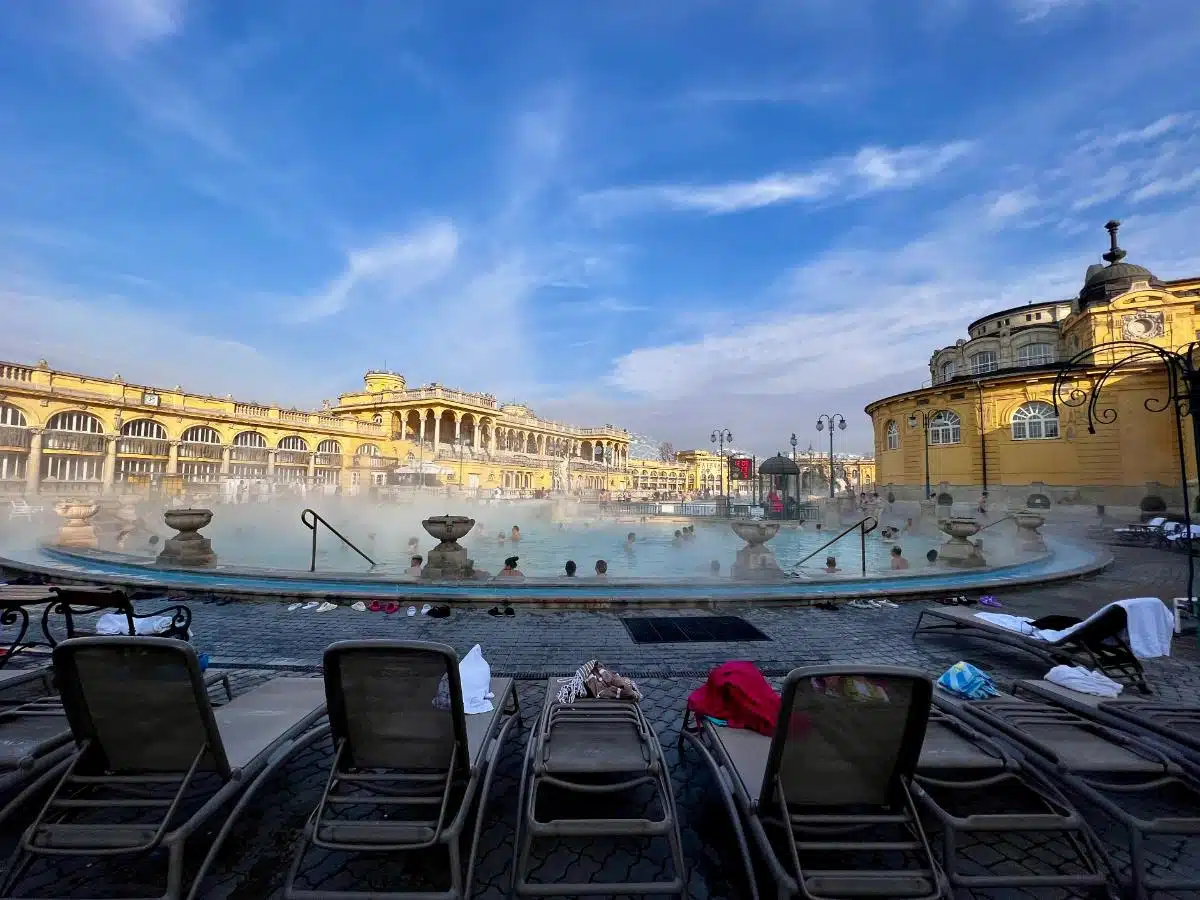
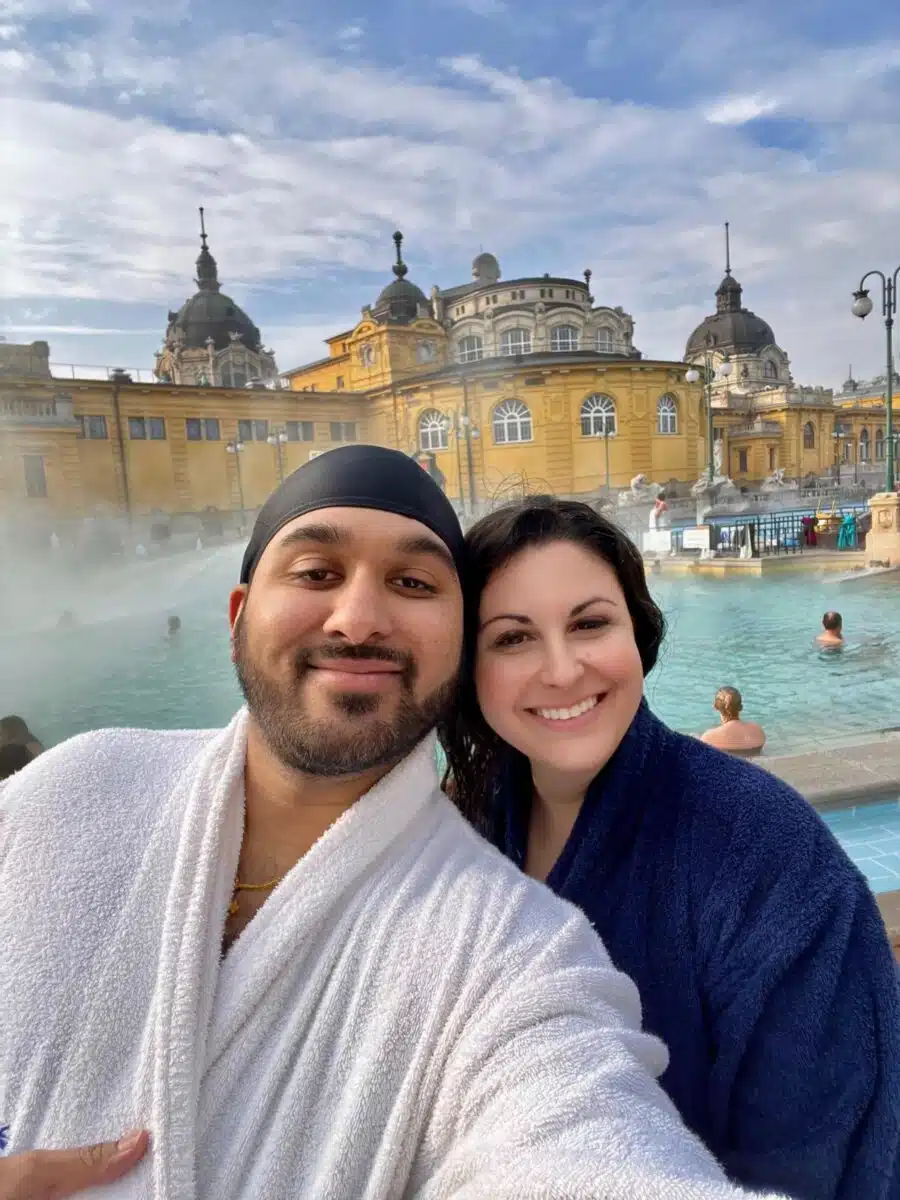
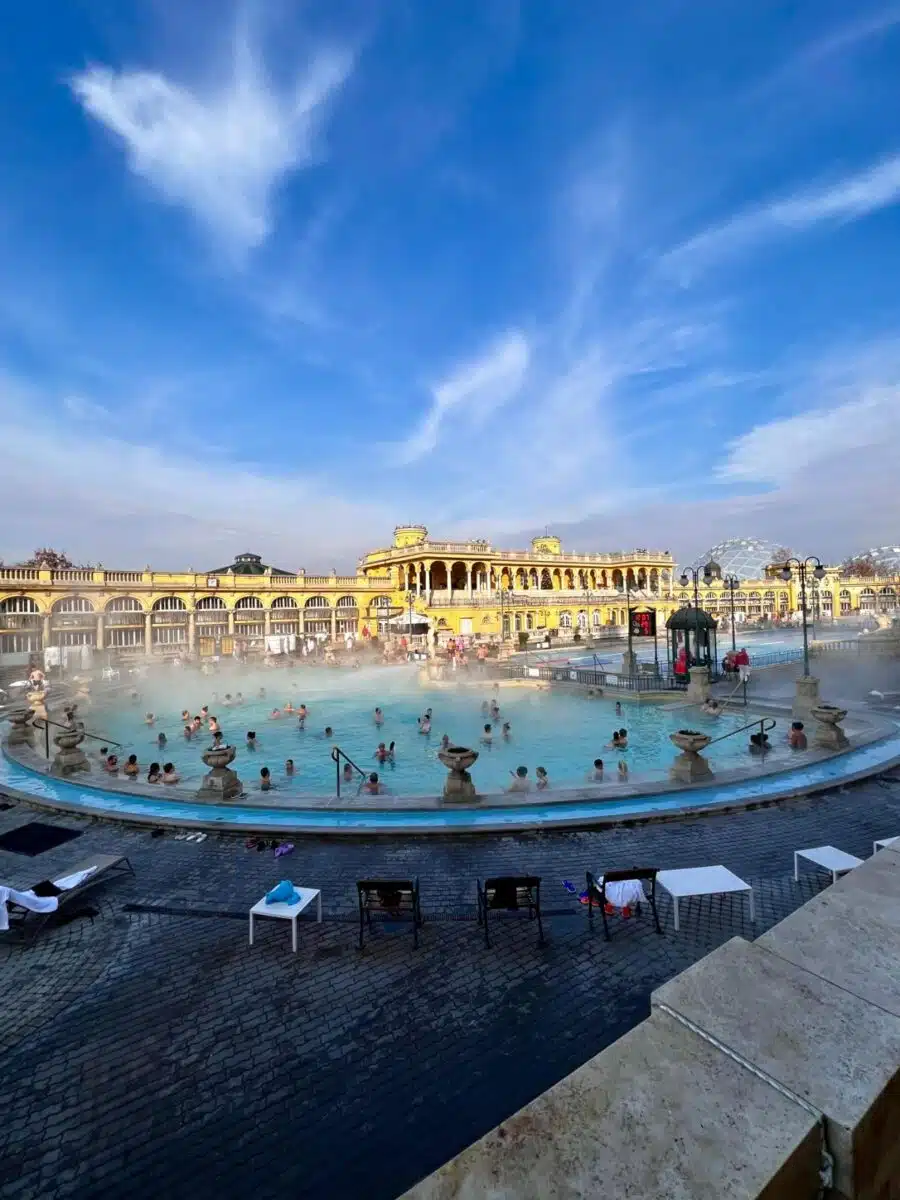
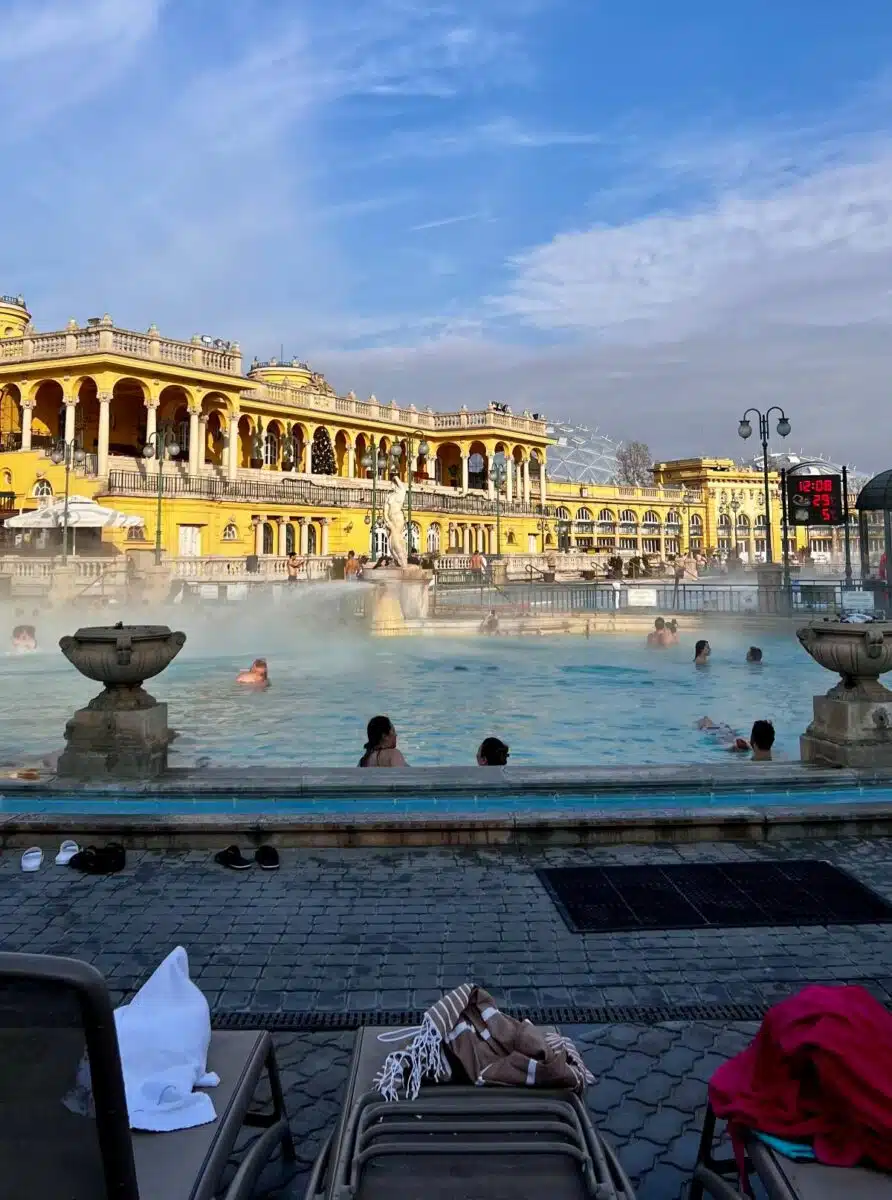
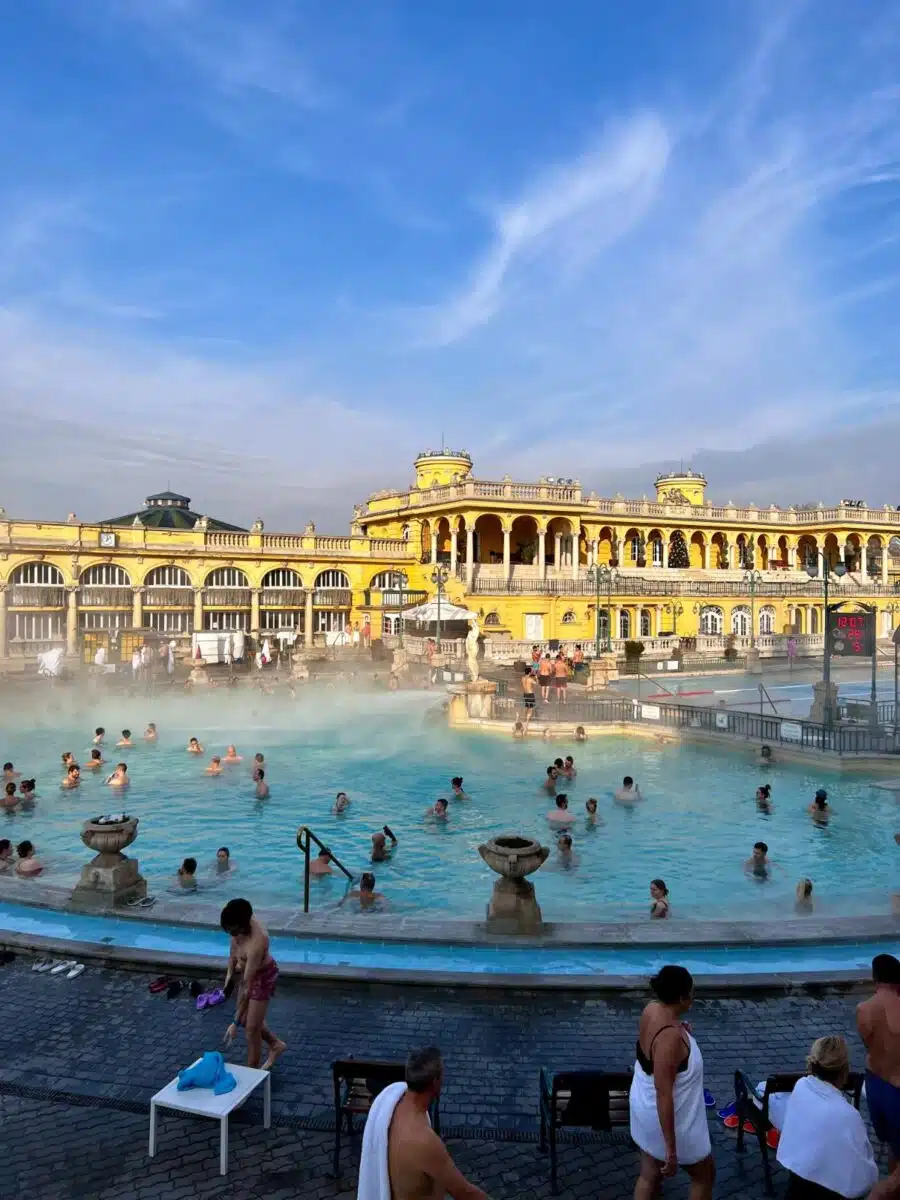
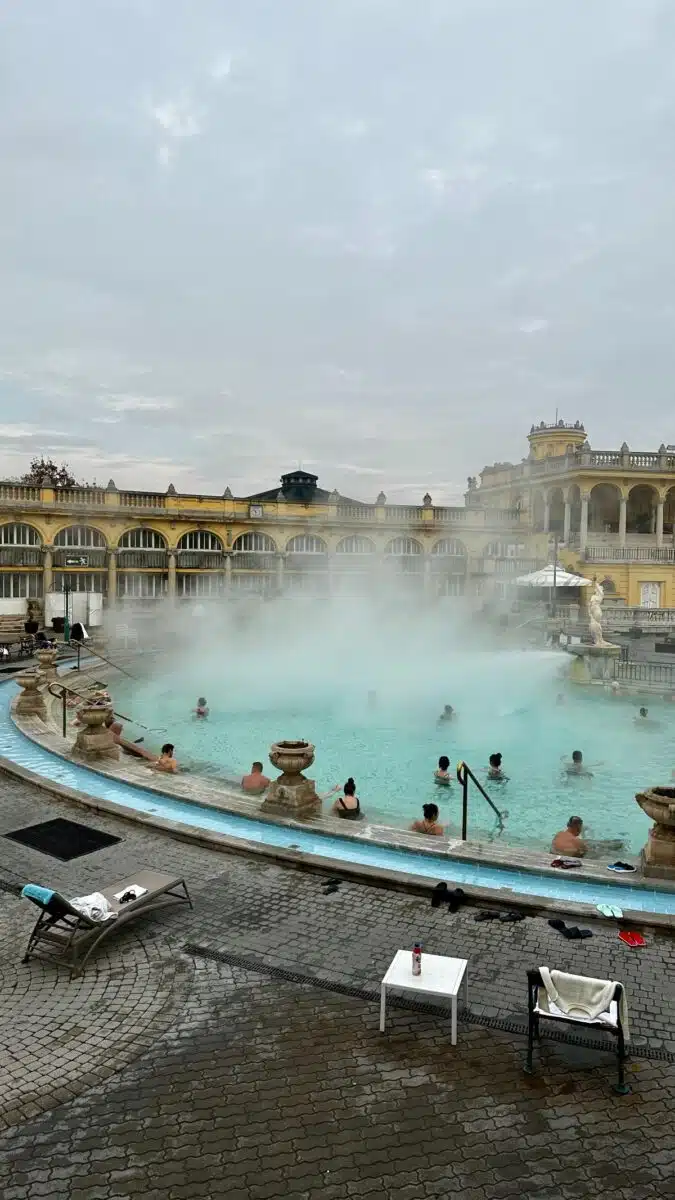
    Outdoor thermal pool at Széchenyi Thermal Bath Budapest at dusk with sunbeds in foreground bathers in the steaming water and the yellow neo-baroque building behind

    The Széchenyi thermal bath is great for first-time visitors (it’s iconic and good for all ages), couples who are looking for a romantic activity, families (kids love the water), and wellness lovers (there are massages and medicinal pools).

    It happens to be one of those attractions that appeals to a wide range of travelers – whether you’re looking to experience a new activity, have a romantic getaway, or simply seek relaxation.

    I would even recommend this place for solo travelers. It was a great place to meet people or just unwind in a historic setting.

    Best Time to Visit for a Quieter Experience

    Like with most activities, the early morning and weekdays will be your best chance at quiet times and the most enjoyable time with the least amount of people.

    Think those Instagram-worthy shots and a peaceful oasis where you can really clear your mind. It was so easy to spend hours here – there was always something new to explore from the different pools, saunas, and steam rooms.

    I was impressed with how massive this facility was. It felt almost overwhelming, like I just entered a wellness city within a city! It has three huge outdoor pools, 15 indoor thermal pools, and sauna/steam rooms.

    The Indoor Thermal Pools

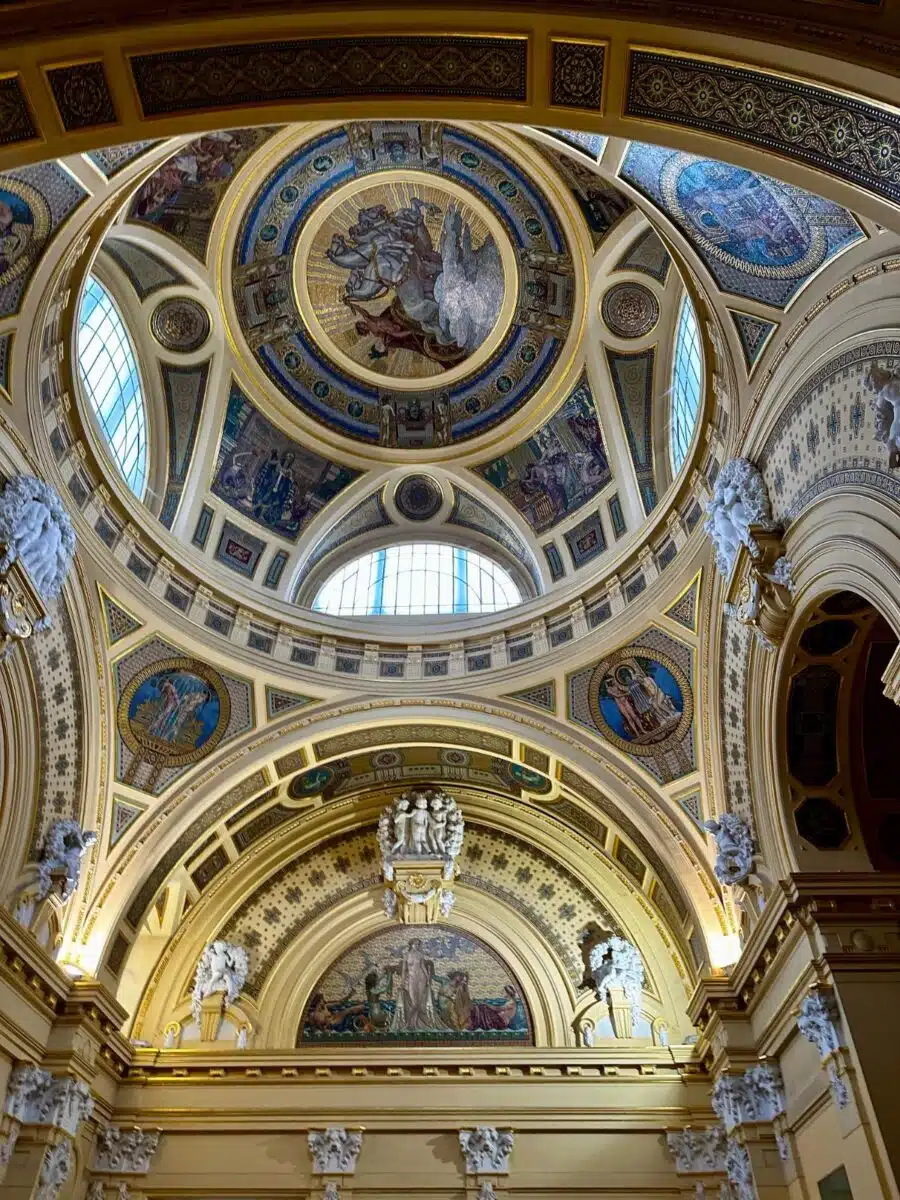
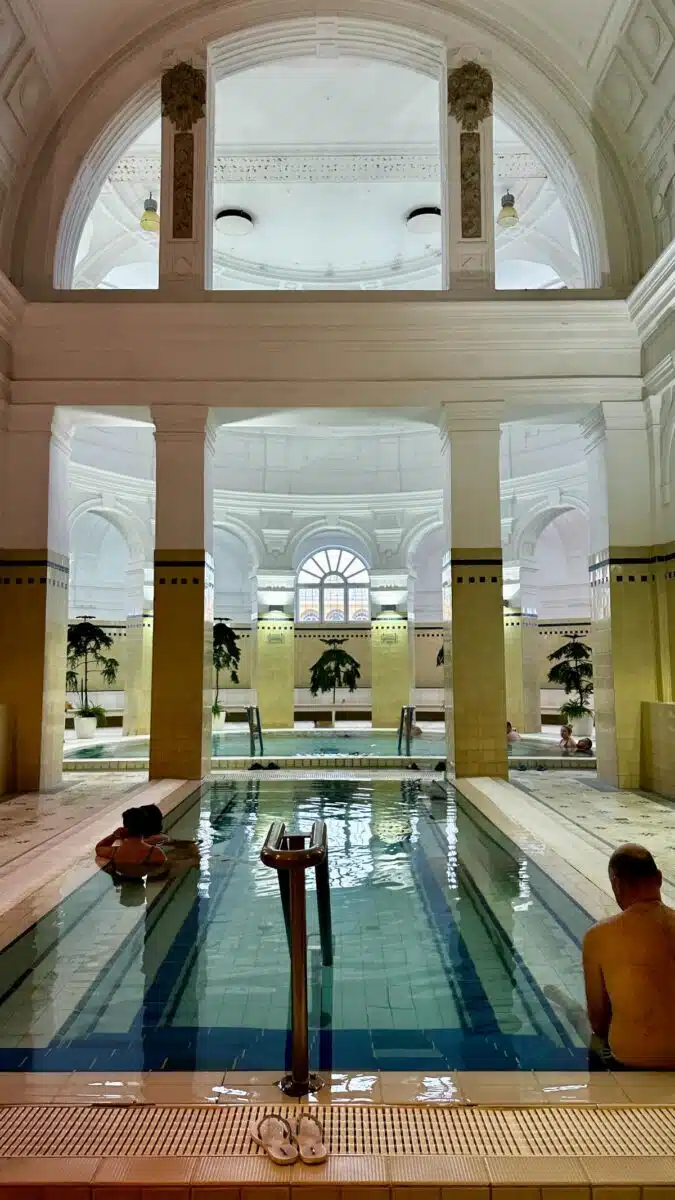
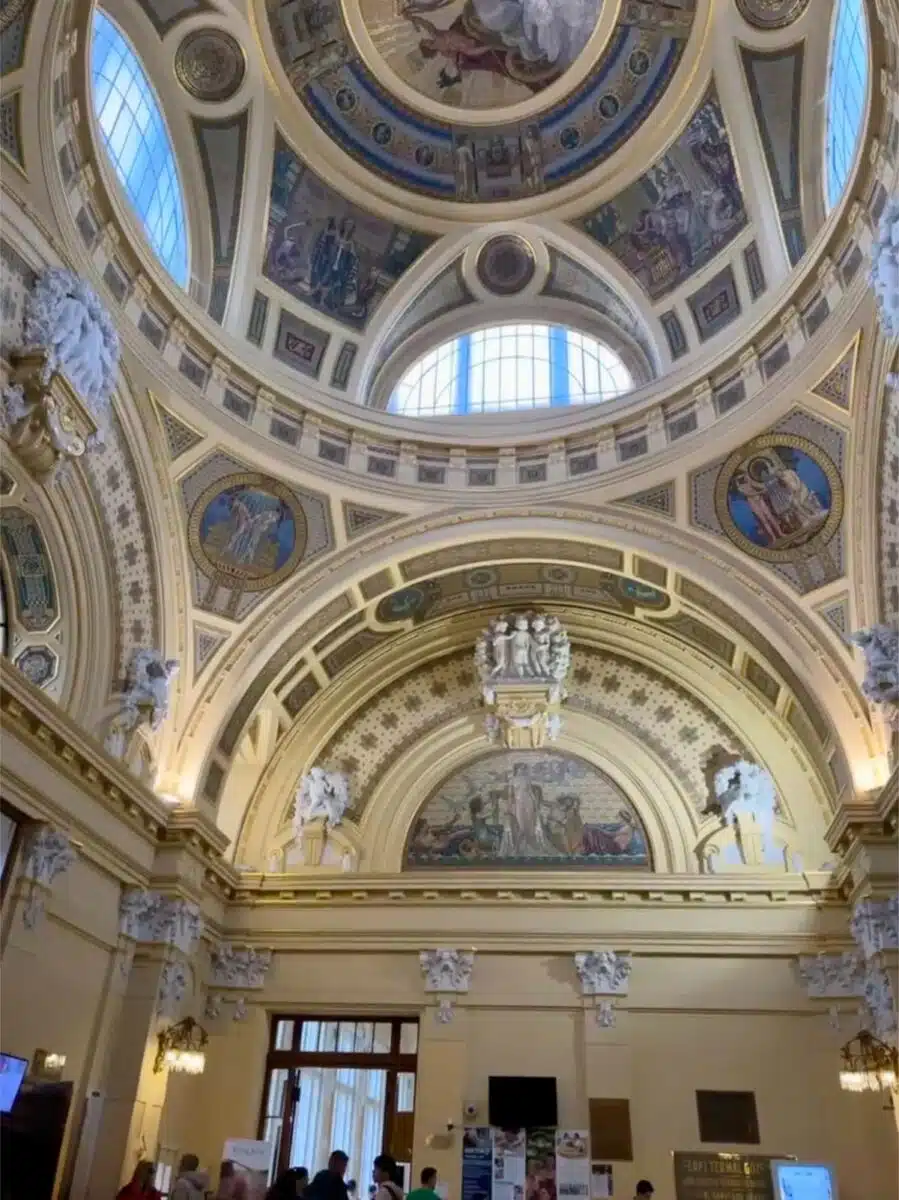
    We started in some of the indoor thermal pools, which were architecturally just as beautiful as the outdoor pools. The beautiful columns, high ceilings, decorative tiles, and neo-baroque architecture made the interior feel elegant and historic, rather than your normal spa.

    It felt like I was stepping back in time. The indoor thermal pool I really enjoyed had different medicinal water activities to do that helped target pressure points and pain.

    The pools featured gentle whirlpools, underwater jets, and varying water temperatures, allowing you to move from one pool to another depending on how your body felt. I definitely enjoyed the indoor pools more than the outdoor.

    I loved the small, quiet pool with bubbling and warm water where I could float and really feel my muscles letting go of any tension. It was truly meditative and a time of complete calmness, and I also felt like I was bathing in a palace!

    The Outdoor Pools (Crowds, Atmosphere, and Winter Magic)

    We then spent the majority of our time in the large outdoor pools. These were significantly more crowded and louder. Despite the crowds, it was a very lively and social atmosphere.

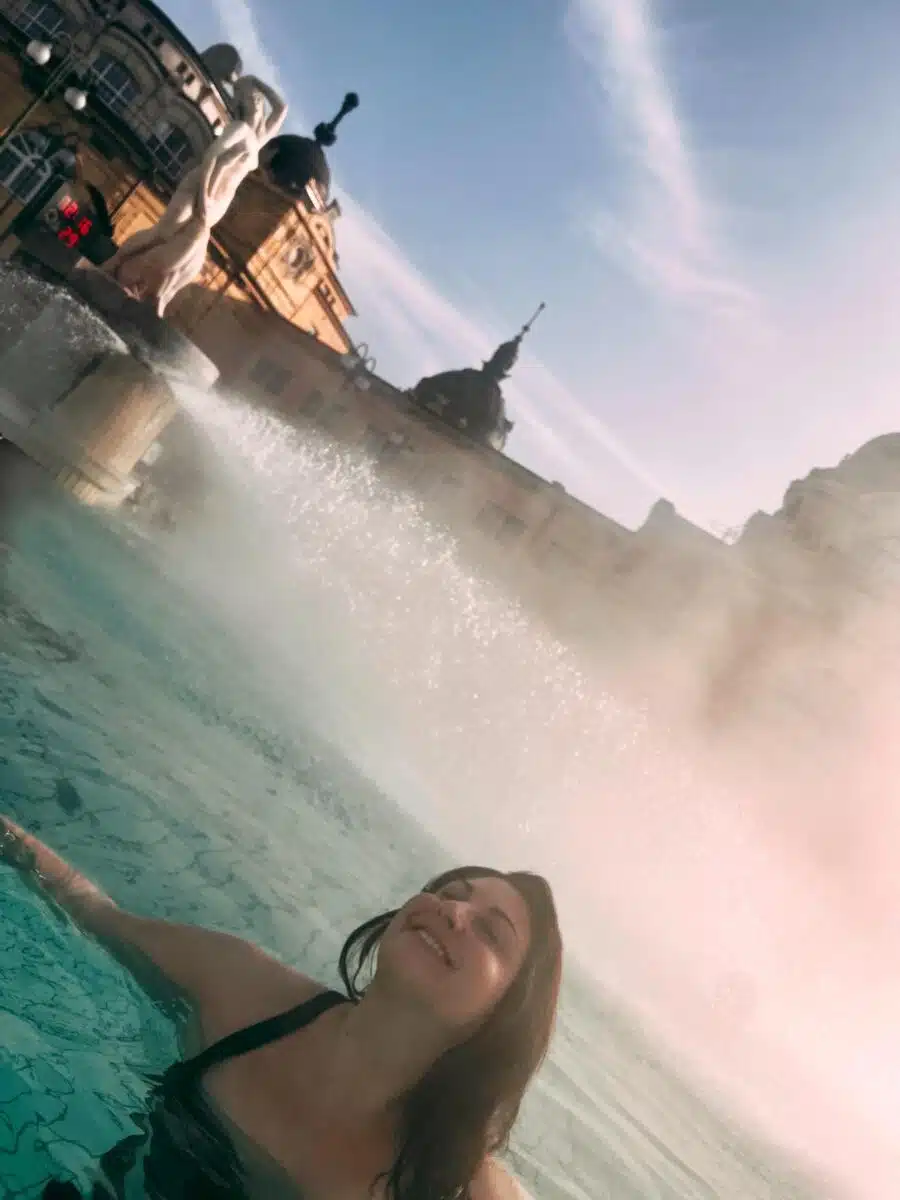
    There was something about the warm water, the steam above the water, and the cold winter air that truly made this visit more magical and relaxing. It felt like a once-in-a-lifetime experience that I can’t recreate anywhere else.

    Photo Tip: Bring a Waterproof Phone Pouch

    My only regret and also recommendation is a waterproof phone pouch to get the perfect photos. I ended up taking my protective case off halfway through because it wasn’t taking clear photos.

    The steam that rises over the baths made it tricky to take photos, but also created an ethereal and dreamlike scene that I’ll always remember.

    Post-Bath Wind-Down: Palm House Upstairs

    After enjoying the thermal bath, we went to enjoy cocktails and fruit bowls at the Palm House upstairs, which was included in our ticket price. The greenhouse environment was filled with palms and tropical plants.

    It was a perfect blend of botanical beauty and wellness, and a nice escape from the cold outside. Sipping a cocktail surrounded by tropical plants felt very restorative.

    It gave us a chance to sit, warm up, and reflect on our experience without being rushed. It was nice to slow down and appreciate our surroundings.

    Guests are required to show up with their swimsuit and flip-flops. We rented bathrobes, and my husband rented a head cover. They have basic options to rent, so bring your own if you would like.

    Our ticket included the locker rental, so definitely pack your own essentials to elevate your experience and minimize what you’re renting. Also, don’t forget to bring a change of dry clothes to change into – I definitely did!

    Final Thoughts

    Overall, I would highly recommend the Széchenyi thermal bath for any first-timers, and even experienced goers! It was definitely worth the price for a day trip for all the facilities offered.

    This is easily a huge highlight of my Budapest trip. I felt relaxed, recharged, and ready to take on the rest of my trip.

    I had a new appreciation for this combination of beauty, history, and wellness all in one place. It was truly an escape from reality, and I dream of returning one day!