Blog

  • Mitja Mirtic, Founder of Goolets: My Journey into Luxury Yacht Chartering

    Mitja Mirtic, Founder of Goolets: My Journey into Luxury Yacht Chartering

    Tim’s Take: Most luxury charter companies sell boats. Mitja Mirtic sells something harder to package, the feeling of time slowing down on open water. What started as a backpacking discovery of Turkish gulets has grown into Goolets, a family-run operation quietly rivalling five-star resorts in personalisation and care, all on a moving deck. His story is proof that the best hospitality brands don’t start with business plans, they start with a feeling someone refuses to let go of.

    My Journey into Luxury Chartering by Mitja Mirtic

    I didn’t grow up dreaming of superyachts or luxury travel. I grew up with curiosity, a deep desire to explore, and a fascination for meaningful and wholesome experiences.

    It was on one of those explorations—while backpacking through Asia with my dear wife Alenka—that we stumbled upon gulets along the coast of Turkey.

    Gulets are traditional Turkish wooden sailing boats, charmingly authentic and offering a kind of travel experience that immediately stuck with me: peaceful, unhurried, and intimate.

    Now, even though gulets primarily served as cargo vessels, they were later adapted for tourism, and nowadays, they are built explicitly for luxury travel.

    When we embarked on the first gulet, it was nothing like the hectic sightseeing trips we had done before. On a vessel, you could do everything—and nothing—all at once.

    Swim in hidden bays, dine under the stars, explore ancient ruins in the morning, and relax on the deck with a cocktail by the afternoon. The world passed slowly, yet fully.

    It was a kind of luxury that felt almost secret. That’s when the idea hit us: What if more people could experience this? Perhaps even in the waters closer to us – Croatia?

    We returned home to Slovenia, still in our twenties, with no money, no fleet, and no real business plan. Just a vision.

    In 2005, we founded Goolets with a simple mission: create the most authentic form of luxury travel that is within reach (accessible & relatively speaking – affordable) without sacrificing comfort, service, or style.

    We started with Turkish gulets, then added luxury yachts as well as superyachts, and slowly built a business rooted in something deeper than just tourism. We were creating floating sanctuaries.

    Luxury Is Not a Price Tag
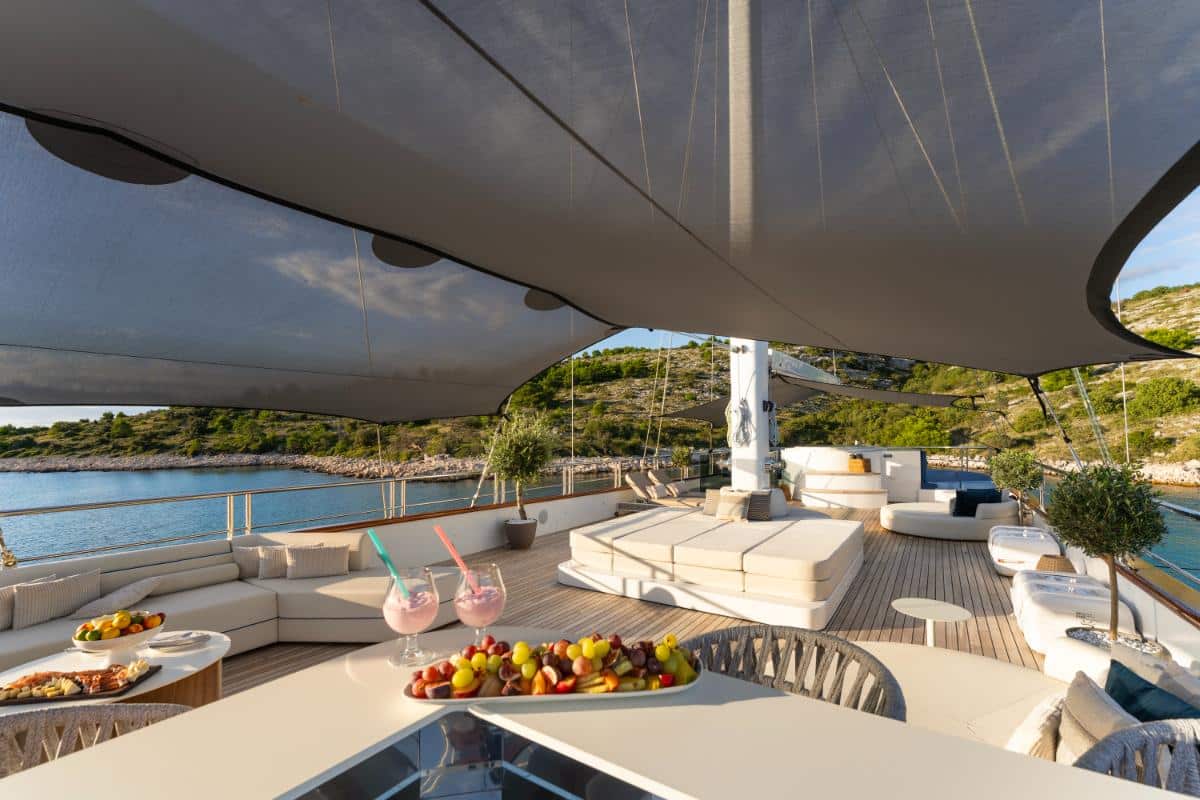
    I believe a huge misconception still exists in the world of luxury yachting. When people hear “luxury yacht charter,” their minds often jump straight to giga yachts, helicopters, and price tags with more zeroes than sense.

    And while those yachts exist, there’s another version of luxury—a quieter, more soulful version—that’s our focus.

    Imagine a handcrafted gulet cruising the Dalmatian coast, where the chef knows your favorite dish, the deckhand remembers your kids’ names, and you fall asleep to the gentle rhythm of the sea in a fully air-conditioned suite.

    That’s luxury, too. Besides choosing among the best gulets, you have the option to choose luxury superyachts, which take the experience even further. But at the end of the day, it all depends on the client’s wishes, because the focus is to make their experience bespoke.

    Goolets offers a different angle into the world of luxury—one that’s attainable but no less exceptional.

    These aren’t budget trips. But they are often far more accessible than people assume, and the level of service, personalization, and care rivals that of any five-star resort with a personal butler.

    It really brings that luxurious feeling to a person where they feel like the center of the universe. 

    From Slovenia to the World—By Way of the Sea

    Being based in Slovenia has actually shaped our company in a unique way. We’re not in a coastal capital, and yet we’re just four hours away from some of the most prestigious yacht ports in Croatia.

    Over time, we developed strong local partnerships, built a fleet of gulets and luxury yachts, and gradually became a go-to company for those seeking high-end charters in the Adriatic. Eventually, we expanded into Turkey, Greece, the Maldives, and beyond.

    One of our proudest moments came from the heartfelt feedback of a family who spent a week aboard one of our luxury charters. Their experience was genuinely priceless.

    They shared how this vacation allowed them to reconnect as a family—a precious moment they hadn’t experienced in a long while.

    They expressed their amazement at the unique blend of luxury and intimacy, feeling pampered and special yet enjoying meaningful, private time together. Receiving such genuine feedback is truly the aspiration and joy of every business founder.

    Today, we operate globally, but still think locally. We have a dedicated team on the ground in Croatia and Turkey, and a support system that extends before and after each charter.

    That’s part of what makes our service feel so personal. For us, luxury isn’t just the boat—it’s the emotion of feeling taken care of, even before you’ve stepped on board.

    What I’ve Learned

    The biggest lesson? Authenticity wins. Every time.

    We’ve had our share of growing pains—from the financial crisis 2008 to the complete shutdown of travel during the COVID-19 pandemic.

    Each challenge pushed us to rethink and refine. But what never changed was our belief in the experience itself.

    When done right, yacht chartering is one of the most complete and joyful forms of travel. It gives you freedom, comfort, and and connection with the sea, your family, and often yourself.

    After a week onboard, one guest told me, “This is the first time in years I’ve done absolutely nothing… and yet I’ve never felt so fulfilled.” That’s the moment I work for.

    Advice for the Next Generation

    If you’re just starting in this or any industry, ask yourself: Why are you doing it? What’s the core feeling or experience you want to create for people?

    Luxury is not about showing off. It’s about presence. It’s about someone remembering how you like your coffee. It’s about waking up in a quiet bay with no other boats around. It’s about creating memories that are real, not rehearsed.

    If you get that part right, everything else—growth, reputation, even success—tends to follow.

    Built a place that’s more story than stars? Share it with our editors →

  • Not Just a Hotel: Why I Brought Lou Calen Back to Life – By Graham Porter

    Not Just a Hotel: Why I Brought Lou Calen Back to Life – By Graham Porter

    Tims Take: In this edition of Behind the Stay, Graham Porter takes us beyond bricks and mortar to share the emotional journey behind reviving Lou Calen, a long-abandoned hotel in Cotignac, Provence. What began as a personal return to a beloved village became a mission to restore its soul and create a space where true connection, creativity, and slow living could thrive.

    I first visited Provence in Easter 1991 while I was a university exchange student in Denmark. My Danish host family had just purchased a house in the village of Cotignac and invited me to visit.

    It was a magical place, one that left a lasting imprint on my memory.

    Then life happened. Thirteen years passed before I returned. I had become fully absorbed in building my business, constantly traveling for work and splitting my time between London and the west coast of Canada, where I was born.

    But something about Cotignac lingered. The French have an expression, “coup de cœur,” which means a sudden, deep, emotional connection. I’m still not sure if it was the beauty of the village, the slower pace of life, or the sense of quiet adventure that drew me back.

    But I do know I was craving something more grounded. Something that would restore my perspective, reconnect me with nature and remind me what life can feel like when you’re not always rushing through it.

    I found it on the ancient terraced slopes just outside the village. A small patch of paradise where I could spend the day soaking in the sounds, smells, and colours of la Provence Verte.

    Cotignac still felt untouched. A place where neighbors still greet each other in the street, where the cliffs whisper a thousand-year history, and where time hasn’t so much stood still as slowed down – in all the best ways.

    I didn’t intend to buy Lou Calen. In fact, I don’t think anyone really sets out to buy a long-abandoned hotel at the foot of a cliff. Especially not if they’ve ever read Peter Mayle’s Hotel Pastis.

    But this wasn’t just any building. It was part of the village’s soul. Once a haven for artists, musicians, and local legends, Lou Calen had sadly sat dormant for years.

    And the village felt its absence. The locals missed it. And, eventually, so did I. It left a hole that couldn’t be ignored.

    What began as a personal project to restore a piece of local history became something much larger. Over the past several years, I’ve worked with a passionate team, both local and international, to bring Lou Calen back to life.

    Not just as a hotel but a living, breathing place of creativity, connection, and culture. We’ve invested a small fortune, well beyond my original estimates, not to make it flashy, but to carefully and respectfully revive a property that means something to this region.

    To me, luxury in hospitality isn’t about opulence. It’s not gold taps or 24-hour butler service. It’s about letting go of your daily pressures.

    It’s about decompressing, connecting with your surroundings, and rediscovering what brings you joy.

    At Lou Calen, that shows up in the details: nearly four hectares of gardens and open space, rooms without televisions so you can hear birdsong instead of breaking news, fresh food delivered by nearby farmers, beer brewed on-site using mimosa flowers hand-picked by the village, and pastis sipped slowly under the shade of a fig tree.

    Here, luxury means freedom. The freedom to slow down. To reconnect with yourself. To be present again.

    I don’t think the world needs more hotels that look like airports

    I don’t think the world needs more hotels that look like airports. We need spaces that feel real. That’s why we’ve preserved the original layout in Le Jardin Secret, our Michelin Green Star restaurant.

    It’s why we have one of the only dedicated pastis bars in France. It’s why our reception space feels more like a cozy bookstore than a sterile lobby.

    And it’s why we offer hands-on workshops, like basket weaving, wild plant foraging, and wood sculpture. Not as novelty experiences, but as meaningful ways to re-engage with creativity and nature.

    Australians, in particular, seem to immediately understand what we’re trying to offer. Their culture values movement, fresh air, and authenticity. They’re early risers, adventurous eaters, and often happiest outdoors.

    Lou Calen gives them the chance to have a French holiday without compromising their lifestyle. It’s not a health retreat, it’s a holiday, first and foremost, but one where your wellness and priorities are respected, not disrupted.

    You can enjoy world-class wine and cheese, but also take a botanical walk, eat nutrient-preserving meals, or join a mindfulness workshop using materials from the land. It’s balance without compromise.

    I’m not a hotelier by trade. I’m a traveler who fell in love with a village and wanted to give something back.

    I didn’t want to just build rooms. I wanted to build a place that adds something valuable to people’s lives. For our guests, yes, but also for the people of Cotignac.

    Through our ever-evolving program of workshops, each rooted in the local culture and designed to create unforgettable memories, we’re sharing something more than hospitality.

    We’re sharing the deep soul of Provence.

    And if Lou Calen can help someone reconnect with themselves, with nature, or with the people they love… then I’d say it’s all been worth it.

    Every stone.

    Every risk.

    Every choice to do things a little differently.

    Built a place that’s more story than stars? Share it with me →
  • The Healthy Hour: Redefining How We Gather

    The Healthy Hour: Redefining How We Gather

    Tim’s Take: A five-day wellness retreat is useless if your daily social life constantly fractures your nervous system. Clinical neurotherapist Alexa Ryan shares how she uses functional nootropics and intentional acoustic design to engineer social environments that actually anchor the body, proving that networking doesn’t have to end in depletion.

    You know that feeling when you leave a wellness retreat glowing, balanced, and promising yourself you’ll carry it all back into real life? And then… reality hits.

    The intimate group dinners turn into loud bars, the morning rituals get lost in traffic-jammed commutes, and the connection to community slips away.

    Wellness retreats remind us how good life can feel when it’s built around healing, connection, and joy. But what happens when the retreat ends?

    I’ve spent most of my career in the world of wellness. As a Neurotherapist, Naturopath, and founder of a private practice and wellness brand, my days are spent helping people heal their bodies and minds.

    Outside of my work, I found myself looking for something that didn’t exist: a way to socialize that was both restorative and joyful, an alternative to the typical evening out that left me feeling drained rather than restored.

    That gap, the distance between how well we feel in curated spaces and how little wellness is woven into everyday gatherings, is exactly why I created The Healthy Hour.

    Where the Idea Began

    Alexa Ryan, neurotherapist and founder of The Healthy Hour, smiling in a bright kitchen

    As someone who absolutely “practices what I preach”, my life DID incorporate many “retreat-like” activities, being that it’s quite literally my job to know how and when to rest, reset, and revive myself and others.

    For my friends and family, though, they only had those experiences away from home. They would complain about daily life while they worked themselves into a cycle of burnout to justify an earned vacation or spa weekend.

    I would always ask myself, “Why do these healthy, happy experiences have to be rare escapes… why can’t everyday social gatherings feel like that too?”

    As both a practitioner and a founder, I started imagining an evening that felt like a “mini retreat.” One where health was a priority and real connection was the main event.

    Creating The Healthy Hour

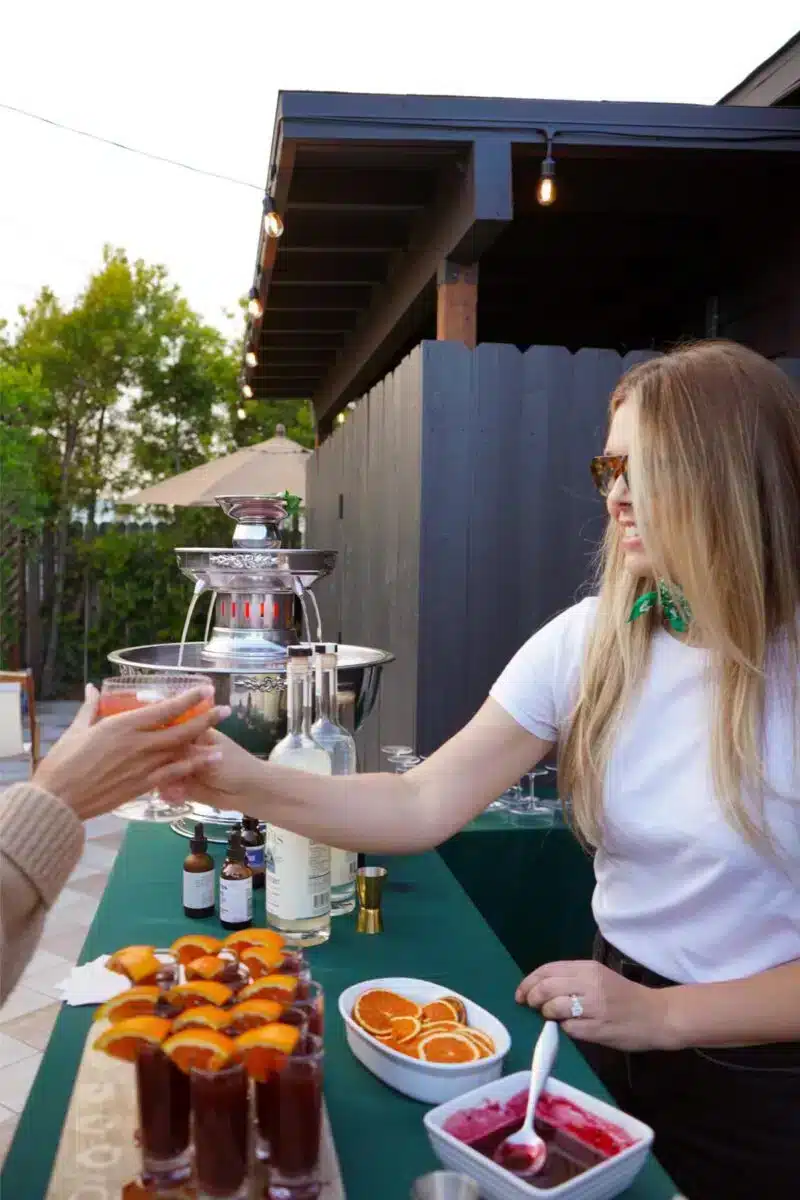
    The Healthy Hour was born as a pop-up experience, equal parts social gathering and wellness retreat.

    We create evenings that allow people to enjoy themselves while also caring for their bodies and minds.

    A place where we can proudly NOT serve alcohol and offer a way for not just wellness-focused people but also non-drinkers, sober curious, and everyone in between to partake in a “better for you” way of socializing over a drink.

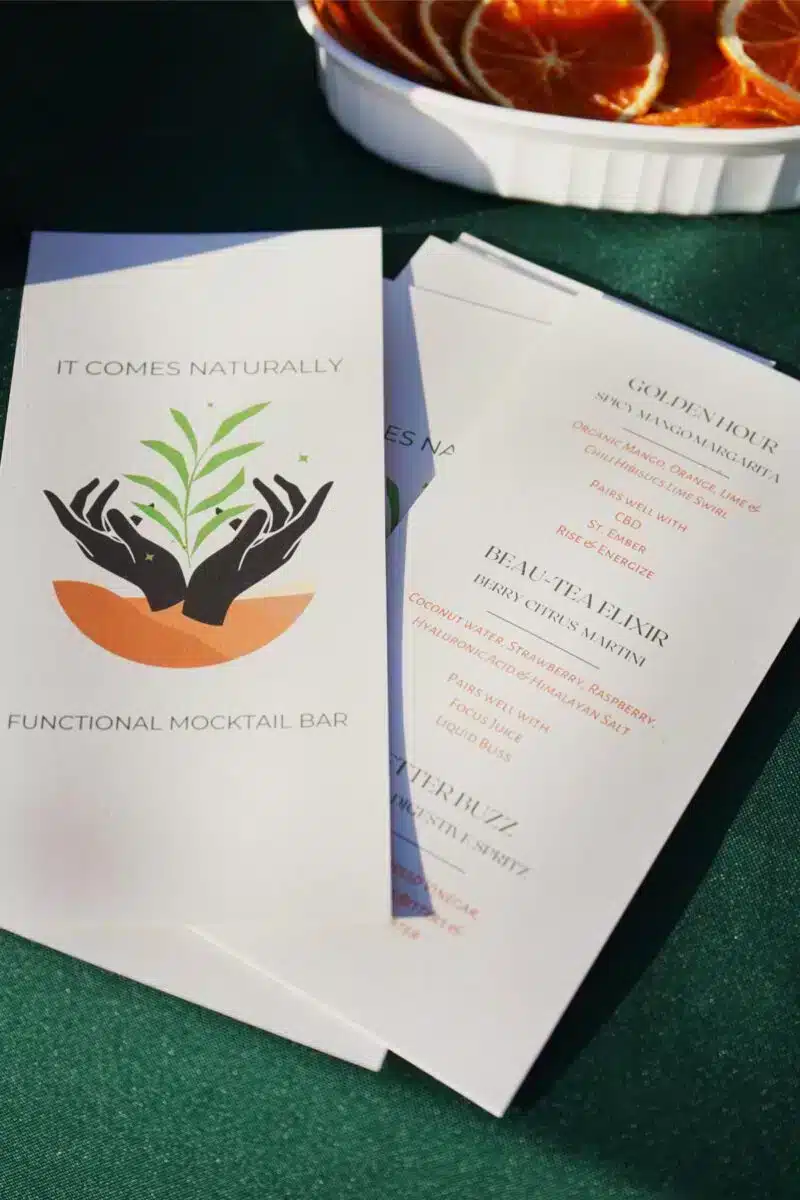
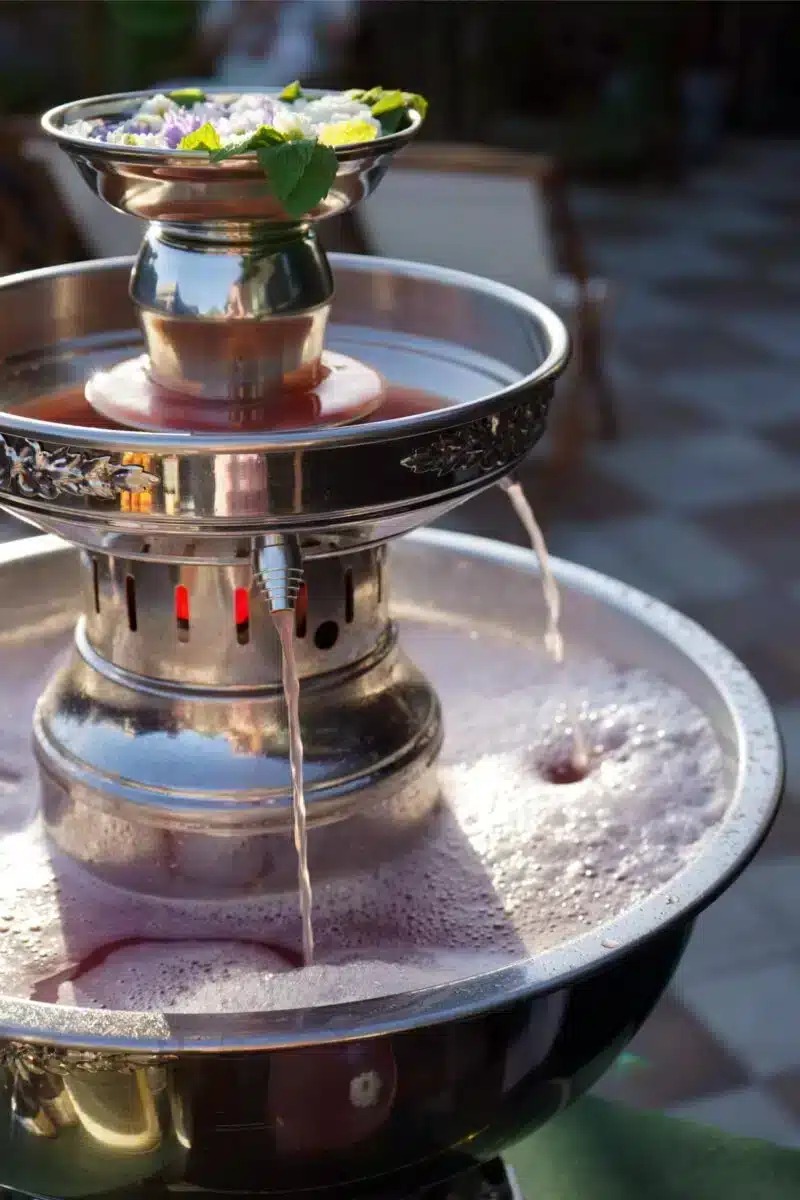
    Instead of cocktails, we serve functional mocktails crafted with adaptogens, nootropics, and mood-boosting botanicals. Instead of fluorescent lighting and background noise, we curate music and ambiance designed to restore nervous system balance.

    We host parties outside, under the stars, to connect with nature. Instead of “small talk over a drink,” we meditate as a group or have aura readings to stimulate conversation, laughter, and connection.

    One of the first details I obsessed over was the beverage menu. As someone who practices functional nutrition and loves being in the kitchen, crafting something others will enjoy, I wanted every sip to be purposeful.

    Drinks like our Dope Juice are like a green juice martini full of CBD and Lion’s Mane. The Spicy Avocado Margarita features ingredients like schisandra berry, L-theanine, and ginseng that support energy and mental focus.

    Or a round of shots before a meditation that actually help relax you naturally with GABA and 5-HTP.

    It was also very important to me that the drinks were fun and beautiful, because there’s something special about a natural dopamine hit from drinking a pretty drink in a magical space.

    What I’ve Learned from Hosting

    Hosting The Healthy Hour has been both rewarding and eye-opening.

    I’ve learned that wellness hospitality isn’t about stripping fun away; it’s about layering intention underneath it.

    It’s about creating spaces where people feel comfortable being themselves, where socializing doesn’t mean sacrificing health goals, and where the body feels as good the next morning as it did the night before.

    I’ve discovered that people are more than ready for healthier ways to gather. Many guests arrive curious but skeptical, wondering if an event without alcohol can still feel fun.

    By the end of the evening, that skepticism turns into enthusiasm. They’re surprised at how easy it is to connect when there’s no numbing involved, how refreshing it feels to leave energized instead of depleted.

    It may be even more rewarding to have people who have never had somewhere they felt comfortable being the non-drinker say “I can’t tell you how nice it is to be somewhere where not drinking alcohol is normal and cool”.

    I’ve also learned that connection itself is medicine. The very act of gathering, sharing stories, laughing, and being seen is profoundly healing.

    Looking Ahead

    For me, The Healthy Hour is just the beginning. My dream is to see these kinds of experiences expand beyond a niche wellness retreat. A world where socializing is synonymous with well-being.

    The future of hospitality is providing unique alcohol-free experiences that inspire people to prioritize their health, connect authentically, and embrace the fullness of life without compromise. Spaces that nourish as much as they entertain, experiences that leave people better than when they arrived.

    As a practitioner and a founder, I’m proud to create spaces where wellness is celebrated as something attainable and “normal”, reminding us that socializing doesn’t have to mean self-sacrifice.

    Because wellness shouldn’t live only in the clinic or the retreat center. It should live in the ways we gather, the drinks we share, the food we eat, and the moments that bring us back to ourselves.

  • Soul Alive Retreats: Why the Nervous System Craves a ‘Safe Space’

    Soul Alive Retreats: Why the Nervous System Craves a ‘Safe Space’

    Tim’s Take: Many wellness retreats treat recovery like a strict clinical checklist, ignoring the profound biological impact of unstructured joy and community. Jenna explores why removing expectation and engineering psychological safety is the ultimate trigger for a deep, lasting nervous system downshift.

    Costa Rica has a way of finding me, again and again.

    Over the past 20 years, I have traveled there more than 26 times, each journey weaving its way deeper into who I am and the work I create in this world. What began as assisting on a raw living foods retreat two decades ago slowly evolved into something I could never have imagined then, the birth of Soul Alive Retreats, a sacred extension of the healing work that fills my life.

    It did not happen through force or planning. It unfolded on its own, like nature does when we simply allow it.

    What we now call Soul Alive Retreats became a graceful uniting of two worlds: the land that feeds and inspires me, and the spaces of CenterPeace Healing, which I have built with my whole heart here at home in Michigan. 

    You could say that Costa Rica has been quietly shaping everything I do, and in return, CenterPeace has been shaping what Soul Alive is becoming. The two have grown together almost unknowingly, an organic dance between place, purpose, and people.

    Creating Safe Spaces

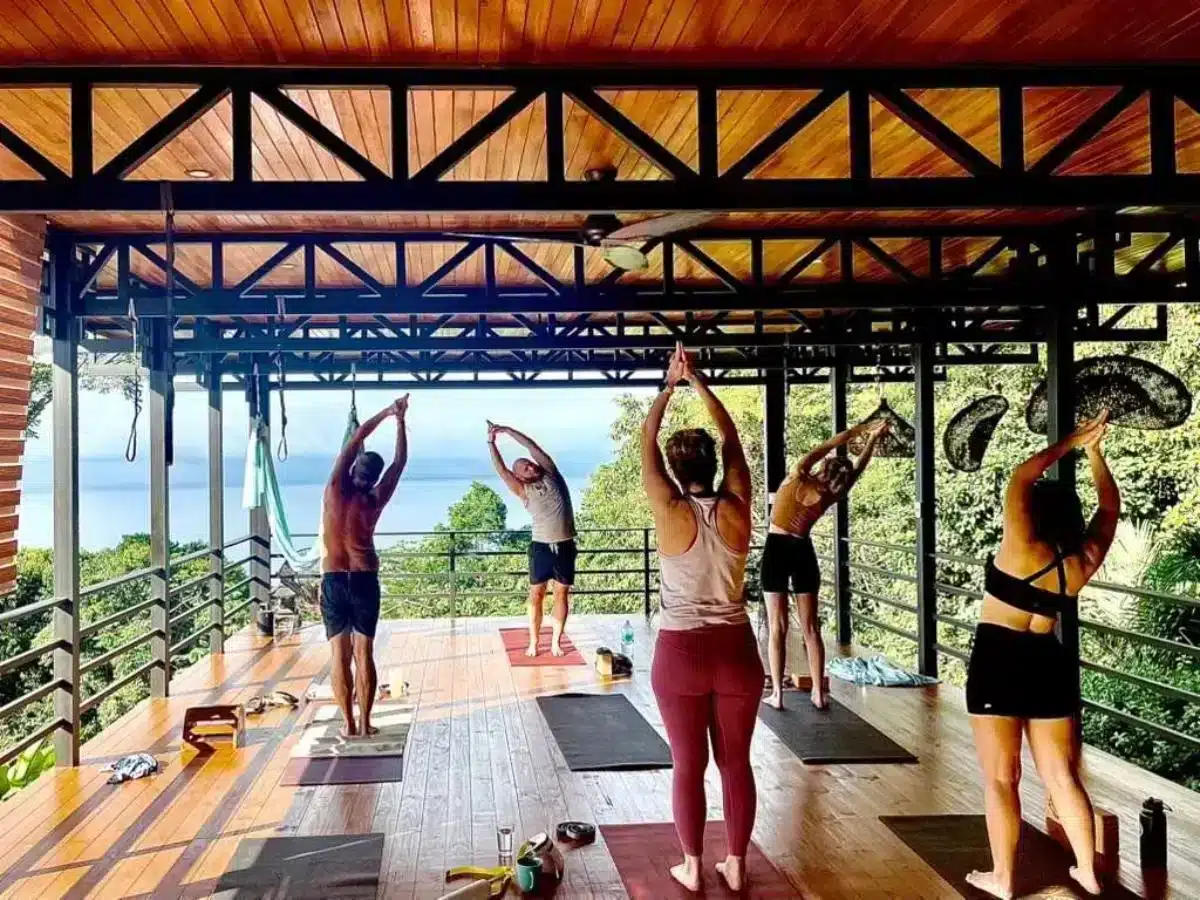
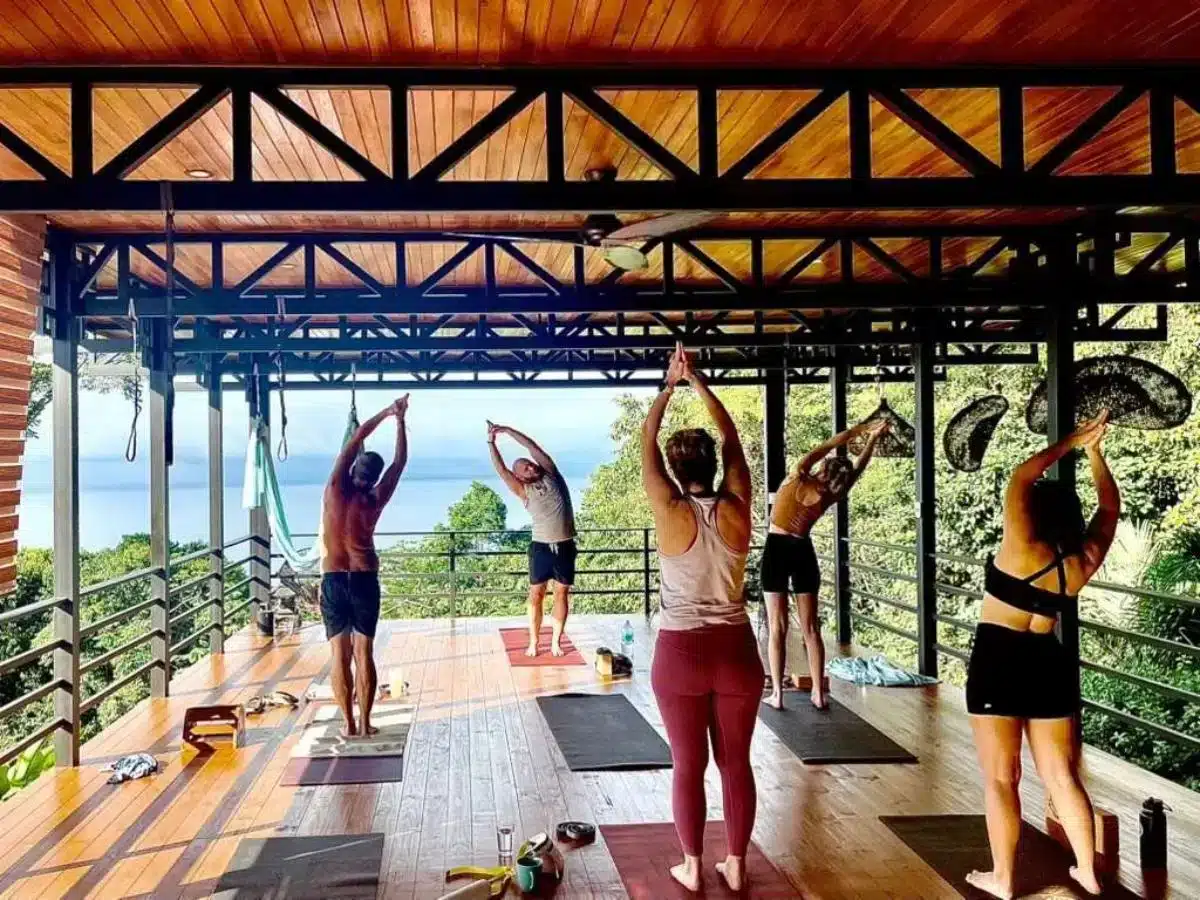
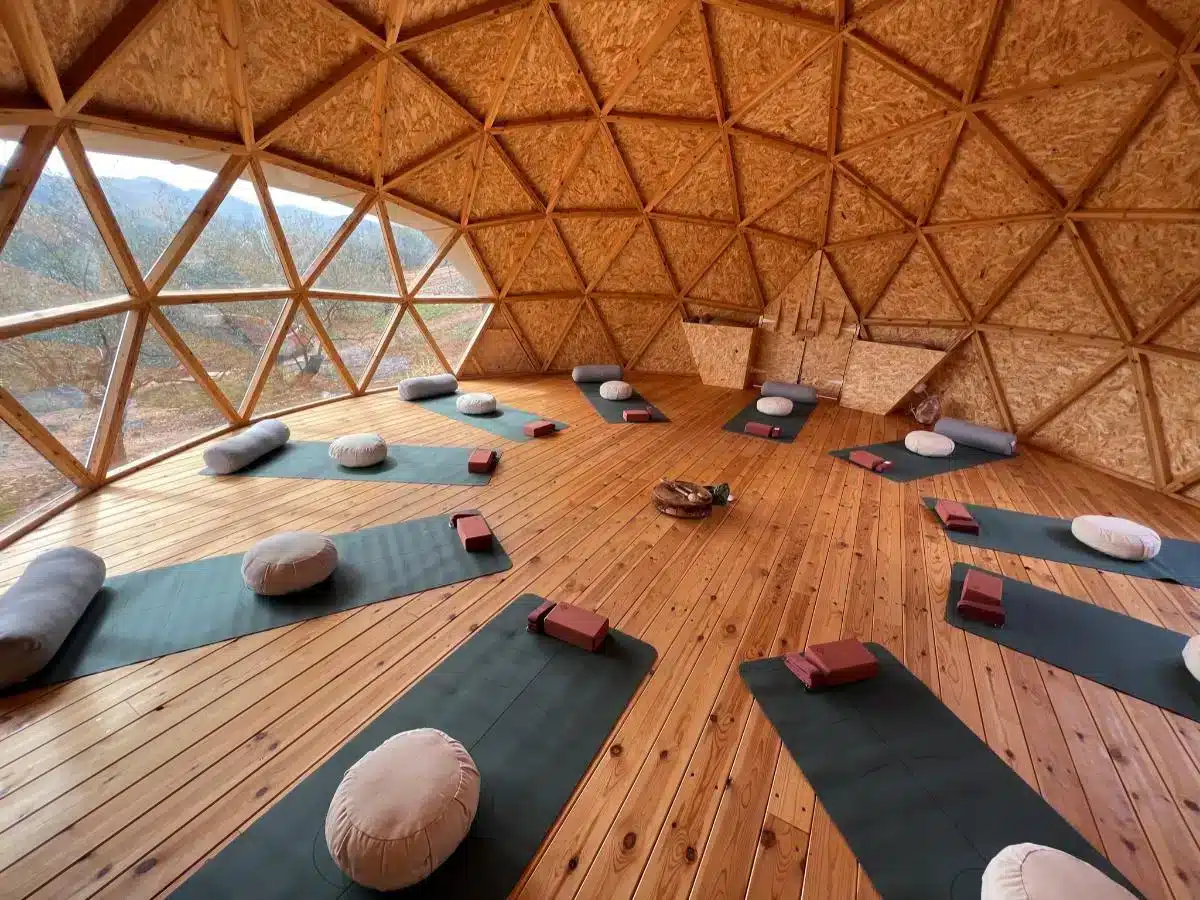
    Group yoga session in an open-air pavilion overlooking the rainforest and ocean at Soul Alive Retreats Costa Rica

    I have often been told that I have a gift for creating safe spaces. For me, that means crafting environments where people can be seen and met exactly where they are.

    Spaces that invite openness, curiosity, and healing without pressure or expectation. Bringing that same energy into Costa Rica, into a place that makes me feel held and safe, felt like the most natural thing in the world.

    A Retreat That’s More Than a Wellness Escape

    When I began shaping these retreats, the goal was not to design another wellness escape. I wanted to create something that invited people to slow down, reflect, and reconnect, a sacred pause and a return home to themselves.

    These retreats are a co-collaboration with my colleague and friend, Dr. Lawrence Bell, bringing together a small group of trusted healers and practitioners from both CenterPeace and Costa Rica.

    What we have built is more than a retreat. It is a living experience that continues to evolve and remind us all what it means to feel alive.

    Mornings in Costa Rica

    Each morning in Costa Rica is always my favorite. You can literally feel the land waking up. The sunrise stretches across the sky, the mist lingers over the mountains, the howler monkeys call in the distance, and the symphony of birds fills the air.

    You step outside, barefoot and heart open, and the air itself feels alive. There is a moment when you look up at the sky, filled with gratitude and awe, and realize the clouds above you are the same clouds that drift over you at home.

    In that simple awareness, everything inside you quiets. You remember that healing does not belong to one place. It lives within you, wherever you stand.

    The Space Between Stillness and Joy

    That, to me, is the heart of this experience. Yes, there is bodywork, breath, sound, and ceremony, but it is what happens between those moments that changes people.

    The laughter that echoes by the pool, the stillness of a shared sunset, the freedom that returns when someone remembers what it feels like to play again.

    We often talk about healing as hard work, about the discomfort, the release, and the shadow, but we forget that joy is medicine too. Awe, wonder, and adventure can shift our energy in ways just as profound as any traditional modality.

    What Wellness Travel Means to Me

    That is what wellness travel means to me. It’s creating containers where people feel safe enough to explore, to rest, to laugh, and to remember what being alive truly feels like.

    In Costa Rica, surrounded by the hum of the jungle and the rhythm of the sea, people come back to themselves. They breathe again.

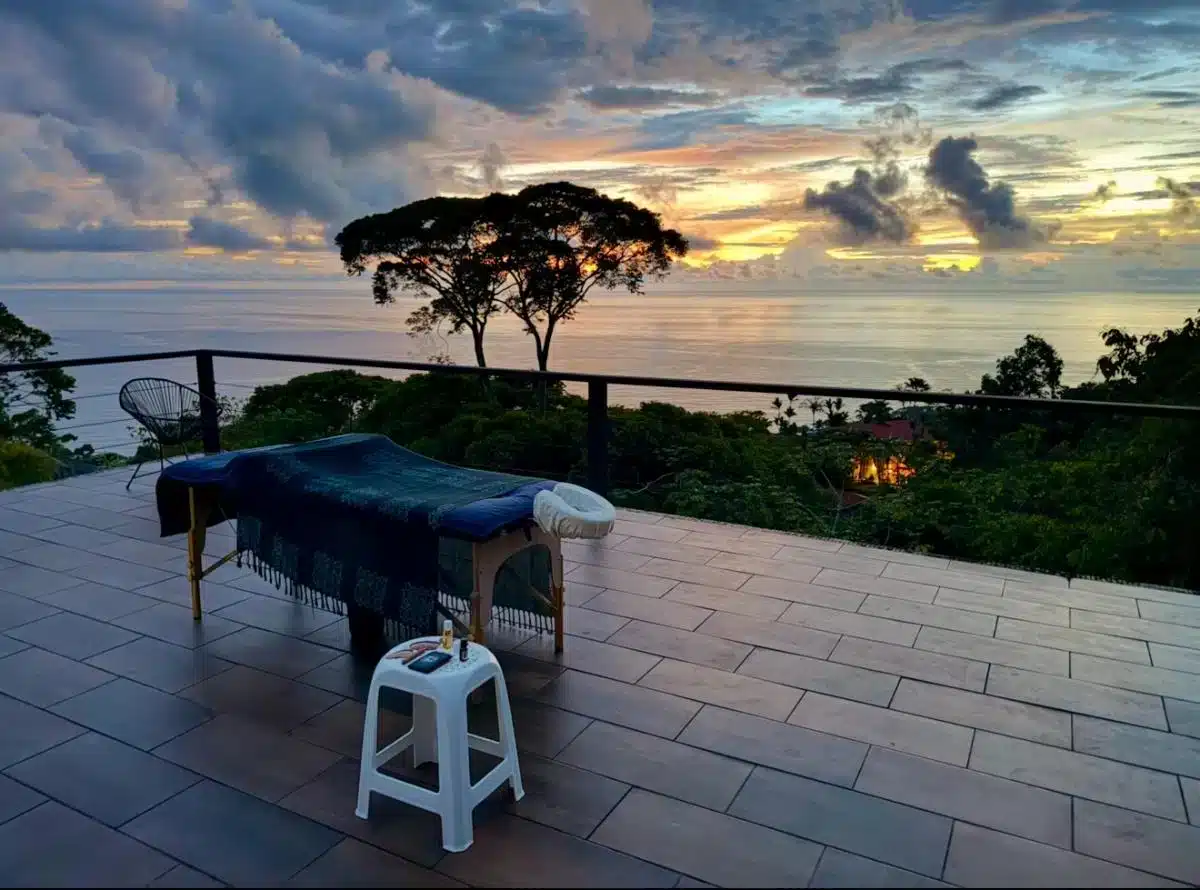
    And as the sun sets over the rainforest each night and the stars rise one by one, I feel that same stillness in my own heart. The same gratitude. The same knowing that this meeting of land, light, and love is exactly what I was meant to help create.

    For me, this is not just a retreat. It is a reunion, with self, with nature, and with the quiet magic that lives inside us all.

    Every time I return, I am reminded that healing is not something we chase. It rises naturally in the moments we allow ourselves to be still, to feel, and to simply be.

    That is what these retreats have come to mean to me, the place where stillness meets the stars and the soul awakens.

  • What is the Restorative Index?

    What is the Restorative Index?

    The Restorative Index is a structured evaluation framework created by Tim Kroeger to measure whether a luxury wellness hotel genuinely restores your energy.

    The Restorative Index in 30 Seconds

    The Restorative Index is a 100-point framework that evaluates luxury wellness hotels across six dimensions:

    • Sleep Architecture
    • Environmental Calm
    • Nutritional Impact
    • Bioregulation & Spa
    • Movement
    • Frictionless Operations

    Each category is weighted based on its real impact on recovery.
    The final score answers one question:
    Did you leave feeling better than when you arrived?

    Most hotel reviews evaluate a property’s appearance. The Restorative Index evaluates what it does to you. Specifically, it measures the six physiological and operational dimensions that determine whether you leave a hotel stay feeling restored or depleted: sleep quality, environmental calm, nutrition, spa and recovery infrastructure, movement options, and operational friction.

    Each property is scored out of 100 points across these six pillars, with weights reflecting their impact on genuine recovery. The result is a single, transparent number that answers the only question that matters: did you leave feeling better than when you arrived?

    The Restorative Index does not ask “Was it beautiful?” It asks “Did you leave feeling better than when you arrived?”, that is the only metric that matters.

    Tim Kroeger, Creator of the Restorative Index

    Why the Restorative Index Exists

    After 15 years of full-time travel across 110+ countries and 5,000+ nights stayed in hotels, I noticed a pattern: some of the most visually stunning properties left me more tired than when I arrived. Meanwhile, quieter, less photogenic places sometimes delivered the deepest recovery of any trip.

    Traditional hotel reviews could not explain this. A property with a five-star rating, beautiful interiors, and glowing reviews might still deliver poor sleep due to thin walls, blue-toned lighting, or a gym that consisted of two treadmills in a basement. The aesthetics scored perfectly, but the guest experience failed where it mattered most.

    I created the Restorative Index to solve this gap. It shifts the evaluation from surface aesthetics to measurable recovery outcomes. It is a repeatable, transparent scoring system designed for travelers who understand that the true return on a hotel stay is measured in energy, not aesthetics.

    The framework was later sharpened by clinical work with Dr. Sarassawadee Suwanjinda at Healthi Life Bangkok, where biomarker data, sleep architecture research, and recovery science informed how each pillar is weighted. I document that process openly in my longevity journey.

    The Six Pillars of the Restorative Index

    Every property evaluated through the Restorative Index is scored across six weighted dimensions, totaling 100 points. The weighting reflects the physiological hierarchy of recovery: sleep matters more than gym equipment, and environmental calm matters more than spa menu variety. Every section combines sensory storytelling with concrete observation and experiential evaluation. We do not merely list data; we describe how the data translates to the guest experience.

    1. Sleep Architecture & Acoustic Isolation — 30 Points

    Sleep is the foundation of energy restoration. If this dimension fails, the property cannot score highly overall.

    Sleep is the highest-weighted dimension because if you do not sleep well, nothing else the property offers really matters. This pillar carries 30 out of 100 points because sleep quality is the single most important determinant of whether a hotel stay restores or depletes you.

    We evaluate blackout effectiveness, including light bleed at dawn and night, acoustic isolation from hallways, external noise, and HVAC sound, thermal regulation, including stable and quiet cooling and heating, mattress support and material quality, and pillow options and sleep accessories.

    Guiding question: Did sleep feel deeper, longer, and uninterrupted?

    2. Environmental Calm & Nervous System Regulation — 20 Points

    This pillar measures whether the property’s overall environment actively calms the nervous system or subtly overstimulates it. A hotel can have a beautiful spa and excellent beds, but if the lobby is loud, the pool area is crowded, and you can hear construction from your balcony, the cumulative sensory load erodes the benefits of every other amenity.

    We assess lighting temperature transitions from morning to evening, spatial flow, evaluating whether it is open and intentional versus cluttered, crowd density and privacy architecture, visual overstimulation assessment, and ambient soundscape quality.

    Guiding question: Did the environment down-regulate stress, or subtly stimulate it?

    3. Nutritional Impact & Stable Energy — 15 Points

    What you eat during a hotel stay directly affects energy stability, cognitive clarity, and sleep quality. This pillar evaluates whether the property’s dining options support sustained energy or create the blood sugar fluctuations that leave you crashing by mid-afternoon.

    We evaluate ingredient quality and protein availability, freshness and preparation philosophy, flexibility with dietary preferences and restrictions, and room service suitability for late arrival without energy crash.

    Guiding question: Did meals support steady energy, or create heaviness and fluctuation?

    4. Bioregulation & Spa — 15 Points

    We distinguish clearly between genuine recovery support, thermal circuits, skilled bodywork, structured protocols, and purely aesthetic indulgence.

    This pillar measures the depth and effectiveness of a property’s spa, thermal, and recovery infrastructure. It goes beyond “Does the hotel have a spa?” to ask whether the recovery offering delivers measurable physiological benefit.

    We evaluate practitioner competence and treatment specificity, thermal facilities functionality, including whether cold plunges are actually cold, and whether treatments contribute to measurable physical or nervous system recovery.

    Guiding question: Did the spa meaningfully enhance restoration?

    5. Movement — 10 Points

    Movement supports recovery. Stagnation undermines it. This pillar evaluates whether a property makes it genuinely easy for guests to maintain physical vitality during their stay.

    We assess space for mobility, stretching, and functional movement, equipment quality, variety, and layout, air quality, and climate comfort during exercise, and recovery tools availability, including foam rollers, stretch areas, and ice baths.

    Guiding question: Can a guest maintain or gently improve physical vitality here?

    6. Frictionless Operations & Cognitive Ease — 10 Points

    Guest energy is often lost through friction. This is the dimension most luxury hotels overlook entirely. Every decision you have to make, every miscommunication you have to resolve, every moment you spend waiting drains the same finite energy pool that the property’s other wellness features are trying to replenish.

    We evaluate service anticipation versus decision fatigue, efficiency, and warmth of check-in and check-out, clarity of communication across all touchpoints, and seamlessness of logistics, transfers, and daily coordination.

    Guiding question: Did the stay feel effortless, or mentally draining?

    The Restorative Index — Score Breakdown

    DimensionWeightWhat It Measures
    Sleep Architecture
    /30Blackout effectiveness, acoustic isolation, thermal regulation, mattress quality, sleep onset design
    Environmental Calm
    /20Sensory load, privacy, spatial flow, lighting transitions, soundscape
    Nutritional Impact
    /15Protein availability, ingredient quality, energy stability, dietary flexibility
    Bioregulation & Spa
    /15Thermal circuits, treatment depth, contrast therapy, practitioner skill
    Movement
    /10Gym quality, movement variety, recovery tools, exercise environment
    Frictionless Operations
    /10Service anticipation, communication, logistics, cognitive load reduction
    Restorative Index/100Total restoration score

    Score Interpretation

    A score of 90 to 100 represents an exceptional restorative stay where the property excels across all dimensions. A score of 80 to 89 is a strong restorative stay with minor gaps in one or two areas. A score of 70 to 79 indicates a good stay with noticeable weaknesses in specific pillars. Anything below 70 suggests the property does not deliver meaningful restoration despite its other qualities.

    A property can be visually stunning and still score poorly on the Restorative Index if it disrupts sleep, overstimulates the nervous system, or creates hidden friction that drains energy. The Restorative Index measures outcome, not appearance.

    Tim Kroeger

    How We Conduct Evaluations

    Each Restorative Index evaluation is conducted during a multi-night on-property stay, typically three to four nights. This duration is necessary to move past the novelty effect of arrival and experience the property under real conditions, including multiple sleep cycles, several meal periods, and sustained exposure to the environment.

    During the stay, we access and evaluate suites and room categories, spa and thermal facilities, all on-site dining options, fitness and movement facilities, common areas and grounds, and the full service experience from check-in to departure.

    Every evaluation includes full transparency: whether the stay was self-funded or hosted, the room category tested, the dates of the visit, and the booking context. No partner receives editorial control over the published score or content. Integrity matters more than access.

    The Final Test

    Every review concludes with the same final test: will the guest return home operating at a higher baseline, or will they need recovery after their vacation? That single question determines whether a property earns its Restorative Index score, or falls short of it.

    The Restorative Index is a 100-point wellness hotel evaluation framework measuring six dimensions: sleep architecture, environmental calm, nutritional impact, spa and recovery, movement infrastructure, and operational friction. Created by Tim Kroeger after 15 years of global travel and 5,000+ hotel nights, it is the only hotel scoring system designed to measure whether a stay genuinely restores energy.

    About the Restorative Index

    Who the Restorative Index Is For

    The Restorative Index is designed for travelers who have learned that a vacation spent in sensory chaos is not a vacation at all. It serves overstimulated professionals recovering from sustained high-output periods, frequent travelers who understand the cumulative cost of poor hotel sleep, wellness-conscious guests who want evidence-based evaluation rather than marketing claims, and anyone who has returned from an expensive hotel stay feeling more tired than when they left.

    If your definition of a great hotel stay is one that leaves you with more energy than you arrived with, the Restorative Index is built for you.

    Explore Properties Scored by the Restorative Index

    Every luxury wellness hotel review published on tim-kroeger.com includes a full Restorative Index score breakdown. Browse our tested and scored wellness hotel reviews to find your next restorative stay.

    Frequently Asked Questions

    What is the Restorative Index?

    The Restorative Index is a 100-point hotel evaluation framework created by Tim Kroeger that scores luxury wellness hotels across six weighted dimensions: Sleep Architecture (30 points), Environmental Calm (20 points), Nutritional Impact (15 points), Bioregulation & Spa (15 points), Movement (10 points), and Frictionless Operations (10 points). Unlike traditional hotel reviews that focus on aesthetics and amenities, the Restorative Index measures whether a stay genuinely restores the guest’s energy and physiological baseline.

    How is the Restorative Index different from a traditional hotel review?

    Traditional hotel reviews assess décor, amenities, and service quality in isolation. The Restorative Index measures whether a property’s combined environment, sleep architecture, sensory calm, nutrition, recovery facilities, movement options, and operational friction, actually restores the guest’s physiological and cognitive baseline. A property can be visually stunning and still score poorly if it disrupts sleep, overstimulates the nervous system, or creates hidden friction that drains energy. The question is not “Was it beautiful?” but “Did you leave feeling better than when you arrived?”

    Why is sleep weighted so heavily in the Restorative Index?

    Sleep Architecture carries 30 out of 100 points because sleep is the physiological foundation of all recovery. No amount of spa treatments, excellent food, or beautiful design can compensate for poor sleep quality. If a property’s blackout performance is weak, its acoustic isolation is poor, or its temperature regulation is inconsistent, the guest’s overall restoration is fundamentally compromised, regardless of how well the property performs in other areas.

    Who created the Restorative Index and why?

    The Restorative Index was created by Tim Kroeger, a luxury wellness travel expert with 15+ years of full-time travel across 110+ countries and 5,000+ hotel nights personally tested. After years of experiencing a disconnect between highly rated luxury hotels and actual guest recovery, where visually stunning properties often delivered poor sleep and left guests more tired, Tim developed the framework to provide a transparent, evidence-based scoring system that measures what truly matters: whether you leave a hotel feeling better than when you arrived.

    Can a hotel with no spa score well on the Restorative Index?

    Yes. While Bioregulation and Spa Recovery carries 15 points, a property can still achieve a strong overall score by excelling in the other five dimensions. A boutique hotel with exceptional sleep architecture (30 points), perfect environmental calm (20 points), outstanding nutrition (15 points), good movement options (10 points), and frictionless operations (10 points) could score 85 out of 100 even with a modest spa offering. The Restorative Index is weighted to reflect that sleep, calm, and operational smoothness contribute more to genuine restoration than spa facilities alone.

  • Why Most “Wellness Rooms” Fail: Experts on Sleep, Sound & Light

    Why Most “Wellness Rooms” Fail: Experts on Sleep, Sound & Light

    If you’ve ever slept “8 hours” in a hotel and still woken up wrecked, it wasn’t you. It was the room. Here’s what experts say actually drives recovery: sleep, sound, and light, and the mistakes hotels keep making.

    In a world where “wellness rooms” are often defined by aesthetics, guests are asking for something simpler and far more valuable: real recovery.

    The kind you feel the next morning in your sleep depth, your mood, and how quickly your body downshifts after travel.

    Across hotels, resorts, and design studios, one theme keeps showing up in practice: the biggest wins rarely come from adding more “wellness.”

    They come from removing sensory friction, light leaks, sound bleed, harsh illumination, and the constant micro-stress that keeps the nervous system on alert.

    Below are expert perspectives from operators and designers on what recovery-first rooms actually require, with a focus on sleep, sound, and light.

    The non-negotiables: sleep, sound, light

    Stylish wellness bedroom with indoor plants and natural green accents

    Recovery-first Wellness room at The Retreat Koh Chang in Thailand

    A “recovery-first” room isn’t about adding wellness features. It’s about getting the basics right, so your body can actually switch off.

    1) Darkness (real blackout)

    Not just heavy curtains. Proper blackout that seals the edges, blocks early sun, and stops outside glow from bleeding into the room.

    2) Silence (less sound bleed)

    Not “quiet vibes.” Actual noise control, especially from corridors, doors, elevators, and the room next door.

    3) Light control (no harsh overheads)

    Guests should be able to move around at night with soft, low-glare lighting, without turning on bright ceiling lights that snap them fully awake.

    The common thread: recovery isn’t a feature. It’s an environment.

    Expert insights

    1. Nowdla Keefe – Eliminating artificial noise and light

    Nowdla Keefe, Manager at Namale Resort & Spa

    We are noticing a huge trend shift in how people want to spend their hard-earned vacations. There is absolutely no doubt that rest vacations and vacations focused on wellness and recovery are on the rise.

    The single most impactful change that can be made for guest recovery is eliminating artificial noise and light completely.

    At Namale, our bures and villas are intentionally built for more than just aesthetics, but for insulation from both sound and light. You fall asleep to ocean waves, not hallway echoes or screen glare. Guests consistently say it is the best sleep they remember having in years.

    One mistake I see in wellness rooms overall is focusing too much on tech. True rest comes from silence and a thoughtful layout. Our approach is simple but deeply restorative, and that is what our guests remember most.

    2. Rachel Melvald – Removing sensory overload

    Rachel Melvald, Founder, Psychitecture.com

    The biggest change that most improves guest sleep and recovery isn’t adding “wellness features”, it’s removing sensory overload.

    When guests are stressed (or healing), the nervous system can sit in fight-or-flight, and the brain keeps scanning for threat. Excess light, noise, and visual stimulation make true rest much harder.

    Practically, that means upgrading the basics: better door seals, soft-close hardware, and acoustic measures that reduce hallway, elevator, and adjacent-room noise. It also means true blackout wall-to-wall, ceiling-mounted curtains, and eliminating “hidden” light sources like LED glows from thermostats, electronics, or buzzing devices that create low-grade stimulation at night.

    On the lighting side, we recommend removing harsh overhead lighting near the bed and using low-level, warm lighting instead (for example, amber bedside lamps) so the room supports wind-down rather than alertness.

    Most common mistake: adding more stimulation (gadgets, “wellness” add-ons, even excessive features) instead of subtracting friction and sensory demand.

    3. Alex Kuby – Acoustic separation

    Alex Kuby, Associate Principal at DyeLot Interiors

    One design change that most improved guest recovery: Acoustic separation paired with layered, low-glare lighting control.

    Why it works: True recovery is interrupted less by discomfort than by micro-stress. Sound bleed from corridors, elevators, and adjacent rooms keeps the nervous system in a state of alert, even when guests are asleep.

    Similarly, overhead lighting and uncontrolled light spill disrupt circadian rhythms. When rooms are designed with acoustic buffering at doors, headwalls, and party walls, and lighting is layered so guests can move through the room without harsh illumination, the body is allowed to downshift. This is not about aesthetics; it is about reducing sensory demand so recovery can occur passively.

    Real-world example: At Hotel De Novo, a Tapestry Collection by Hilton property in Springdale, Utah, DyeLot focused on reducing sensory friction in the guestroom rather than adding wellness-branded features.

    The design team prioritized acoustic buffering at corridor-facing walls and doors, minimized reflective surfaces near the bed, and introduced layered lighting that indirectly illuminates walls from concealed sources in the millwork to allow guests to move through the room at night without activating overhead fixtures.

    Window treatments were detailed to fully darken the room, accounting for early desert sun and exterior ambient light. These interventions were subtle, operationally durable, and invisible when done correctly, but they fundamentally changed how the room supported rest and recovery after a day in Zion National Park.

    Most common mistake: Treating wellness as an additive program rather than subtracting friction. A room that truly supports recovery is quieter, darker, simpler, and more forgiving.

    4. James Kuester – Adding blackout shades

    James Kuester, Principal at Küster Design

    Bedroom with controlled natural light through adjustable blinds

    The most significant change we’ve made in our guest room design is the addition of blackout shades alongside the existing window treatments. This upgrade has greatly improved the guest experience by creating a darker, more restful sleeping environment.

    One of the features guests comment on most is the ability to fully control the amount of light in their room. At the Blenman Inn in Tucson, AZ, for example, the shades are even powered by remote control, making them effortless for guests to operate.

    Shay Howell, Operations Manager, says, “Guests regularly comment on how much better they sleep being able to block out the bright, Arizona sun at night.”

    At San Gabriel House in Georgetown, TX, guests often admire the beauty of the updated window treatments, but, as Innkeeper Danni Babik notes, “…they always comment on how appreciative they are of the fully adjustable room-darkening shades.

    What actually worked: the pattern across these experts

    Across four different perspectives, the most effective recovery-first interventions are remarkably consistent:

    • Make darkness total (and controllable). Not “nice curtains,” but blackout that accounts for edge leaks and ambient exterior light, plus simple controls guests will actually use.
    • Treat noise like a design problem, not a guest complaint. Corridor-facing walls, doors, headwalls, and party walls matter. Sound bleed keeps the nervous system in a state of alert even when the guest thinks they’re asleep.
    • Swap harsh overheads for layered, low-glare lighting. Guests need a night pathway that doesn’t spike alertness, indirect illumination, warm bedside options, and reduced glare near the bed.
    • The best interventions are often invisible when done right, subtle upgrades that reduce sensory demand without adding complexity.
    • The consistent warning: “wellness rooms” fail when they add features without removing what interrupts rest.

    The most common “wellness room” mistake

    The most repeated critique is blunt: hotels treat wellness as an additive.

    They add tech. Add gadgets. Add features. Add aesthetics.

    But if the room still has light leaking around the curtains, sound bleeding from the hallway, glare near the bed, and a night lighting setup that forces guests to blast overheads, then the guest’s physiology stays on alert. The result: a room that looks like wellness and performs like any other.

    A recovery-first room is usually quieter, darker, simpler, and more forgiving.

    Case study: Desa Hay Bali (in-room recovery basics done right)

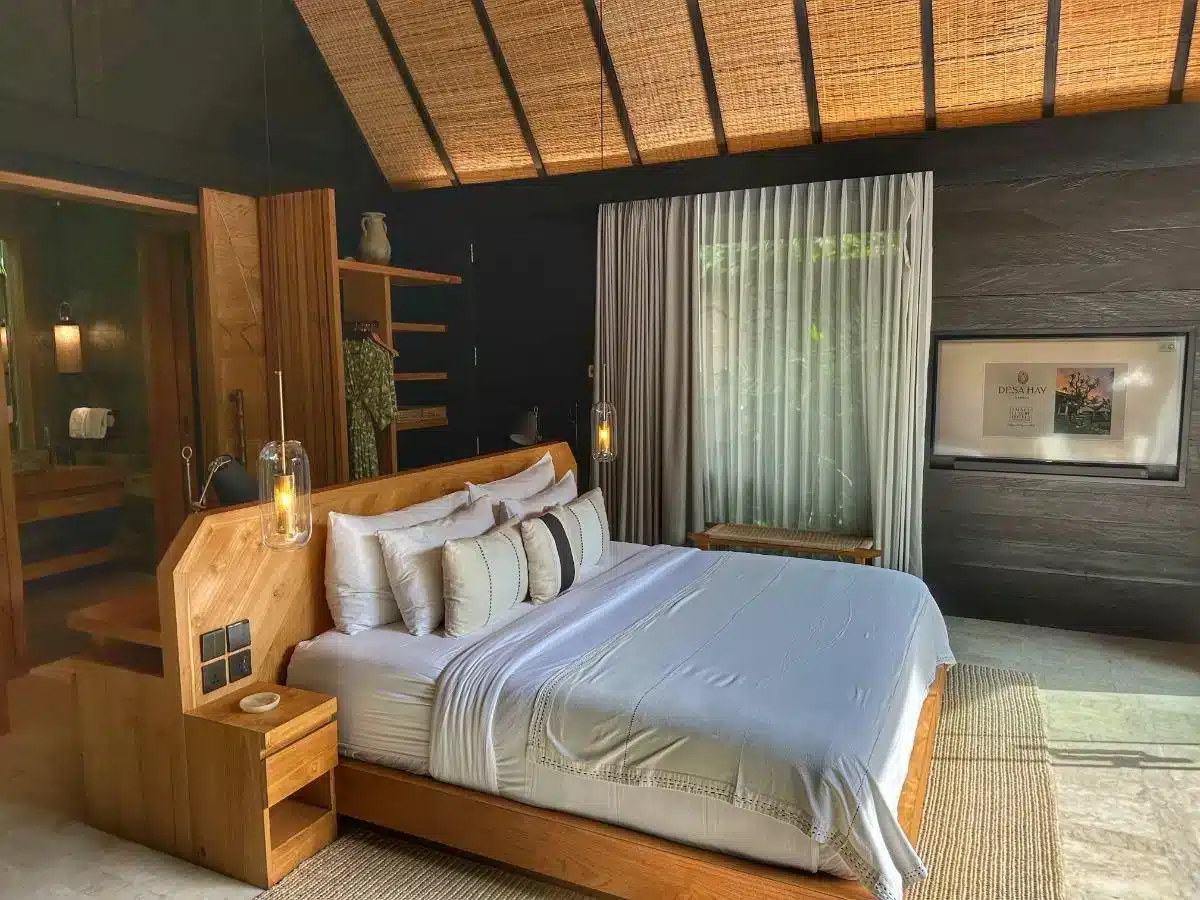
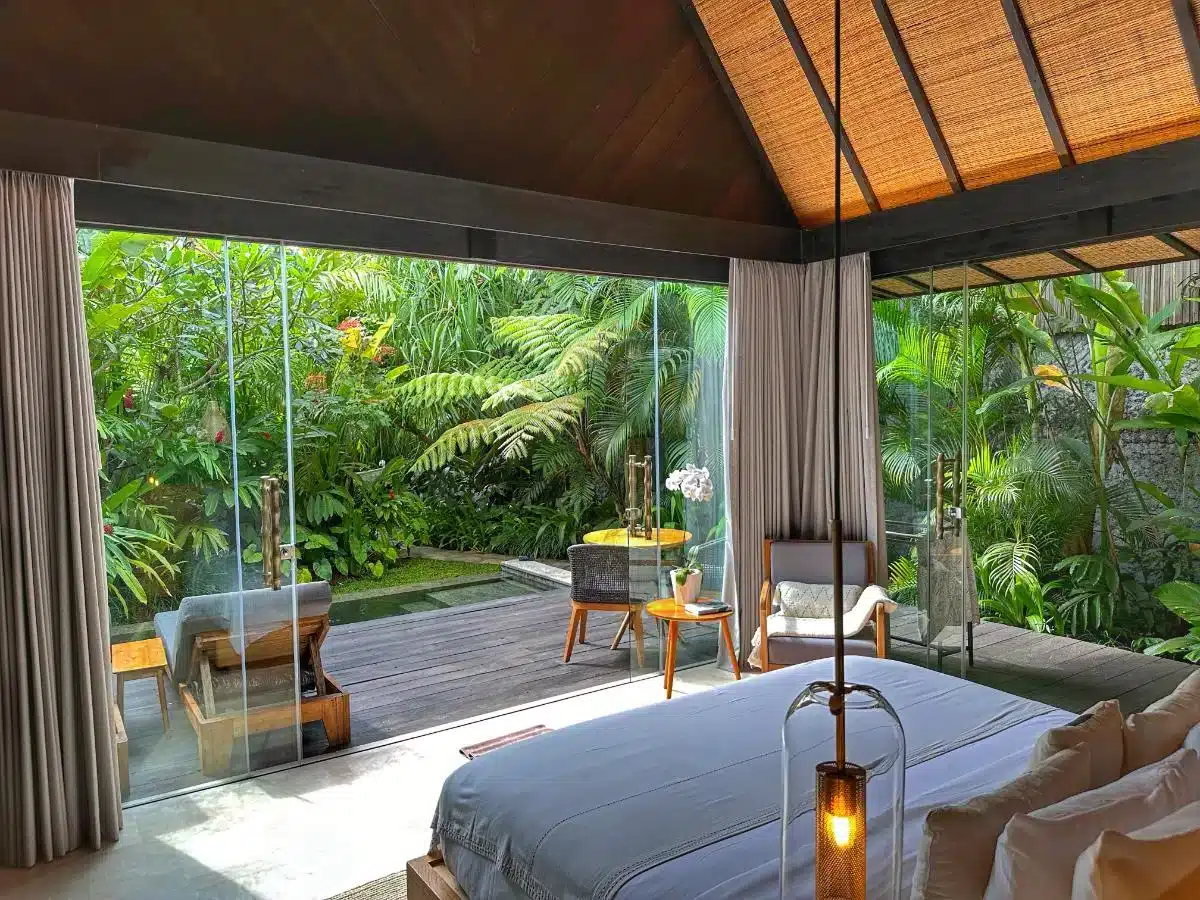
    The photos above are from my villa at Desa Hay Bali, and it’s a clean example of what “recovery-first” looks like in practice.

    Sleep quality came down to three basics done well: proper blackout (curtains that actually block morning light), near-total quiet (no noise bleed interrupting the night), and usable night lighting (soft enough to move around without resorting to harsh overheads).

    That combination is exactly what the experts above keep pointing to. An environment that makes it easier for the nervous system to downshift and for sleep to stay intact.

    Closing: what “recovery-first” really means

    A recovery-first room isn’t a wellness aesthetic. It’s a room that lowers sensory demand so the nervous system can downshift, quiet, dark, and controlled in a way that makes rest happen almost automatically.

  • 5 Travelers Share the Moment Travel Burned Them Out and the Rule They Live By Now

    5 Travelers Share the Moment Travel Burned Them Out and the Rule They Live By Now

    There’s a moment many frequent travelers recognize: the trip that should feel exciting starts to feel like endurance. Not because the destination is “bad,” but because your body is quietly keeping score.

    Sleep debt, overstimulation, constant movement, friction, pressure to maximize.

    Below are five first-person stories from travelers who hit that wall, and the single rule that changed how they travel afterward.

    The rules, at a glance

    • Dana Yao: International trips start with adjustment, not highlights.
    • Johan Siggesson: If it’s not restful, it’s not sustainable.
    • Elizabeth Mateer: Don’t abandon yourself in the hard moments.
    • Bernadine Cruz: What you can control should work for you, not against you.
    • Jamie Warwick: Movement is optional; rest is not.

    Dana Yao – Japan, day four: My itinerary didn’t care that I was jet-lagged.

    Co-Founder, Dana Yao Media

    The trip that burned me out was our first trip back to Japan after we stopped living there.
    When Japan was home, traveling there always felt exciting and energizing. So when we went back as visitors, we planned a super packed 2.5-week trip, thinking we could do it all: places we didn’t go before, new restaurants and activities, and day trips to explore new areas. I didn’t want to miss out on anything.

    The turning point came about 3 or 4 days in. We were still jet-lagged because I hadn’t planned in any recovery time, and suddenly we were walking about 25,000 steps a day after months of a much more sedentary life in the US.

    By 8 pm, I was collapsing the moment we got back to the hotel. My whole body hurt, especially my back and feet. Despite the exhaustion, I kept pushing because my itinerary said we should. Quickly I realized that I was burned out and just not excited anymore.

    So learning from that trip, the rule I travel by now is: if it’s international travel, the first couple of days are for adjusting and settling in, not hitting as many places as possible. We also limit each day to 1-2 major highlights and let the rest be open so we could have the room to be spontaneous and explore in the moment.

    The signal: Exhaustion that didn’t reset overnight + body pain + “not excited anymore.”
    The rule now: If it’s international travel, the first couple of days are for adjusting and settling in, not hitting as many places as possible.
    What changed: She limits most days to 1–2 major highlights, leaving space to be spontaneous instead of constantly catching up to the itinerary.

    Johan Siggesson – Uganda: I missed gorillas because I’d emptied the tank.

    Traveling Photographer & Owner, Johan Siggesson Photography

    I was in the middle of a multi-stop journey through East Africa, capturing the seasonal shifts of the wildlife. I experienced wonderful photography opportunities- golden light, elephants at dawn. My body was telling me to slow down, sleep, and relax.

    I was doing sunrise safaris and editing marathons at night, and thought I was doing the smartest thing by maximizing my time. I started waking up with a deep sense of dread, and the excitement behind the camera started to fade.

    I was still in Uganda when I reached my breaking point. I missed a once-in-a-lifetime opportunity to encounter gorillas because I was too worn out to go. I sat in my tent and lost the battle. The moment was both tough and clear.

    My rule now: If it’s not restful, it’s not sustainable.

    I always take the first 24 hours slowly. I don’t take pictures, and I don’t do excursions. I check in and walk around quietly, and let the place greet me instead of the other way around.

    The first time I exercised that rule was in the Faroe Islands. I allowed the wind and silence do the work of transition, and I, for the first time in a long time, did not feel like I was “working” while traveling.

    The signal: Waking dread + emotional flatness + fading excitement
    The rule now: If it’s not restful, it’s not sustainable.
    What changed: He protects the first 24 hours: no photos, no excursions. He checks in, walks around quietly, and lets the place “greet” him before he starts extracting experiences from it.

    Elizabeth Mateer – Antarctica + Kilimanjaro: Solo can mean fear with no one to lean on.

    PhD, Neuropsychology fellow at Harvard Medical School

    Traveler reflecting on burnout and personal travel transformation

    Travel burned me out the first time I realized that “solo” doesn’t just mean independence: it can mean fear, discomfort, and having no one to lean on at the moment.

    For me, it happened twice in ways I still remember vividly. The first was crossing the Drake Passage on the way to Antarctica. I was alone in a cabin, violently seasick, listening to waves slam the ship and feeling the floor tilt under me like it had a mind of its own. No cell service. No exit. Just the thought: I made a mistake. I chose this. I’m stuck.

    The second was Kilimanjaro. I climbed “solo” (with a guide, but socially alone), and summit night hit after a day of altitude sickness. It was midnight, freezing, and I had this quiet, seductive thought: I don’t have to do this. If I turn around, no one will know. That’s the turning point: when travel stops being inspiring and starts feeling like endurance.

    My body’s signals were clear: nausea, poor sleep, irritability, and a kind of anxious tunnel vision, like my world shrank to “get through the next hour.”

    The rule I travel by now: Don’t abandon yourself in the hard moment

    The ritual that changed everything is simple: I stop fighting the experience and start supporting my nervous system: warmth, water/electrolytes, slow breathing, and one tiny goal at a time (“get dressed,” “walk to that rock,” “eat two bites”).

    In less intense situations, it usually just comes down to having a snack. I remind myself: fear and aloneness often show up right before something incredible.

    I don’t regret either trip. Pushing through gave me empowerment I still draw on and friendships from both journeys that I still have today.

    The signal: Nausea + poor sleep + irritability + anxious tunnel vision (“get through the next hour”)
    The rule now: Don’t abandon yourself in the hard moment.
    What changed: She stopped fighting the experience and started supporting her nervous system: warmth, electrolytes, slow breathing, and one tiny goal at a time—“get dressed,” “walk to that rock,” “eat two bites.” In less intense situations, the same principle often looks like something small (a snack, water, a pause) before the spiral starts.

    Bernadine Cruz – China: The friction was the burnout.

    Founder, Conmigo Travel Bags

    Traveler sharing their burnout experience and life-changing travel rule

    I thought I was a good traveler until I flew to China.

    11 ½ hours in economy class will teach you things about your body and soul you never wanted to know. It was somewhere over the Pacific, after a night of brain-numbing sleeplessness and a snoring, flatulent seatmate, knees jammed into the seat in front of me, and a back that felt twice its age, I knew I was going to lose my mind before I even landed.

    Then came China. It hit me like a great wall (pun intended). Crowds, noise, and the constant anxiety of pickpockets. Halfway through what should have been a once-in-a-lifetime trip, I was frustrated and exhausted.

    My everyday carry was a black hole. I could never find my phone when I wanted to take a photo. My passport and money were always buried. The fanny pack I thought would solve everything was useless.

    My carry-on was too big. My body and mind hurt. My patience was gone. I remember standing in another airport terminal, juggling bags, thinking, there’s got to be a better way.

    My body’s signal was constant tension. Wired-but-drained. A GI tract that was not cooperating. A feeling where everything was just too much effort.

    The rule I travel by now: You can’t control everything, but what you can, make it work for you and not against you. I decided to start with what I carry.

    The signal: Constant tension + wired-but-drained fatigue + GI stress + everything felt like effort
    The rule now: You can’t control everything, but what you can, make it work for you and not against you.
    What changed: She decided to start with what she carries, reducing friction so travel isn’t a series of small, constant battles.

    Jamie Warwick – Southeast Asia: I wasn’t traveling. I was managing myself.

    Founder, Bangkok Driver

    The point where travel burned me out wasn’t a single bad trip; it was the way I was travelling. I spent months moving through Southeast Asia with a backpack, constantly packing and unpacking, changing cities, changing rooms, and resetting my life every few days. At first, the movement felt purposeful. Over time, it became exhausting.

    I’d done what you’re supposed to do. I had a round-the-world ticket and a clear itinerary, where I wanted to go, how long I’d stay, and what came next. But after a few months, that structure started to feel like work. Every move had a deadline. Every destination came with logistics and expectations. Instead of relaxing, I was managing myself.

    I kept pushing the return flights back on that ticket, telling myself I just needed more time. Eventually, I stopped rescheduling and let the deadline pass. The flights expired. That moment mattered more than I realised at the time. It was the quiet end of my backpacking lifestyle.

    Thailand was where this shift became clear. Standing in a room with my backpack open, I realised I was tired of handling everything I owned every few days. Tired of constant adaptation. I didn’t feel curious or energised anymore, just mentally overloaded.

    The signals had been there. Light, broken sleep. Flattened mood. No enthusiasm. I felt wired but fatigued, and even simple decisions took effort. Travel, which once felt freeing, had started draining me.

    The rule I travel by now is simple: movement is optional; rest is not.

    What changed everything was removing pressure from arrival. No plans on day one. Stay local. Eat nearby. Sleep properly. Let the nervous system settle.

    Thailand was where I stopped moving altogether. That’s when I stopped being a traveller and became an expat, not because travel ended, but because it finally became sustainable.

    The signal: Broken sleep + flattened mood + decision fatigue + wired-but-tired stress
    The rule now: Movement is optional; rest is not.
    What changed: He removed pressure from arrival: no plans on day one, stay local, eat nearby, sleep properly, let the nervous system settle.

  • From Burnout to Bioregulation: The Making of the Reverse Aging Challenge

    From Burnout to Bioregulation: The Making of the Reverse Aging Challenge

    Tim’s Take: You cannot cure chronic executive burnout with a softer hotel bed; you have to actively recondition the nervous system. Oscar Trelles shares how he abandoned the New York startup grind to build a science-backed retreat in Málaga that uses thermal exposure to anchor the body back into deep recovery.

    Before the pandemic, I lived between time zones, on a plane every other week, chasing growth across New York, London, and Singapore. I remember entire months where the only sunrises I saw came through airplane windows and to the hum of jet engines.

    The market research company I had co-founded was thriving, and by every external measure, I was too. Only I really wasn’t. I wasn’t in good health, my closest relationships were crumbling, and I was too numbed by the noise of success to even notice.

    When lockdown hit, everything that had defined me disappeared. The high-stakes meetings, the travel, the constant busyness that had once kept me distracted, all stopped at once.

    What stayed were the questions I had avoided for years. Who am I to the people I love? How does the world see me without momentum? What happens when achievement stops working as anesthesia?

    The answer began, unexpectedly, with a breath.

    The Breath That Changed Everything

    I first heard about the Wim Hof Method from a friend in London, an avid runner who swore the breathing technique gave her the endurance she had never known before.

    Later, while living in Germany, I almost joined a group plunging into a frozen lake (in February!), but I hesitated and missed the chance.

    It wasn’t until months later, while back in New York visiting my family, that I finally attended a workshop. The room was quiet except for the sound of collective breathing, deep and rhythmic, like waves rolling in and out.

    Within minutes, I felt an electrical stillness take over my body. When it ended, I sat in silence, almost unable to contain my astonishment. For the first time in years, my body and mind were in the same place.

    That single experience changed everything. It gave me calm, clarity, and the courage to rebuild my life from presence instead of pressure. It also changed the way I do business.

    Why Málaga Became the Reset

    Months later, I moved to Málaga, on Spain’s southern coast. I fell in love with the climate but stayed for the rhythm. The light here has a way of slowing you down.

    Mornings begin with birdsong echoing through narrow streets, afternoons stretch lazily toward the sea, and evenings soften into the kind of silence that makes reflection possible.

    The Mediterranean lifestyle didn’t just feel good; it showed me that health wasn’t about optimization anymore. It was about alignment.

    Building a Framework for Resilience

    My work as a startup mentor and coach kept bringing me back to one recurring theme: resilience. I saw the same burnout patterns I had lived through, only wearing different clothes and job titles.

    As I began teaching the Wim Hof Method, I noticed that the practices that had changed my own health the most (breathwork, fasting, movement, heat, and cold) all worked together as a system.

    They could be combined into a coherent framework that helped people recondition their physiology, not just their mindset.

    That framework became the foundation of The Reverse Aging Challenge, a science-based, nature-powered program designed to help people reset their biology and extend their healthspan using natural tools to build sustainable habits.

    Choosing a Place That Lets the Nervous System Exhale

    Designing it felt more like composing music than building a business. Each element needed its own tone and tempo, yet had to flow into the next with purpose.

    For the in-person retreat, the setting mattered as much as the science. I wanted a place that offered comfort without dulling awareness. I found it at Costa del Soul, a beautifully designed retreat space in Guaro, hidden among olive trees and whitewashed hills between Málaga and Marbella.

    It is close enough to the airport for easy travel yet far enough for the nervous system to exhale. There is no spa menu, no background soundtrack, no marble. Only birds, wind, and sunlight dancing across the greenery. Here, nature does the heavy lifting.

    A Typical Day on the Reverse Aging Challenge Retreat

    Our days follow the body’s natural rhythm. We begin with breathwork as the sun rises over the hills, golden light spilling into the shala as people exhale in unison.

    Meditation follows, then the day’s main theme and practices. Meals are Mediterranean and served family-style, to reinforce the idea of choice and agency.

    They are timed to support metabolic repair, but no one counts calories here. Afternoons invite slow movement, swimming, or reflective walks through the countryside. Evenings are for integration: journaling, conversation, and stillness by the fire.

    The Science Behind the Simplicity

    Behind the simplicity is science. Over the past few years, I have compiled what I call the Reverse Aging Evidence Matrix, a growing collection of peer-reviewed studies showing how short, controlled stressors such as cold, heat, fasting, and conscious breathing activate the body’s repair mechanisms, resolve inflammation, and improve metabolic health.

    We make these findings accessible and practical because data alone does not transform people. What truly changes them is the lived experience of meeting discomfort and realizing they can deal with it.

    Why This Is the Future of Wellness Travel

    Wellness travel, to me, is not about escape or indulgence. It is about reconnection: with nature, with others, and with oneself.

    The most transformative moments I have witnessed happen when someone steps into an ice bath, trembling with fear, and steps out astonished by their own strength. That instant, when biology and belief meet, is what the future of wellness travel must honor.

    We do not heal by adding more comfort. We heal by cultivating capacity. By remembering that stress, when met intentionally, becomes medicine.

    Adding Life to Your Years

    Today, the Reverse Aging Challenge aims to bring together people from around the world who share the same curiosity: to live longer not by fighting age, but by adding life to their years.

    Each retreat becomes a small community and a reminder that health is not something we buy; it is something we practice together.

    My journey from corporate acceleration to embodied deceleration has been the most meaningful venture I have ever built.

    The destination was never a place. It was a state of coherence. The irony is that I had to travel halfway across the world only to find home inside my own breath. But this is just the beginning.

  • How to Stop Waking Up Tired: My Sleep & Energy Reset at Healthi-Life Bangkok

    How to Stop Waking Up Tired: My Sleep & Energy Reset at Healthi-Life Bangkok

    After 15 years of nonstop travel, I reached a point of total burnout. I was sleeping “enough” hours, but waking up exhausted, low on energy, and trapped in a cycle of jet lag.

    To fix this, I went for a personal consultation and an InBody scan at the Healthi-Life Longevity Clinic in Bangkok. What I learned was that while high-end treatments are a great boost, a sustainable lifestyle is the foundation of recovery.

    I turned the steps I’m following into a simple, phone-friendly checklist you can use.

    Free download: Get the Sleep + Energy Reset Checklist here.

    Why “8 Hours” Isn’t Enough: The Quality Over Quantity Rule

    During my consultation, the doctor emphasized that sleep is the fundamental pillar of health. If quality drops, your hormones (specifically ghrelin and leptin) become imbalanced, leading to energy dips and intense food cravings.

    The goal isn’t just “more hours”; it’s hitting the two critical phases of recovery:

    REM Sleep: Critical for cognitive function and “brain recovery”.

    Deep Sleep: Supports physical recovery and body regulation.

    The 3 “Quick Start” Rules to Reset Your Energy

    Based on my clinical recommendations, these are the three high-impact changes you should implement tonight:

    1. The 2:00 PM Caffeine Cutoff

    Avoid all caffeine (coffee, tea, or energy drinks) after 2:00 PM to prevent interference with early-phase deep sleep.

    • Pro Tip: Prefer green tea over coffee in the morning. It provides steadier energy, avoids the “spike and crash,” and contains antioxidants for anti-aging and reduced inflammation.

    2. The 3-Hour Digestion Gap

    Avoid big meals 3–5 hours before bed. Digestion activates the body when it should be calming down. If you must eat, keep it to a small, low-stimulation snack.

    3. The Digital Sunset

    Turn off phones and blue light 1–2 hours before sleep. It takes the brain significant time to “downshift” from the stimulation of a screen. Additionally, train your brain that the bedroom is for sleep and sex only. Avoid working or scrolling in bed.

    Daytime Habits That Support Nighttime Recovery

    Better sleep actually begins the moment you wake up.

    • Morning Sunlight: Get sunlight immediately after waking (even on a balcony) to set your body clock and trigger hormone regulation.
    • Vitamin D: Spend time outside regularly. In city life like Bangkok, Vitamin D deficiency is common and can lead to fatigue and low metabolism.
    • Exercise Timing: Aim to workout before 2:00 PM if possible. Late-night training can be too “activating” for the system, making it harder to wind down.

    Nutrition for Muscle Support and Hormone Balance

    My InBody scan at Healthi-Life showed that while my cellular health was high, there was room to improve muscle mass through better nutrition:

    • Protein Strategy: Aim for ~30g of protein per meal.
    • Variety is Key: Rotate your protein sources (chicken, fish, eggs, legumes, tofu) to ensure you get a full spectrum of essential amino acids your body cannot produce on its own.
    • Healthy Fats: Include salmon, almonds, and olive oil to support hormone balance and cholesterol production.

    Advanced Recovery: Personalized IVs and Supplements

    While lifestyle is the foundation, clinical boosts can accelerate the reset.

    • Personalized IV Therapy: At Healthi-Life, formulas are customized based on your InBody scan. My formula focused on antioxidants (Vitamin C, NAC) and Vitamin B complex to support cellular energy.
    • Targeted Supplements: We discussed Magnesium Glycinate for sleep regulation and Melatonin (used carefully 30 minutes before bed) for those who struggle to fall asleep.
    Reader discount
    Use code TIM1000 for ฿1,000 off your first treatment. Mention it when you book.
    TIM1000

    How to Start Your 14-Day Experiment

    Don’t overhaul your life in one day. Start small and stay consistent.

    1. Track for 14 Days: Log your bedtime, caffeine cutoff, and morning sunlight exposure.
    2. Monitor Your Body: If you change your training or diet, consider a professional body composition check every 2–4 weeks to see what is working.

    Download the checklist (free)

    If you want to try this without overthinking it, use the checklist like a simple experiment:

    Pick one rule. Stick to it for a few nights. Then add the next.

    Download: Sleep + Energy Reset Checklist

    How to use this without turning your life into a spreadsheet

    Here’s the simplest 7-day approach:

    • Days 1–2: no caffeine after 2pm
    • Days 3–4: last big meal 3–5 hours before bed
    • Days 5–7: phone off 1 to 2 hours before sleep + morning daylight

    Track one thing: how you feel when you wake up (1–10).

    That’s it.

    Beyond the Spa

    Wellness isn’t always a retreat or a perfect routine.

    Sometimes it’s just getting your sleep back, so your days stop feeling like survival.

    That’s the kind of “luxury” I’m leaning into more: the version you can feel.

    If you want more routines, recovery experiences, and wellness travel that actually delivers, follow along on Instagram: @itstimkroeger

    Disclaimer: This article reflects my personal consultation at Healthi-Life Longevity Clinic Bangkok and is for informational purposes only. It is not medical advice. Always speak with a qualified clinician regarding your health concerns.